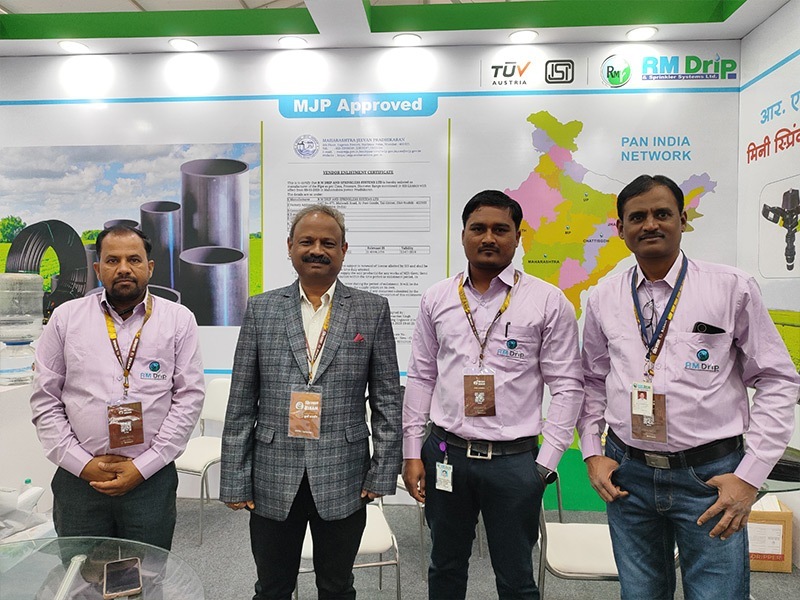
R M Drip & Sprinklers Systems Ltd Q2 FY26 – From Default Notices to Drip Dominance: ₹11 Cr PAT, 221% Profit Jump, and a 62x P/E Madness!
1. At a Glance
There are multibaggers, and then there’s R M Drip & Sprinklers Systems Ltd (RM Drip) — the irrigation company that went from loan defaults to stock market royalty faster than monsoon memes go viral. As of November 2025, the stock trades at ₹79, commanding a ₹1,975 crore market cap, a P/E ratio of 62.8x, and more optimism than a startup pitch deck.
In Q2 FY26 (Sep 2025), RM Drip reported sales of ₹61.66 crore and PAT of ₹10.96 crore, marking a whopping 221% YoY profit growth. Operating margins stayed strong at 26.65%, and the company flexed an ROCE of 44.7% and ROE of 39.7% — numbers that would make even blue chips blush.
But wait — this isn’t all roses. Promoter holding is just 21.1%, debtors are sitting pretty at 300 days, and the company still owes the ghosts of its SBI defaults. So, is RM Drip a redemption arc or a rerun of “Micro-Irrigation: Scam Reloaded”? Grab your coconut water; it’s going to get juicy.
2. Introduction
In the world of smallcap drama, RM Drip has more plot twists than a daily soap. Incorporated in 1996, it spent years manufacturing micro irrigation systems — the unsung heroes of agriculture — before deciding that its true passion was spicing up investor portfolios.
This is the same company that once had auditors frowning and bankers sighing. Default on statutory dues? ✅. Loan repayment delays? ✅. CFO resignations? ✅. And yet, here it stands, valued at nearly ₹2,000 crore with a five-year return of 73% and one-year rally of 158%. It’s like that student who used to bunk classes but now gives TED Talks on productivity.
The market clearly believes in second chances. With sales growth of 108% and profit growth of 281% (TTM), RM Drip is no longer the underdog — it’s the headline act. But let’s be real: when a company with ₹31 crore annual PAT is valued at ₹1,975 crore, even its sprinklers are spraying optimism.
3. Business Model – WTF Do They Even Do?
RM Drip makes irrigation sexy. The company designs, manufactures, and installs micro irrigation systems — the pipes, drippers, and filters that help farmers save water while growing more crops. Think of it as “plumbing for plants,” but with better margins.
Their product line-up sounds like an engineer’s fantasy catalog:
Sprinkler Systems: RM Sprinkler, RM Mini, and Micro Sprinkler.
Filters: Plastic Disc Filters, Sand/Gravel Media Filters, Fertigation Tanks, and Hydro-cyclone Filters.
They also supply to big OEMs (Original Equipment Manufacturers) and partner with Greaves Cotton Ltd for distribution — because even irrigation needs a little corporate glamour.
Revenue is largely from product sales (96%), with “Other Income” barely sprinkling in 4%. Their dealer network spans Maharashtra, MP, Gujarat, Karnataka, UP, Bihar, and Jharkhand, i.e., regions where both farmers and politicians talk a lot about “pipeline projects.”
4. Financials Overview
Standalone Quarterly Comparison (₹ in Crores)
Source table
Metric
Sep 2025 (Latest)
Sep 2024 (YoY)
Jun 2025 (Prev Qtr)
YoY %
QoQ %
Revenue
61.66
30.48
31.18
80.9%
97.7%
EBITDA
8.31
8.78
8.31
-5.4%
0.0%
PAT
10.96
5.31
5.65
106.4%
94.0%
EPS (₹)
1.26
0.21
0.23
500%+
448%+
If you multiply the latest EPS (₹1.26) by four, you get an annualised EPS of ₹5.04, implying a P/E of 15.7x on fundamentals — way below the stated 62.8x, suggesting the market is still adjusting post share-split.
Commentary:
Revenue doubled, profit tripled, and still, promoters are missing in action.
OPM dipped slightly QoQ but remains elite at 26.65%.
Looks like the company finally found its “drip” — of profits.
5. Valuation Discussion – Fair Value Range Only
Let’s play the valuation game three ways.
(a) P/E Method: Annualised EPS = ₹5.04 Industry P/E = 22.2 → Fair Value = ₹5.04 × (20 to 25) = ₹100 to ₹125