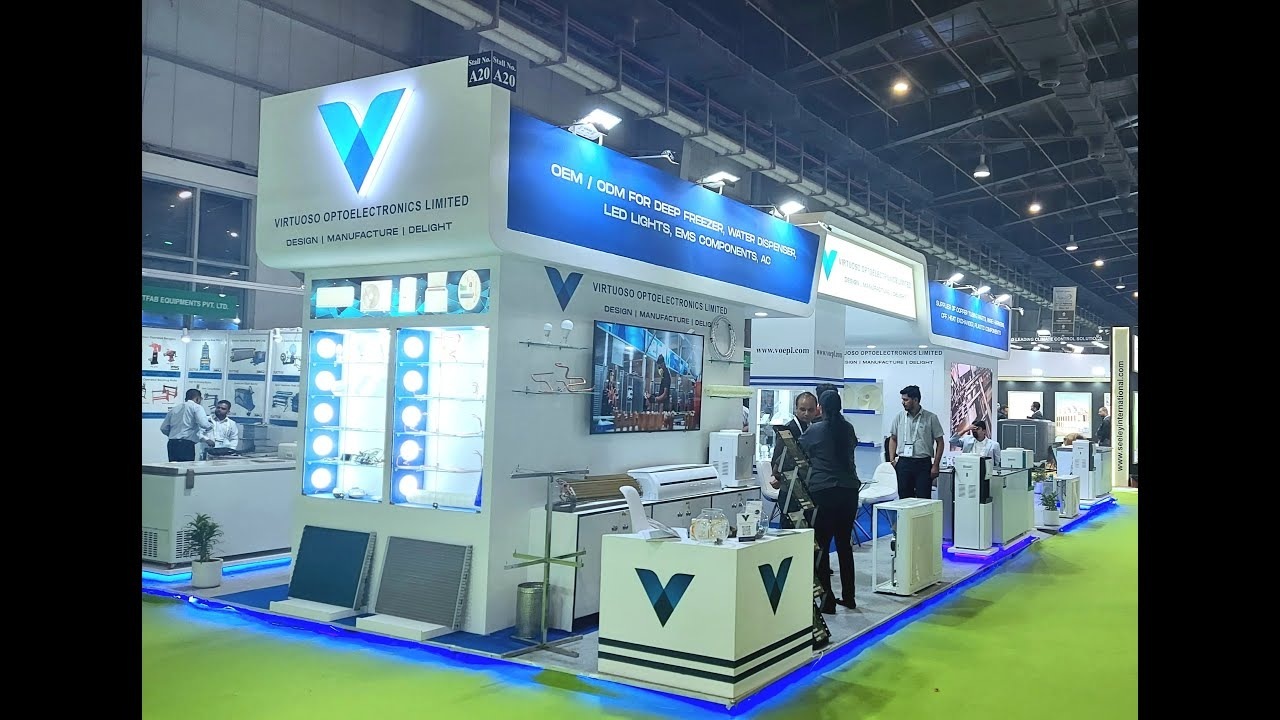
Virtuoso Optoelectronics Ltd Q2FY26 – From Voltas’ Favourite Factory to a PLI-Powered Powerhouse (and a Comedy of Margins)
1. At a Glance
Virtuoso Optoelectronics Ltd (VOEPL) is the kind of company that would win “Best Supporting Actor” in the Indian white goods drama — not the hero, but definitely the one doing all the hard work. Incorporated in 2015 and promoted by the Bharti family, this Nashik-based OEM-ODM manufacturer has quickly become Voltas’ favourite factory — though now it seems tired of playing sidekick.
As of November 2025, VOEPL trades at ₹457 per share, with a market cap of ₹1,414 crore. The company’s P/E ratio stands at 176, making it more expensive than some people’s patience. Its ROCE is 12.7%, ROE 5.7%, and Debt-to-Equity ratio 0.59, showing that it’s not exactly debt-free but not drowning either. The stock has fallen -7.5% in 3 months and -16.9% in six months, because apparently investors don’t love negative profit growth as much as management loves capacity expansions.
Q2FY26 (ended September 2025) was… well, mixed. Sales stood at ₹97.84 crore, down from ₹203.19 crore in Q1FY26. PAT fell to a loss of ₹3.88 crore, and EPS slid to -₹1.28. The profit margin vanished faster than your AC cools a Delhi summer.
But before we roast too hard — remember, this is the same company that went from making LEDs to building entire AC ecosystems, now adding compressors, water dispensers, and even toy components. It’s like watching a kid who topped physics now auditioning for “Shark Tank India.”
2. Introduction
Virtuoso Optoelectronics (or VOEPL, for the acronyms enthusiasts) is an OEM and ODM manufacturer of white goods and electronics, meaning it builds the stuff you buy under someone else’s brand. You’ve likely owned a product that VOEPL made — you just didn’t know it.
The company’s primary claim to fame? Making air conditioners and lighting solutions for top-tier consumer brands — especially Voltas, which contributes around 70–75% of VOEPL’s revenue. Yes, that’s not “customer concentration,” that’s “one-sided relationship goals.”
But things are changing. The company’s vision is as clear as its LED lamps: diversify customers, expand product lines, and vertically integrate like a boss. It’s now moving into compressor manufacturing, commercial refrigeration, and water dispensers, because apparently, once you’ve mastered cold air, you might as well take over cold water too.
Backed by a PLI grant of ₹50.5 crore, VOEPL is on a mission to become India’s fully integrated white goods player. Its new plants, expansions, and backward integration programs are turning it from a contract manufacturer into a full-fledged ecosystem builder.
So yes — the company may have a bad quarter here and there, but when your business model includes both ACs and LEDs, at least your mistakes are well-illuminated.
3. Business Model – WTF Do They Even Do?
VOEPL is essentially a “make everything, brand nothing” company.
Let’s break down their model — and roast it with love:
a) OEM (Original Equipment Manufacturer) They manufacture products designed by clients. For example, Voltas gives them blueprints; VOEPL makes indoor and outdoor AC units; Voltas slaps its logo, sells to you, and takes the credit.
b) ODM (Original Design Manufacturer) Here VOEPL flexes creativity — it designs, conceptualizes, and makes entire products that clients can market under their own brand. Think of it as ghostwriting for electronics.
c) EMS (Electronics Manufacturing Services) This is the lighting side — they make LED lamps, panels, controllers, etc. About 60% of their Q3FY25 revenue came from EMS, so if your LED tube light hasn’t flickered in a while, you might owe them thanks.
d) White Goods They make air conditioners, water dispensers, deep freezers, and are now expanding into commercial refrigeration and toy components (because why not diversify from cool air to cool toys?).
Their eight manufacturing facilities have some wild stats —
Lighting: 60 million lamp units/year
Air Conditioners: 8 lakh indoor + 6 lakh outdoor units/year
Water Dispensers: 1.5 lakh capacity, expanding to 2 lakh by FY26
Commercial Refrigeration: expanding from 1.5 lakh to 4 lakh by FY26
Compressors: a new ₹800 crore plant in Nashik, aiming for 2.8 million units/year
Basically, VOEPL is turning into the white goods version of Reliance Jio — rapid expansion, full integration, and quietly building a supply-chain empire while everyone else debates valuations.
4. Financials Overview
Source table
Metric (₹ Cr)
Sep’25 (Latest Qtr)
Sep’24 (YoY)
Jun’25 (Prev Qtr)
YoY %
QoQ %
Revenue
97.84
203.19
203.19
-51.8%
-51.8%
EBITDA
10.10
20.07
20.07
-49.7%
-49.7%
PAT
-3.88
6.43
6.43
-160.3%
-160.3%
EPS (₹)
-1.28
2.18
2.18
—
—
Commentary: The Q2FY26 results look like someone turned the AC off halfway through summer. Revenue halved, margins melted, and profit turned negative. To