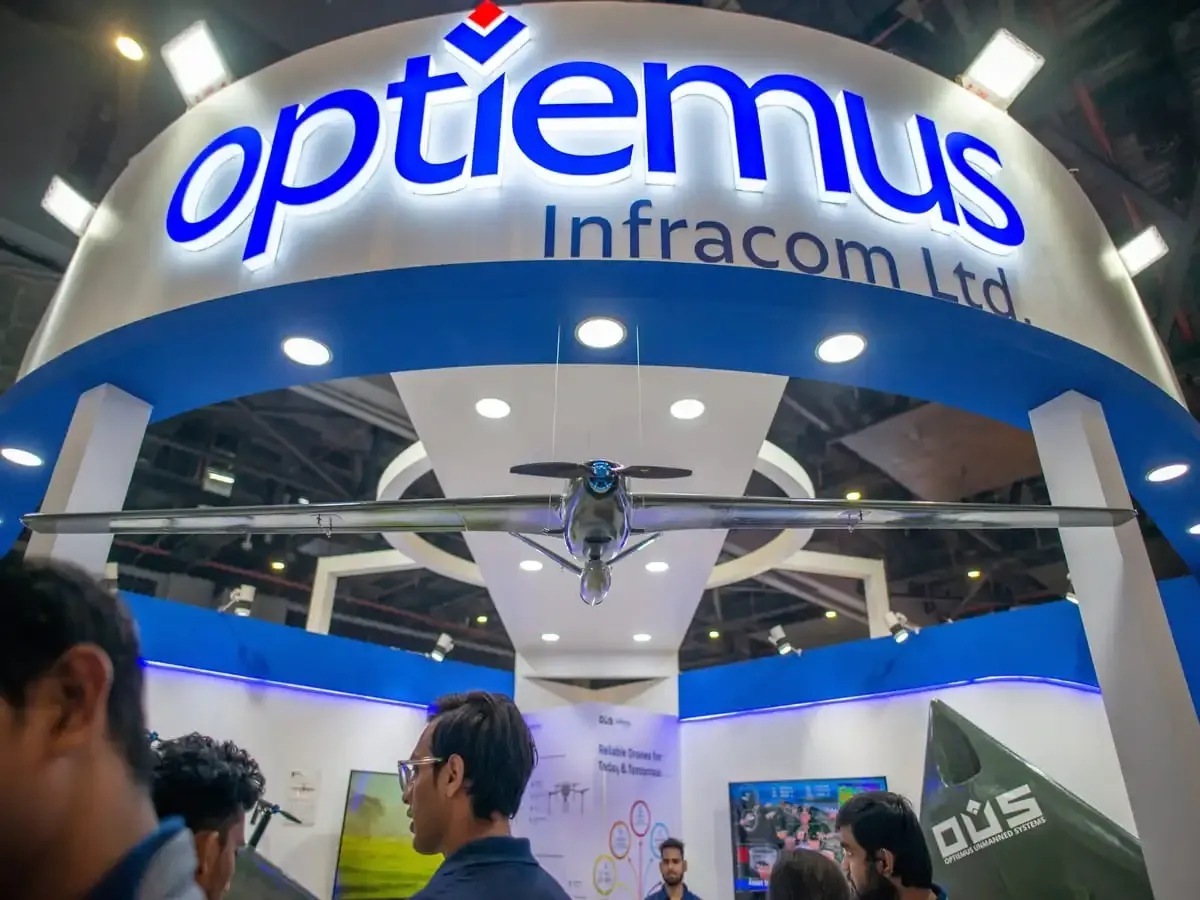
Optiemus Infracom Ltd Q2 FY26 – The Desi Mobile Maker That Went From Nokia Ringtone to Drone Symphony
1. At a Glance
Ladies and gentlemen, hold your mobile phones tight—Optiemus Infracom Ltd (NSE: OPTIEMUS, ₹554, Market Cap ₹4,867 crore) is no longer just that Nokia distributor from 1995. It’s now a full-blown electronics and telecom manufacturing powerhouse, juggling smartphones, tempered glass, IoT wearables, drones, and even “engineered by Corning” glass like it’s a Bollywood multistarrer.
In Q2 FY26 (Sep 2025), sales came in at ₹418 crore, down 12.2% QoQ, while PAT grew 22.2% QoQ to ₹16.8 crore. That’s right—the company somehow made more profit on fewer sales. Classic Indian jugaad or just operating leverage magic? You decide.
At a P/E of 70.8x, ROCE of 14.4%, and ROE of 11.6%, Optiemus looks like that overachieving student who keeps reminding you he’s “just getting started.” The book value sits at ₹81.1 per share, and the stock trades at 6.83x book—because why not? It’s 2025, and India now manufactures its own tempered glass. Dividend yield? 0%. Because apparently, love for shareholders is also made in India—slowly.
2. Introduction – From Nokia Ringtone to Manufacturing Symphony
If you’ve been around since the 2000s, you probably remember “Nokia: Connecting People.” Optiemus Infracom was literally connecting those people—by distributing Nokia phones back when Snake was the only gaming addiction. Fast forward 30 years, and this same company now manufactures smartphones, tempered glass, wearables, and drones. Yes, drones. The only thing they haven’t manufactured yet is your next excuse for missing profits.
The journey from Delhi’s general trade markets to global manufacturing partnerships with brands like Corning, Nothing, OnePlus, and Wistron is not just impressive—it’s meme-worthy. Optiemus now operates 3 factories in Noida capable of producing 1.5 million handsets per year and 500,000 tempered glass units per month, and recently added drone production through its new division—Optiemus Unmanned Systems.
In the last 5 years, sales grew at 41.5% CAGR, while PAT grew 22.4% CAGR, showing the company’s transformation from a trading house to a manufacturing-led player under the PLI scheme. But before we start clapping, remember: sales fell 12% QoQ, and profit margins are still tighter than a new pair of jeans.
Still, with a slew of joint ventures and a growing domestic electronics ecosystem, Optiemus has become a fascinating case study—part success story, part startup chaos, and part PSU-like patience test.
3. Business Model – WTF Do They Even Do?
Optiemus has one of those business models that can confuse even a finance professor after lunch. Let’s simplify:
1. Trading & Distribution (42%) – Their OG business. They distribute mobile handsets from brands like Nokia, Samsung, and HTC. They run 27 regional branches, connect with 650 distributors, over 10,000 retail partners, and manage 700 service centers. Basically, if you bought a phone in India in the 2000s, chances are they touched it before you did.
2. Manufacturing (58%) – This is where things got spicy. Optiemus manufactures smartphones, tempered glass, and wearables. Through subsidiaries and associates, they produce millions of units annually from three Noida-based facilities. They also make screen glass under a Corning licensing deal, which means they can officially say “Engineered by Corning” without being sued.
3. Retail (Mobiliti World) – Their own retail brand launched in 2013. Around 220 retail touchpoints, selling products from everyone—Apple, Samsung, Oppo, and even BlackBerry (yes, that’s still a thing somewhere).
4. Drones (Optiemus Unmanned Systems) – The latest toy in the box. They’re now building “high-precision drones,” with an initial ₹25 crore investment. Because why stop at phones when you can make flying cameras too?
5. PLI-Driven Manufacturing Push – Through subsidiaries Optiemus Electronics (OEL) and GDN Enterprises, the company is milking India’s Production Linked Incentive (PLI) schemes for mobile and telecom products.
In short, Optiemus is now India’s multi-device manufacturing ecosystem in motion—phones, wearables, glass, and drones. A one-stop tech shop with desi DNA and global dreams.