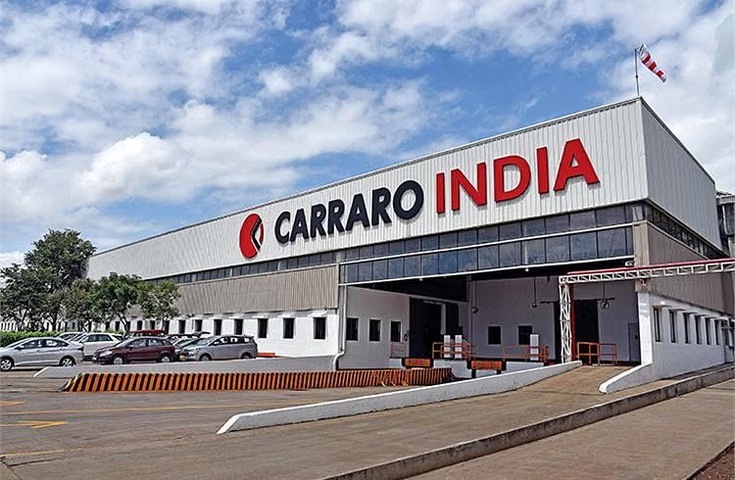
Carraro India Ltd Q2 FY26 – When Tractors Get Italian Transmissions and Customs Show Cause Notices!
1. At a Glance
Carraro India Ltd — the Italian-engineered, Pune-manufactured gearbox specialist that’s been quietly powering half of India’s tractors — is having its moment. With a market cap of ₹2,945 crore, stock price ₹518, and a delicious ROE of 20%, the company’s balance sheet hums smoother than one of its transmissions.
In Q2 FY26 (Sep 2025), revenue raced up to ₹582 crore, a 33.2% YoY jump, while PAT hit ₹30.6 crore, rising 41.8% YoY. You know what that means — for once, the farmer and the backhoe loader operator both have something to celebrate together.
The P/E ratio is a respectable 30.6, EV/EBITDA sits at 15.6, and debt-to-equity is a well-oiled 0.34. Promoters — Carraro International S.E. — hold 68.8%, and unlike some desi promoters, haven’t pledged a single rupee’s worth of shares. Dividend yield is 0.88%, which is basically enough to buy a vada pav and chai combo, but hey — that’s better than zero.
The real kicker? Carraro India has been clearing customs cases faster than your local courier clears return parcels. Between tax refunds, credit rating upgrades, and solar panels on OPEX models, this is one Italian family that doesn’t just make pizzas — they make profits.
2. Introduction – The Italian Gearbox That Found Its Mojo in Maharashtra
Picture this: it’s 1997. Backstreet Boys are playing on the radio, MS-Dhoni is still dreaming of Ranchi fame, and Carraro SpA — an Italian drivetrain powerhouse — decides to open shop in India. They looked around and thought, “Where else but Pune, the Detroit of India?”
Fast-forward to 2025: Carraro India Ltd (CIL) has become the silent force behind tractors and construction vehicles across the country. It doesn’t make tractors — it makes them move. From axles, gear assemblies, hydraulic lifts, and transmission systems, this company is the secret sauce behind Mahindra’s ruggedness and JCB’s swagger.
But it’s not all torque and traction. Carraro India has been juggling solar panels, customs notices, and IPO glamour in the same financial year. Think of it as the Bollywood actor who does commercial masala films (mass production) but occasionally sneaks in an indie award-winner (custom-built IP rights from its parent).
In FY24, the company clocked ₹1,956 crore in revenue and ₹96 crore in PAT — up from ₹47 crore in FY23. That’s a 2x profit jump in two years, no sidekick required. Even the Operating Margin has gone from 5% a few years ago to nearly 9% today. Clearly, these Italians have learned the fine art of “Indian jugaad.”
So what keeps this well-oiled engine running? Let’s open the hood and find out.
3. Business Model – WTF Do They Even Do?
Carraro India Ltd isn’t your typical auto company that slaps a logo and sells shiny things. It’s the mechanical heart surgeon of the vehicle world.
Here’s the breakdown — and it’s spicier than it looks:
Agricultural Equipment – Think of every tractor ploughing your onions in Nashik or pulling sugarcane in Kolhapur — chances are, the transmission or axle inside came from Carraro’s Pune plant.
Construction Equipment – Those backhoe loaders and compact wheel loaders tossing mud like they’re auditioning for a Salman Khan movie? Yup, Carraro drives them too.
Gears and Components – The company also supplies precision gears and spare parts that end up in both farm and industrial vehicles.
Carraro India’s domestic market contributes 65%, and exports contribute 35% — the latter mostly to Italy, Brazil, and China. Essentially, Carraro’s products travel more than most Indian honeymooners.
And if you’re wondering what’s next — they recently acquired Carraro Technologies India Pvt Ltd (CTIPL) for ₹239.8 million, making it a wholly owned subsidiary. Translation: They’ve brought all the tech brains under one roof. It’s like Iron Man buying Jarvis.
Plus, they’re putting up solar panels at their Pune factory — not out of love for the environment, but on an OPEX model (operating expenditure), meaning cost savings start flowing in FY25.
Smart move. Because when your machines make torque, why not let your roof make watts?