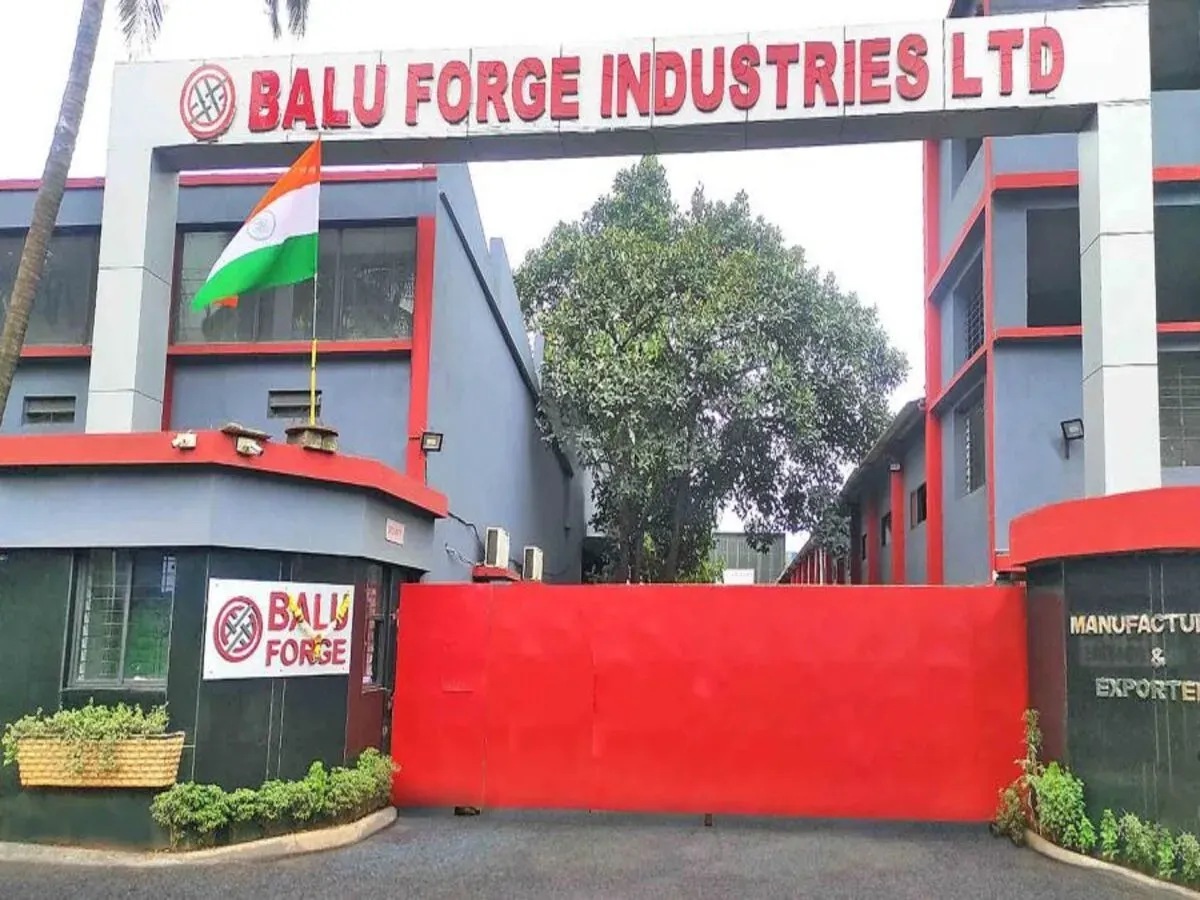
Balu Forge Industries Ltd Q2 FY26: Forging Profits Hotter Than the Steel They Make — ₹2,995 mn Revenue, ₹650 mn PAT, OPM 28%, ROCE 31%, and Still No Smoke Breaks in Belgaum
1. At a Glance
Balu Forge Industries Ltd (BFIL) has officially become that rare Indian smallcap that can flex both biceps — growth and margins — without tripping on leverage. The company clocked ₹2,995 million in consolidated revenue for Q2 FY26, up 34.4% YoY, while net profit jumped 35.5% to ₹650 million. The Operating Profit Margin (OPM) stood tall at 28%, with a ROCE of 31.3% and ROE of 25.4%, reminding every engineer why crankshafts deserve more love than crypto.
At a market cap of ₹7,151 crore and a P/E of 29.3x, the market’s already giving them a decent “forged premium.” But hey, when you grow sales by 49.8% and profits by 79.7% in a year, you can afford to strut. The company’s debt is a mere ₹81.5 crore, and with a debt-to-equity ratio of 0.07, even CA students call it “almost boring.” Balu’s story isn’t about flashy numbers—it’s about precision, forging muscle, and making sure every ton of steel earns its keep.
2. Introduction
If you’ve ever wondered what happens when an engineering company actually engineers profits, meet Balu Forge Industries Ltd. In a world where “Make in India” often sounds like a WhatsApp forward, Balu Forge decided to make in Belgaum — and make it count.
Founded with the quiet confidence of a crankshaft designer, this company has turned hot metal into hotter margins. From manufacturing components that go inside tractors, defense vehicles, and power equipment, to now entering aerospace and high-precision machining, Balu Forge has taken the “forge ahead” motto literally.
Their recent ₹496.8 crore fundraise and NSE mainboard listing in April 2024 have turned heads. And not without reason — FY24 saw revenues leap 71%, EBITDA margins jump from 15% to 21%, and in H1 FY25, they cranked it up to 27%. That’s not just progress, that’s industrial cardio.
The Belgaum-based beast now runs three facilities, cranking out 3.6 lakh crankshafts per year, serving 25+ OEMs in 80+ countries, and showing up in sectors from railways to defense. The upcoming 72,000-ton forging capacity expansion looks set to make their hammering sound like a war drum for competitors.
3. Business Model – WTF Do They Even Do?
Let’s break this down like a gearbox.
Balu Forge Industries makes fully finished and semi-finished forged components, primarily crankshafts, hydraulic parts, railway wheels, and transmission clutches. Basically, anything that moves power from one part to another and doesn’t break — Balu’s involved.
Think of them as the unsung blacksmiths of modern industry — whether it’s a tractor engine in Punjab, a defense vehicle in Ladakh, or a railway bogie in Chhattisgarh, there’s probably a Balu-forged part humming quietly inside.
Their secret sauce? Precision forging + CNC machining + metallurgy expertise. The company’s new 7-axis CNC machining line and 16-ton hydraulic hammer setup mean they’re moving into the high-precision, high-margin league.
They’ve expanded from being an “auto-component supplier” to a multi-sector engineering house. The industry-wise revenue mix says it all: Agriculture (45%), Power Gen (15%), Heavy Engg (12%), CV (10%), Defense (7%), and Others (11%). So basically, they’re everywhere — from your tractor clutch to defense jets’ drive systems.
And when the entire 32,000 TPA machining capacity is booked solid, you know the customers aren’t just impressed—they’re hooked.
4. Financials Overview
Metric
Latest Qtr (Sep 2025)
YoY Qtr (Sep 2024)
Prev Qtr (Jun 2025)
YoY %
QoQ %
Revenue (₹ mn)
2,995
2,230
2,330
+34.4%
+28.5%
EBITDA (₹ mn)
828
650
720
+27.3%
+15.0%
PAT (₹ mn)
650
480
570
+35.5%
+14.0%
EPS (₹)
5.71
4.39
5.00
+30.0%
+14.2%
Witty Commentary: Balu’s financials look like a well-oiled forging press — steady, rhythmic, and