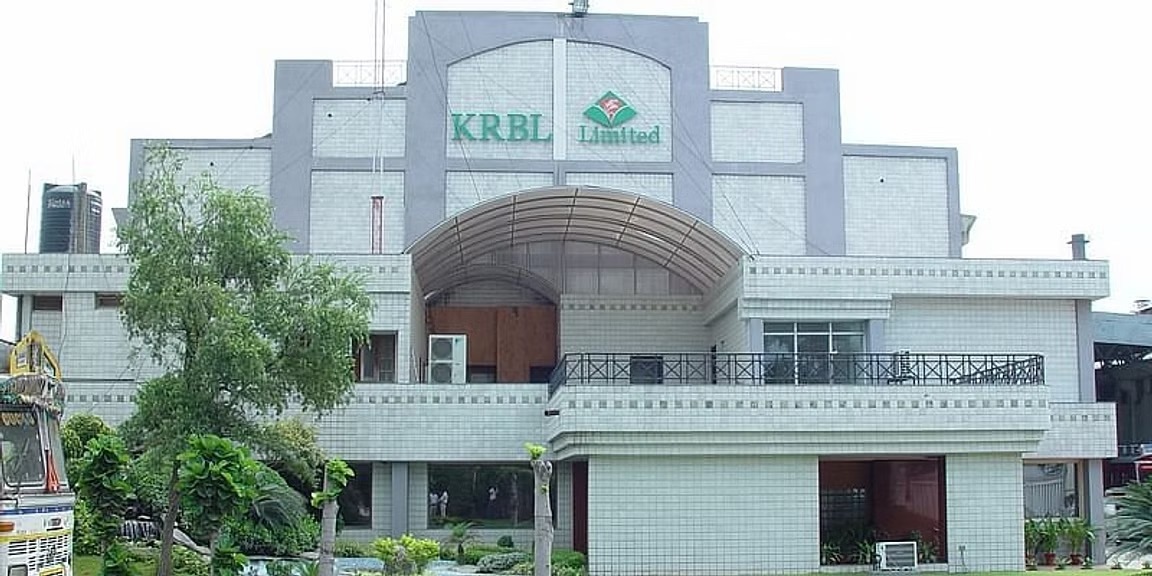
1. At a Glance
KRBL Ltd – the self-proclaimed “World’s No.1 Basmati Producer” – is currently priced at ₹418 per share, boasting a market cap of ₹9,568 crore. But beneath the aroma of its famed India Gate basmati, there’s a spicy mix of profit growth, margin stress, and courtroom masala.
For Q2 FY26 (September 2025), the company clocked Revenue of ₹1,511 crore and PAT of ₹172 crore, marking a 67.6% YoY profit surge despite a dip in exports and ongoing ED investigations into its Joint MD. The basmati empire, however, is feeling the pinch from rising paddy costs — gross margins have slid to 23.2%, and EBITDA margins are struggling around 11–13%.
At a P/E of 15.6, KRBL is cheaper than rival LT Foods (22.3x), but don’t be fooled – this isn’t a clearance sale; it’s a cautious reminder that governance smells stronger than basmati right now. Still, with nearly zero debt (D/E 0.01), a ROCE of 11.8%, and ROE at 9.4%, the company isn’t out of steam – it’s just waiting for the cooker whistle to blow again.
2. Introduction
If India’s FMCG world were a Bollywood script, KRBL would be that old-school patriarch who built an empire on patience, discipline, and rice… only to find himself surrounded by Gen Z competitors selling “organic quinoa.”
For decades, KRBL’s India Gate brand ruled not just Indian kitchens but also the shelves of Middle Eastern supermarkets. You couldn’t attend a wedding in Dubai or Riyadh without spotting those majestic blue-and-gold bags stacked like royalty. But lately, this king’s kitchen has been smoky. Between geopolitical turmoil, rising raw material costs, and the Enforcement Directorate poking around, KRBL’s story feels less like a steady aroma and more like a pressure cooker moment.
And yet, the company refuses to lose its fragrance. It’s expanding dealer networks (now over 850 dealers and 3.77 lakh retail outlets), planning to enter the healthy edible oil segment, and even buying real estate worth ₹402 crore at Panipat. Because, why not diversify when your rice still sells like family pride?
But the million-dollar question is — can KRBL sustain its brand dominance while the boardroom keeps catching fire alarms? Let’s dive into this grainy thriller.
3. Business Model – WTF Do They Even Do?
KRBL doesn’t just sell rice. It owns the entire basmati ecosystem. From seed development, contract farming, procurement, milling, packaging, and marketing, the company has built an integrated supply chain so tight that even the farmer knows his grain’s final supermarket destination.
Its business can be split into two parts:
a) Agri-Business (Core Revenue Generator – 100%)
This is the rice money machine. Under brands like India Gate, Nur Jahan, Lion, Unity, and Doon, KRBL sells both basmati and non-basmati rice across India and 90+ countries.
b) Energy Business (Supporting Role)
KRBL has a green side — or at least, it likes to say so. With 112.25 MW of wind power, 17 MW of solar, and 17.59 MW of biomass, it generates energy mainly for captive use. Any extra goes to the Punjab State Electricity Board. Basically, even its rice mills are “Made in Renewable.”
But here’s the twist: 80% of FY25’s revenue came from the domestic market, up from 66% in FY22, thanks to the India Gate brand dominating both general and modern trade with 37% and 45% market shares respectively. Exports?