1. At a Glance
Let’s start with a pulse check.
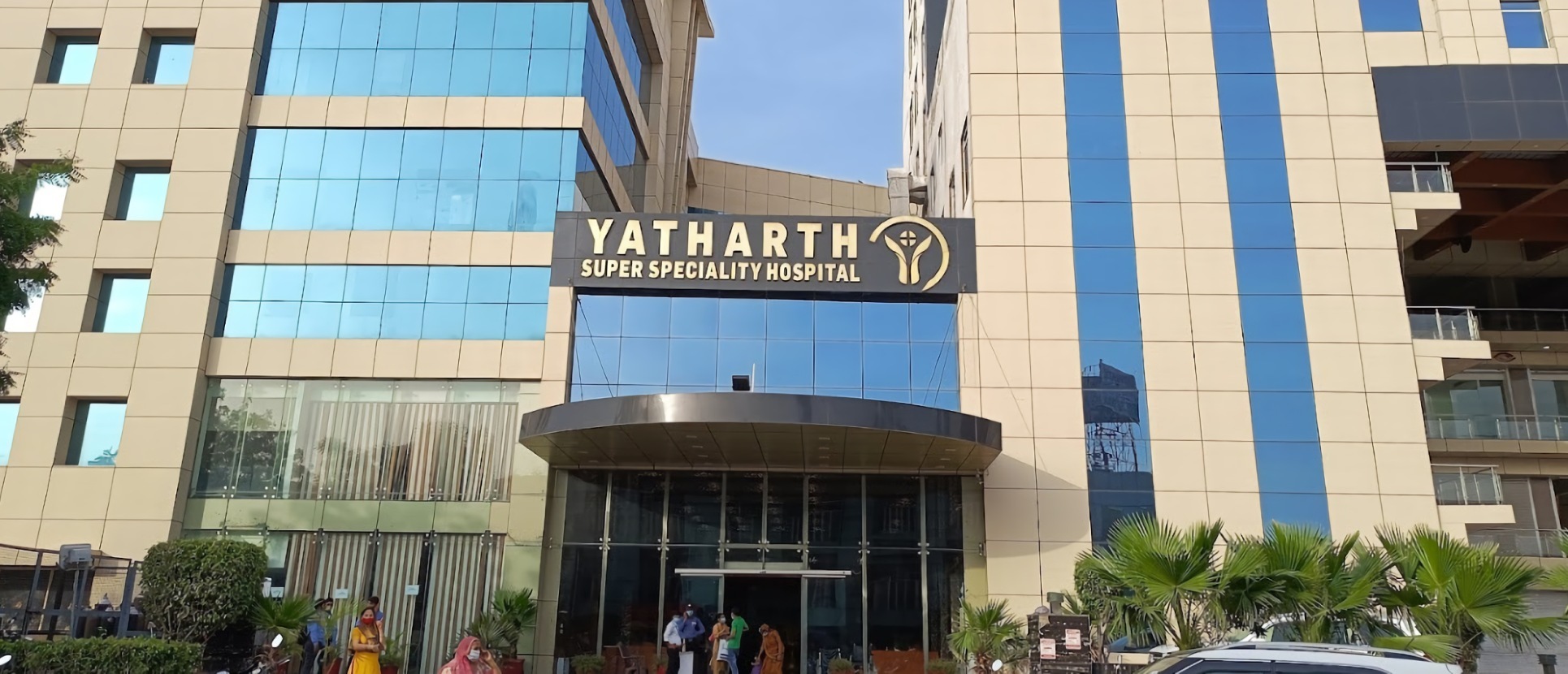
Yatharth Hospital & Trauma Care Services Ltd — the Delhi-NCR-based super-specialty hospital chain that’s grown faster than your local chemist’s credit bill — just clocked a Q2FY26 revenue of ₹2,794 million (₹279.4 crore) and a PAT of ₹413 million (₹41.3 crore). The stock trades at ₹772 (as of Nov 20, 2025), giving it a market cap of ₹7,428 crore, and trades at a P/E of 48.7x — not cheap, but then neither are hospital bills in Noida.
The company runs 7 hospitals with over 2,300 beds, of which around 1,600 are operational, maintaining an average occupancy rate of 65% and ARPOB (Average Revenue Per Occupied Bed) of ₹32,395. The management clearly believes in “bed expansion as religion” — they’re planning to add 1,200 more by FY28.
In short: a company born in Noida, expanding across Delhi, Agra, Jhansi, and Faridabad — and slowly turning the NCR map into a real-life Monopoly board of trauma centres.
2. Introduction – The Bedtime Story of a Hospital Chain
Once upon a time (2008, to be exact), a group of doctors in Noida decided that healthcare shouldn’t just heal the body — it should also stun investors with its EBITDA margins. Thus was born Yatharth Hospital and Trauma Care Services Ltd, a name that sounds like a tongue-twister but now stands for one of India’s fastest-growing hospital networks.
From a modest Noida facility, Yatharth has evolved into a ₹988 crore sales powerhouse (FY25) with 152 crore in net profit, which is a long way from the ₹20 crore profit era of FY21. The company’s 5-year profit CAGR sits at a jaw-dropping 152%, enough to make pharmaceutical giants look under the bed for their missing growth rates.
But what’s made Yatharth special isn’t just expansion — it’s the ruthless precision with which they’ve picked their territories. Noida, Greater Noida, Faridabad, Jhansi, and now Agra — all are growing cities with underserved healthcare infrastructure. Instead of going to metros like Mumbai or Chennai (already overcrowded with Apollo and Fortis), Yatharth chose NCR and Tier-II hubs — and that’s turned out to be its biggest “prescription for profit.”
3. Business Model – WTF Do They Even Do?
If you think Yatharth just stitches wounds and runs CT scans, think again. This is a multi-specialty empire built on specialization.
Each hospital in its network functions as an independent tertiary-care unit, offering services under various “Centres of Excellence” — fancy jargon for specialized wings that mint cash. The big-ticket ones include cardiology, neurology, oncology, nephrology, orthopedics, and critical trauma care.
Their revenue mix?
- IPD (In-patient): 88.8%
- OPD (Out-patient): 11.2%
Translation: most people come in for real treatment, not for “doctor uncle, just check my BP.”
Hospital-wise, Noida Extension brings in 34% of revenue, followed by Greater Noida (30%), and Noida (20%). Even Jhansi contributes 7%, proving that healthcare margins work even in Bundelkhand if you’re good at billing.
What makes Yatharth tick is its hybrid model of organic expansion (adding 450 beds at existing facilities) and inorganic acquisitions (snapping up distressed hospitals via SARFAESI auctions — yes, they buy hospitals the way some people buy used cars).
Their latest acquisition — Shantived Hospital, Agra (150 beds, expandable to 250) — came at a total cost of