1. At a Glance
When most people say “living the suite life,” they mean sipping cocktails near infinity pools — not analyzing debt ratios and operating margins. But here we are, dissecting Royal Orchid Hotels Ltd (ROHL) — India’s mid-tier hospitality player that thinks asset-light means “less furniture, more franchisees.” Incorporated in 1986, this ₹1,152 crore market cap hotelier now operates 112+ hotels across 75+ locations with a grand total of 6,603 keys. From the glittering Regenta Resorts to budget Regenta Inns, the brand’s spread is as wide as a Gujarati buffet.
At ₹420 per share (as of Nov 19, 2025), the company trades at a P/E of 25x, which is less than half of industry heavyweights like Indian Hotels (Taj) or Lemon Tree. ROE stands tall at 22.4% and ROCE at 17.4%, respectable for a company juggling over ₹677 crore in debt and still finding time to open new resorts near statues, beaches, and airports.
Revenue for Q2FY26 stood at ₹79.19 crore (up 12.5% YoY), but PAT slipped 43% YoY to ₹4.3 crore — a reminder that hotel margins can vanish faster than hot buffet idlis at a wedding brunch. Occupancy across owned and leased properties averaged 70%, with ARR at ₹5,532. Managed hotels clocked 62% occupancy with ARR of ₹3,941.
As Lord Krishna said in the Bhagavad Gita, “Action is thy duty, not the fruit thereof.” Maybe Royal Orchid took it literally — expanding furiously while profits take a nap.
2. Introduction
If hospitality were a Bollywood movie, Royal Orchid would be the dependable character actor — not the lead hero, but always in the frame, smiling, serving chai, and somehow surviving every market cycle.
After all, this isn’t your average leisure stock. It’s a full-service hotel network — owned, leased, managed, and franchised — running everything from 5-star suites in Mumbai to resorts in Dapoli to inns in Pilgrimage zones. While Taj and ITC woo foreign diplomats, Royal Orchid courts the business traveler from Ludhiana and the family from Indore looking for an affordable “staycation.”
The company has mastered India’s favorite corporate yoga pose — “Asset-Light Asana”. It’s currently adding 28+ new hotels with 2,400+ keys without spending much of its own money. How? By convincing property owners to fund the capex while Royal Orchid pockets management fees — the dream model for every hotel chain that hates construction dust.
But it’s not all room service and rain showers. ROHL’s balance sheet shows a debt pile growing faster than its minibar bills. Borrowings shot up to ₹677 crore as of Sept 2025, nearly triple FY24 levels, raising eyebrows about how “light” this model really is. Still, the company’s optimism is infectious — launching new properties in Mumbai T2, Surat, Pushkar, Varanasi, and even Nepal, where guests may find both enlightenment and breakfast buffets.
3. Business Model – WTF Do They Even Do?
At its core, Royal Orchid makes money from four things:
- Room Revenue (52.8%)
- Food & Beverage (37.1%)
- Management Fees (9.5%)
- Other Services (3.1%)
Its operations are split between:
- Owned Hotels (398 keys) – where it bears the costs and enjoys the profits.
- Leased Hotels (688 keys) – where it rents, manages, and prays the rent-to-revenue ratio doesn’t ruin the margins.
- Joint Ventures (193 keys) – like business marriages that survive only if EBITDA stays faithful.
- Managed/Franchised (5,324 keys) – the “royalty cash cow” with low investment and recurring income.
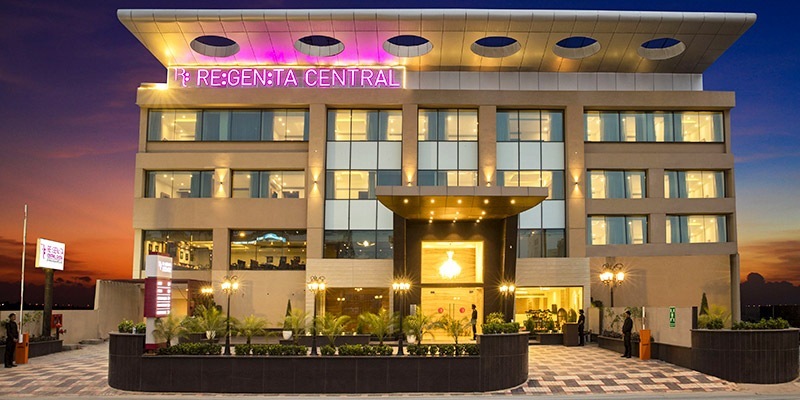
The portfolio covers Royal Orchid (5-star), Regenta Central (4-star), Regenta Suites & Place (business/budget), and Regenta Resort (leisure/spiritual). Essentially, one brand for every type of traveller — the executive, the pilgrim, and