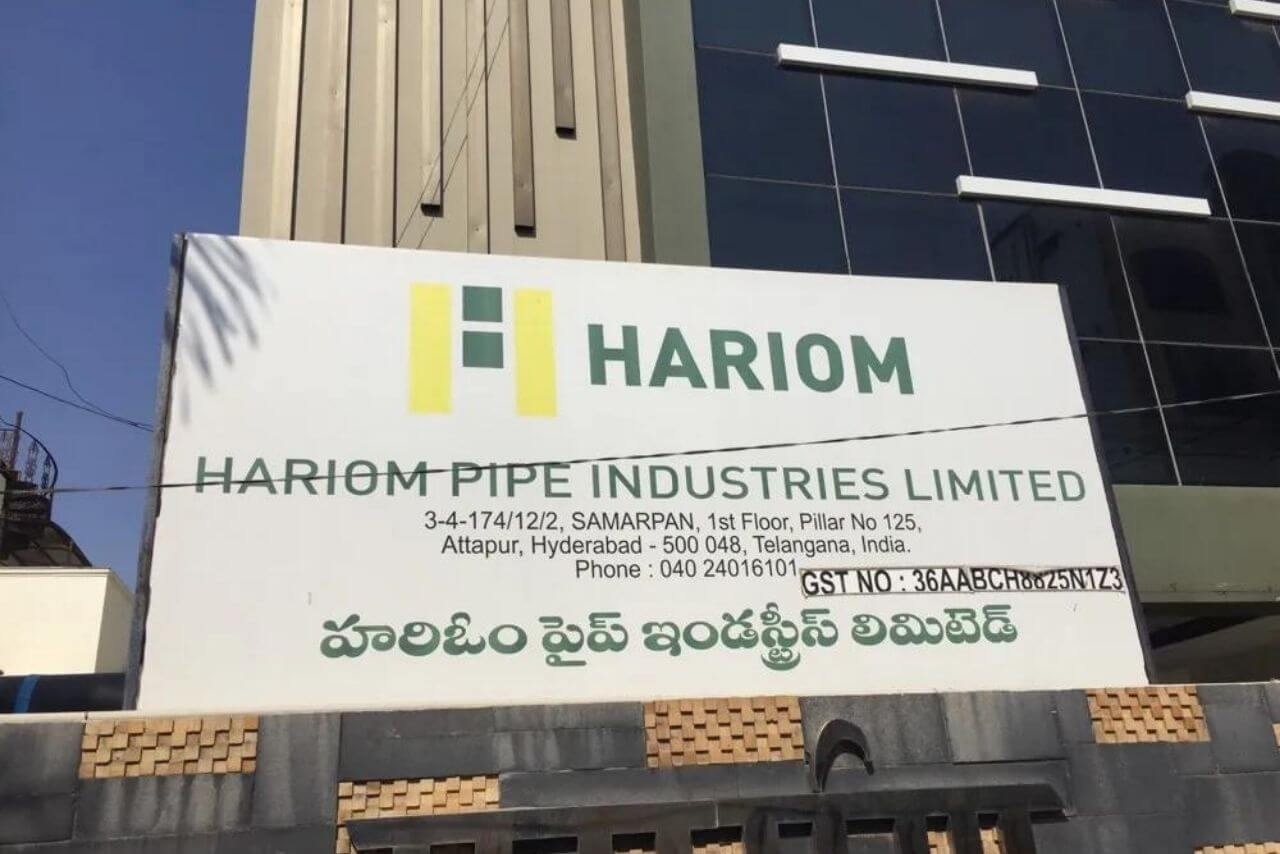
1. At a Glance
If ambition had a shape, it would probably look like a steel pipe — long, shiny, and occasionally hollow inside. Hariom Pipe Industries Ltd (HPIL) just dropped its Q2FY26 results, and the numbers are giving mixed vibes: revenue of ₹336 crore (up 6.9% YoY), but net profit slipped 33.8% to ₹10.4 crore. It’s like the gym bro who bulked up but forgot leg day.
The market doesn’t seem impressed — the stock’s down nearly 25% in 3 months, trading at ₹370 with a P/E of 18.3x and a ROE of 11.9%. Market cap stands at ₹1,145 crore, making it a mid-size contender in the steel pipes space — somewhere between APL Apollo’s swagger and Ratnamani’s yoga calmness.
As the Bhagavad Gita wisely says, “You have the right to work, but never to the fruits of it.” Clearly, HPIL took that to heart — they worked hard on expansion, but the fruit (profit) went missing this quarter.
2. Introduction
There are companies that manufacture dreams, and then there’s Hariom Pipe — manufacturing everything from sponge iron to scaffolding, GP coils to GI pipes, and now apparently, electricity.
With four manufacturing plants across the South, a 60 MW solar project coming up, and a ₹3,135 crore MoU for a 1.5 MTPA integrated steel plant in Gadchiroli, the company’s ambitions are big enough to make Elon Musk blush. The only problem? Their profits are playing hide and seek.
Let’s put it this way: while competitors are busy talking about carbon neutrality and AI-driven supply chains, HPIL is busy talking about “Hot Charging” — a process so efficient it could make your tiffin hot by lunch.
But jokes aside, Hariom Pipe is one of India’s few truly vertically integrated steel players — from raw material (sponge iron) to final product (MS & GI pipes) — all made in-house. It’s a rare level of control that gives them pricing power… at least in theory. In practice, this quarter’s margins look like a leaky faucet.
3. Business Model – WTF Do They Even Do?
Imagine a steel company that doesn’t just make pipes but also the stuff that makes the pipes — and even the energy that powers the machines making those pipes. That’s Hariom Pipe in one sentence.
Their business is split across eight major product lines and 800+ SKUs, including:
- Sponge Iron & Billets (raw material stage)
- Hot Rolled Strips & MS Tubes (intermediate)
- GP/CR/HR Coils & GI Pipes (value-added stage)
- Scaffolding Systems (for construction — and possibly for holding up their profit margins)
They serve everything from auto parts and furniture to solar structures and greenhouses — because if you can bend steel, why not bend into new markets too?
The company sells 85% of its output through a 900+ dealer network across southern India, with Telangana and Karnataka being top markets.
And now, they’ve decided to power it all literally — through Hariom Power & Energy Pvt. Ltd., their renewable energy subsidiary building a 60 MW solar plant with a long-term 25-year PPA. Because who needs steel when you can sell sunshine?
4. Financials Overview
| Metric | Latest Qtr (Q2FY26) | YoY Qtr (Q2FY25) | Prev Qtr (Q1FY26) | YoY % | QoQ % |
|---|---|---|---|---|---|
| Revenue | ₹336 Cr | ₹314 Cr | ₹461 Cr | +6.9% | -27.1% |
| EBITDA | ₹43 Cr | ₹42 Cr | ₹58 Cr | +2.4% | -25.9% |
| PAT | ₹10.4 Cr | ₹16 Cr | ₹24 Cr | -33.8% | -56.7% |
| EPS (₹) | 3.36 | 5.09 | 7.62 | -33.8% | -55.9% |
Annualised EPS: ₹13.44 → P/E ≈ 27.5x (vs trailing 18.3x — clearly, optimism costs extra).
Commentary: The top line still flexed, but bottom line went on a diet. Margins at 12.6% OPM look okay, but the rising interest and depreciation bills (thanks to expansions) are eating into the muscle. Someone needs to send them a protein shake labeled “Cash Flow.”
5. Valuation Discussion – Fair Value Range Only
Let’s get nerdy. Three methods, one honest conclusion.
(a) P/E Method:
- EPS (TTM): ₹20.2
- Industry Avg P/E: 22.1
- Fair Value Range = ₹20.2 × (16–22) = ₹323 – ₹445
(b) EV/EBITDA Method:
- EV = ₹1,558 Cr
- EBITDA (TTM): ₹192 Cr
- EV/EBITDA = 8.1x
If re-rated to 10–12x (industry range), EV Range = ₹1,920–₹2,304 Cr, implying Equity Value = ₹1,507–₹1,891 Cr → ₹487–₹610 per share.
(c) DCF Method:
Assuming 10% CAGR in FCF over 5 years, 10% WACC, and 2% terminal growth → intrinsic value approximates ₹390–₹450.
Fair Value Educational Range: ₹380 – ₹500
📜 Disclaimer: This fair value range is for educational purposes only and is not investment advice.
6. What’s Cooking – News, Triggers, Drama
November 2025 earnings call dropped bigger announcements than the numbers themselves. Let’s recap the spicy bits:
- MoU for ₹3,135 Cr integrated steel plant at Gadchiroli (Maharashtra), with a 1.5 MTPA capacity. That’s nearly 3x Hariom’s current size — imagine a smallcap suddenly dreaming of becoming a midcap hero overnight.
- 60 MW Solar Plant via subsidiary HPEPL — a clean energy move expected to generate ~9.6 million kWh annually. Sadly, the power isn’t for internal use; they’re selling it to Maharashtra.
- New Executive Director appointed and borrowing limits raised to ₹2,000 Cr — clearly gearing up for the big capex.
- Ultra Pipes acquisition added 84,000 MTPA of MS Tube capacity.
The company now owns 112 acres of land, with 65 acres still free for expansion — because in India, even factories follow the “ghar badhao” dream.
7. Balance Sheet
| (₹ Cr) | Mar 2023 | Mar 2024 | Sep 2025 (Latest) |
|---|---|---|---|
| Total Assets | 709 | 880 | 1,143 |
| Net Worth (Equity + Reserves) | 376 | 464 | 605 |
| Borrowings | 297 | 372 | 418 |
| Other Liabilities | 37 | 44 | 121 |
| Total Liabilities | 709 | 880 | 1,143 |
Observations (with sarcasm):
- Assets up 60% in two years — someone’s been shopping.
- Debt creeping to ₹418 Cr — like EMI payments after festive season.
- Net worth grew strongly, meaning promoters haven’t mortgaged their souls (yet).
8. Cash Flow – Sab Number Game Hai
| (₹ Cr) | FY23 | FY24 | FY25 |
|---|---|---|---|
| Operating Cash Flow | -101 | 5 | 79 |
| Investing Cash Flow | -222 | -182 | -86 |
| Financing Cash Flow | 426 | 74 | 31 |
HPIL clearly believes in the mantra “Go big or go broke.” FY23’s negative operating cash was a shocker, but FY25 finally turned green with ₹79 Cr inflow — though most of it was probably used before the ink dried.
They’ve been burning cash on expansions like a Bollywood producer chasing sequels — let’s just hope this franchise has a happy ending.
9. Ratios – Sexy or Stressy?
| Metric | FY23 | FY24 | FY25 |
|---|---|---|---|
| ROE | 16.7% | 19.7% | 11.9% |
| ROCE | 17.0% | 15.0% | 14.1% |
| P/E | 18.3x | 22.0x | 18.3x |
| PAT Margin | 7.1% | 4.2% | 4.1% |
| Debt to Equity | 0.81 | 0.80 | 0.69 |
Verdict: Margins are slimming, but the balance sheet’s still wearing its seatbelt. ROE cooling from 19% to 12% means returns are melting faster than an ice cube on a foundry floor.
10. P&L Breakdown – Show Me the Money
| (₹ Cr) | FY23 | FY24 | FY25 |
|---|---|---|---|
| Revenue | 644 | 1,360 | 1,604 |
| EBITDA | 82 | 139 | 175 |
| PAT | 46 | 57 | 62 |
Comedy version: Revenue nearly tripled in two years — that’s the good news. Bad news? Profit barely doubled. Somewhere between sales and PAT, the money’s taking a tea break.
11. Peer Comparison
| Company | CMP (₹) | P/E | Sales (₹ Cr) | PAT (₹ Cr) | ROCE % |
|---|---|---|---|---|---|
| APL Apollo Tubes | 1,730 | 45.8 | 21,317 | 1,049 | 22.4 |
| Welspun Corp | 896 | 13.3 | 15,463 | 1,774 | 21.2 |
| Shyam Metalics | 842 | 24.2 | 16,768 | 970 | 12.0 |
| Godawari Power | 257 | 23.8 | 5,397 | 743 | 23.3 |
| Hariom Pipe | 370 | 18.3 | 1,496 | 62 | 14.1 |
Notes: Hariom is the youngest sibling in this steel family — smaller, scrappier, and still getting bullied by the big brothers. But being vertically integrated gives it a unique edge if executed right.
12. Miscellaneous – Shareholding and Promoters
| Category | Sep 2025 |
|---|---|
| Promoters | 57.27% |
| FIIs | 9.53% |
| DIIs | 0.16% |
| Public | 33.06% |
Key Promoters:
- Rupesh Kumar Gupta (MD) – The man with both the name and control.
- Sailesh Kumar Gupta – Co-promoter and Executive Director.
- Family Group – The Guptas basically run it like a family WhatsApp group — everyone has some shares.
Fun fact: Malabar India Fund holds over 9%, proving even smart money can’t resist a well-galvanized story.
13. Corporate Governance – Angels or Devils?
Auditors haven’t thrown any surprise disclaimers, and promoter pledging stands at 0%, which is cleaner than most college attendance sheets.
Board expansion, new subsidiaries, and fundraising resolutions show proactive governance — or at least a desire to look busy at board meetings. Borrowing limits raised to ₹2,000 Cr suggest serious capex ahead.
In short, no red flags — just orange ones waving gently in the industrial wind.
14. Industry Roast and Macro Context
Steel pipes might not sound sexy, but they’re literally the veins of India’s infrastructure dreams — highways, solar plants, oil pipelines, irrigation, you name it. The government’s focus on housing, renewable energy, and infrastructure capex means pipe players have enough work to last another five-year plan.
Yet, this industry has its quirks:
- Raw material prices (iron ore, coal) swing like a pendulum in a toddler’s hand.
- Competition is brutal — margins are thinner than a wafer.
- ESG pressure is rising, but most small players still believe “green steel” is a paint color.
APL Apollo dominates the “branded pipes” league, while Hariom is hustling in the “integrated south Indian warrior” category. It’s like comparing a BMW showroom with a local garage that builds custom drag racers — both impressive, but in very different ways.
15. EduInvesting Verdict
Hariom Pipe is a story of grit, grind, and galvanized ambition. Founded in 2008, it has built a vertically integrated empire covering everything from raw sponge iron to polished GI pipes. Its dealer-led model, backward integration, and recent diversification into renewables give it a sturdy foundation.
But here’s the flip side:
Margins are under pressure, ROE is slipping, and debt is inching up. Expansion plans — especially the ₹3,135 Cr Gadchiroli plant — are massive relative to its balance sheet. Execution risk looms large.
Still, the growth narrative remains intact — especially with 97% of FY25 revenue now from value-added products (up from 66% in FY22). That’s a legit transformation — fewer commodities, more engineered products.
SWOT Analysis
Strengths:
- Fully integrated operations (mine to market).
- 900+ dealers and strong regional presence.
- Rapid shift to value-added, high-margin products.
- Clean shareholding (0% pledge) and rising FII interest.
Weaknesses:
- Profit growth lagging revenue growth.
- High dependence on South India (limited geographic diversification).
- Working capital intensity and rising depreciation.
Opportunities:
- Gadchiroli expansion can 2x–3x capacity.
- Renewable venture offers diversification.
- Government infrastructure push = sustained demand tailwinds.
Threats:
- High capex = high leverage risk.
- Commodity price volatility.
- Competition from large, efficient peers like APL Apollo & Welspun.
Final Thought:
Hariom Pipe isn’t a flashy multibagger yet — it’s a workhorse with a torch in hand, welding its way through the Indian steel jungle. The vision is there, the execution is halfway, and the numbers need catching up. If they can keep margins steady and manage debt during expansion, this could evolve from a smallcap steel player into a full-blown integrated industrial story.
Until then, as the Bible says, “Let your light shine before others” — or in Hariom’s case, let your solar project shine, and may the EBITDA follow.
Written by EduInvesting Team | 19 November 2025
SEO Tags: Hariom Pipe Industries, Steel Pipes, Iron & Steel Products, Gadchiroli Plant, Solar Energy, Indian Manufacturing, EduInvesting