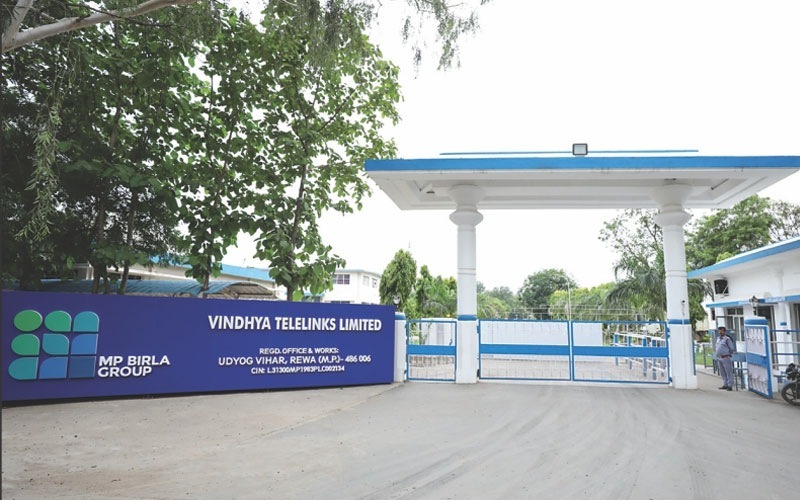
1. At a Glance
Vindhya Telelinks Ltd — the MP Birla Group’s underrated workhorse — just clocked ₹960 crore in Q2FY26 revenue and ₹59 crore profit after tax, flexing a 143% YoY profit jump that would make even Indus Towers blink. The stock trades at ₹1,615 (as of 18 Nov 2025), giving it a modest market cap of ₹1,916 crore — which is less than the market value of its investments (₹3,098 crore). Yep, you read that right — the company’s investments alone are worth more than its entire market valuation. Bhagavad Gita once said, “Karmanye vadhikaraste ma phaleshu kadachana” — do your karma, don’t chase the results. Vindhya seems to have taken that literally — building cables, EPC projects, and infrastructure across India, while the market blissfully ignores its hidden value.
Trading at 0.45x book value and a P/E of just 7.18, the company’s balance sheet looks sturdier than many hyped-up tech IPOs. Yet, with ROE stuck at 5.03% and debt at ₹1,400 crore, the Birla-backed player has more in common with a reliable but overworked government contractor than a flashy unicorn. Still, a ₹6,150 crore order book and a fresh ₹36.7 crore optical fibre expansion signal that this isn’t your average cable-laying babu anymore — this one’s tightening its wires for the next upgrade cycle.
2. Introduction
Vindhya Telelinks is the kind of company that never makes noise but quietly wires half the country. It’s like that serious student in your college who topped every exam but never showed up at any fest — you only remember him when the placements happen. Incorporated way back in 1983, the company has spent four decades connecting India, literally — from telecom cables to power infrastructure to solar PV wiring.
It’s not just cables — this company builds the roads (figuratively) that digital India runs on. Its EPC segment, which contributes about 60% of total revenue, has its fingerprints all over BharatNet, BSNL, BBNL, and other alphabet soup government projects. The rest comes from manufacturing cables — copper communication, optical fibre, solar PV, and even railway signalling cables — all made in its fortress-like facility in Rewa, Madhya Pradesh.
If that wasn’t enough, it sources its optical fibre from a sister concern (Birla Furukawa Fibre Optics Pvt Ltd) and supplies to another cousin (Birla Cable Ltd). Basically, the MP Birla family reunion happens in the form of balance sheet interlinkages. The firm’s 32% stake in Birla Corporation and 30% in Universal Cables adds to its “investment fortress.” Investors love cash cows; Vindhya’s more like a quiet elephant — it doesn’t moo, it moves heavy things slowly but surely.
3. Business Model – WTF Do They Even Do?
Vindhya operates in two main segments — EPC (Engineering, Procurement & Construction) and Cables — both of which feed into India’s infrastructure and digital backbone.
EPC Segment (60%)
This is the big one. Vindhya takes government and PSU contracts to build telecom and energy infrastructure — everything from laying fibre optic networks to connecting rural India under BharatNet. The company’s been active in over 15 states, including Punjab, Haryana, UP, Tamil Nadu, and even J&K. Basically, if you see a government van digging a road to lay a cable — there’s a decent chance Vindhya’s name is on that tender.
Cable Segment (~40%)
Here’s where it manufactures the guts of connectivity — copper and optical fibre cables, FRP rods, glass rovings, solar PV cables, and even railway signalling wires. Its Rewa plant churns out a whopping 48 lakh fibre km annually. With the recent ₹36.7 crore capex approved in November 2025, the company’s boosting capacity further, which might help it ride the next telecom or solar wave.
And guess what?
They’re also into technological collaborations. Vindhya has an exclusive agreement with Switzerland’s Huber + Suhner AG to manufacture RADOX cables in India — these are like the Rolls Royce of cables, used in high-stress environments like railways, EVs, and defence.
So, what does Vindhya really do?
Simple — they build the invisible arteries that power and connect India, then quietly send the invoice to the government.
4. Financials Overview
| Metric | Latest Qtr (Sep’25) | YoY Qtr (Sep’24) | Prev Qtr (Jun’25) | YoY % | QoQ % |
|---|---|---|---|---|---|
| Revenue | ₹960 Cr | ₹953 Cr | ₹908 Cr | 0.75% | 5.7% |
| EBITDA | ₹72 Cr | ₹48 Cr | ₹61 Cr | 50.0% | 18.0% |
| PAT | ₹59.1 Cr | ₹24 Cr | ₹59 Cr | 143% | 0.1% |
| EPS (₹) | ₹49.9 | ₹20.6 | ₹49.4 | 143% | 1% |
Annualised EPS = ₹49.9 × 4 = ₹199.6 → P/E = 1615 / 199.6 = 8.09x.
Not bad for a company trading below book value. The numbers show that Vindhya is moving from being a slow EPC player to a more stable hybrid business with consistent margins. The jump in profit is primarily due to better mix and operational efficiency.
5. Valuation Discussion – Fair Value Range (Educational Only)
P/E Method:
Industry average P/E = 19.2×
Vindhya P/E = 7.18×
Fair range = 10× to 14× of FY26E EPS (₹200) → ₹2,000 to ₹2,800 per share.
EV/EBITDA Method:
EV = ₹3,280 Cr, EBITDA (TTM) = ₹505 Cr → EV/EBITDA = 6.49×
Fair range (industry 8–10×) → Implied EV = ₹4,000–₹5,000 Cr → Fair Equity Value ≈ ₹2,300–₹2,900 per share.
DCF Method (simplified):
Assuming FCFE growth of 8%, cost of equity 13%, terminal growth 3%, fair value range ≈ ₹2,100–₹2,500 per share.
👉 Fair Value Range (Educational Purpose Only): ₹2,000 – ₹2,800.
(Disclaimer: This range is for educational discussion, not investment advice.)
6. What’s Cooking – News, Triggers, Drama
November 2025 brought some sizzle to Vindhya’s otherwise quiet kitchen. The board approved ₹36.7 crore capex to expand its optical fibre capacity, signalling bullishness despite an EU tariff slap of 8.3% on its fibre exports earlier that year. Talk about “Make in India” being tested in Europe.
On May 22, 2025, the company declared a ₹16/share dividend, renewed its Swiss tech pact, reappointed its Managing Director, and changed auditors — all in one meeting. That’s corporate housekeeping on steroids.
In March 2025, it acquired 100% of Birla Visabeira, potentially a strategic step to consolidate its cable ecosystem. CARE Ratings reaffirmed its A+ (Negative) rating in July 2025, citing liquidity pressure — because let’s face it, EPC receivables are like Indian government reimbursements: they always come, but never on time.
Meanwhile, its order book stands at a massive ₹6,150 crore. That’s over 3x its annual revenue, ensuring that Vindhya’s engineers won’t be taking long weekends anytime soon.
7. Balance Sheet
| Metric | Mar’23 | Mar’24 | Mar’25 | Sep’25 |
|---|---|---|---|---|
| Total Assets | ₹6,068 Cr | ₹6,787 Cr | ₹7,723 Cr | ₹8,107 Cr |
| Net Worth (Equity + Reserves) | ₹3,412 Cr | ₹3,973 Cr | ₹4,086 Cr | ₹4,249 Cr |
| Borrowings | ₹668 Cr | ₹493 Cr | ₹1,168 Cr | ₹1,400 Cr |
| Other Liabilities | ₹1,989 Cr | ₹2,320 Cr | ₹2,469 Cr | ₹2,459 Cr |
| Total Liabilities | ₹6,068 Cr | ₹6,787 Cr | ₹7,723 Cr | ₹8,107 Cr |
Commentary:
- Borrowings jumped back to ₹1,400 Cr — looks like someone found the debt drawer again.
- Investments crossed ₹3,800 Cr — almost twice its market cap.
- The company’s asset base is expanding faster than telecom data usage post-Jio.
8. Cash Flow – Sab Number Game Hai
| Year | CFO | CFI | CFF |
|---|---|---|---|
| FY23 | ₹34 Cr | -₹30 Cr | ₹28 Cr |
| FY24 | ₹441 Cr | -₹41 Cr | -₹284 Cr |
| FY25 | -₹590 Cr | ₹6 Cr | ₹528 Cr |
The FY25 negative operating cash flow screams working capital stress — typical of EPC-heavy firms with delayed government payments. Financing inflow saved the day, but let’s not romanticize debt-funded operations. Still, Vindhya’s balance sheet remains stable — they just need to collect their dues faster than BSNL builds towers.
9. Ratios – Sexy or Stressy?
| Metric | FY23 | FY24 | FY25 |
|---|---|---|---|
| ROE | 6% | 5% | 5.03% |
| ROCE | 8% | 11% | 7.64% |
| P/E | 7.18× | 9.0× | 7.18× |
| PAT Margin | 6.4% | 7.0% | 5.0% |
| Debt/Equity | 0.17 | 0.12 | 0.33 |
Vindhya is more “stable uncle” than “fitness influencer.” ROE and ROCE are unflattering, but leverage is manageable. PAT margins dip when EPC revenues dominate — because in government contracting, margin is more a negotiation than a math.
10. P&L Breakdown – Show Me the Money
| Year | Revenue | EBITDA | PAT |
|---|---|---|---|
| FY23 | ₹2,900 Cr | ₹281 Cr | ₹185 Cr |
| FY24 | ₹4,088 Cr | ₹297 Cr | ₹283 Cr |
| FY25 | ₹4,054 Cr | ₹259 Cr | ₹203 Cr |
EBITDA margins hover between 6–7%, like a student who never fails but never tops. Still, a consistent ₹4,000+ crore revenue club means Vindhya’s not playing small-ball anymore.
11. Peer Comparison
| Company | Revenue (Cr) | PAT (Cr) | P/E | ROE (%) |
|---|---|---|---|---|
| Indus Towers | ₹31,520 | ₹9,358 | 11.6 | 32.5 |
| HFCL | ₹3,727 | ₹28 | 385.1 | 4.4 |
| Bondada Engineering | ₹2,307 | ₹166 | 27.7 | 36.2 |
| Vindhya Telelinks | ₹4,136 | ₹267 | 7.2 | 5.0 |
Vindhya’s valuation is the cheapest in the sector. HFCL’s PE is 385 — Vindhya’s is 7. If this were a party, Vindhya would be the sober one who built the sound system while others are dancing on the table.
12. Miscellaneous – Shareholding & Promoters
| Shareholder | % Holding |
|---|---|
| Promoters (MP Birla Group) | 43.55% |
| FIIs | 1.46% |
| DIIs | 8.27% |
| Public | 46.73% |
Top Institutions: Nippon Life India Trustee (8.23%), Aequitas Equity Scheme I (~1.3%)
Promoter Roast: The MP Birla family loves circular shareholding. Universal Cables owns 30% of Vindhya, and Vindhya owns 30% of Universal Cables. That’s not cross-holding — that’s corporate kabaddi.
13. Corporate Governance – Angels or Devils?
Vindhya scores well on transparency. No pledges, no shady related-party loans. In FY25, new auditors were appointed, the MD was reappointed, and dividend was declared. CARE’s “Negative outlook” rating doesn’t imply scandal — it just means cash flow timing issues, which is practically a qualification criterion for Indian EPC firms. The board remains old-school, conservative, and allergic to social media hype. In short, angels in form, babus in spirit.
14. Industry Roast and Macro Context
Telecom infrastructure is the Indian government’s favourite yo-yo — one day it’s “Digital India,” next day it’s “budget constraints.” EPC players like Vindhya dance to this tune. Fibre rollout remains strong thanks to 5G, BharatNet, and defence projects, but private telcos aren’t exactly splurging.
On the cable side, competition is brutal — HFCL, Sterlite, and newer solar cable entrants all fight for the same tender pie. Add EU anti-dumping duties, and exports take a hit. Yet, demand from power distribution, smart grids, and solar EPCs keeps the domestic business humming. The industry’s future depends less on hype and more on execution. Vindhya, thankfully, knows how to execute.
15. EduInvesting Verdict
Vindhya Telelinks is that quiet contractor who built half the telecom backbone but still doesn’t get invited to CNBC panels. It’s undervalued, overworked, and underappreciated. The numbers say “steady operator,” not “shooting star.”
SWOT Analysis
Strengths:
- Backing of MP Birla Group (strong legacy + balance sheet discipline)
- Massive ₹6,150 Cr order book ensuring revenue visibility
- Deep-rooted presence in telecom EPC; strong client base (BSNL, Jio, Railways)
- Market value of investments > Market Cap (hidden gem factor)
Weaknesses:
- Low ROE and ROCE due to EPC-heavy margins
- High working capital cycle (debtors ~153 days)
- Dependence on government contracts with slow cash conversion
Opportunities:
- 5G and BharatNet rollouts, solar infra, and smart cities
- RADOX tech collaboration could open premium cable markets
- Potential value unlocking from investment holdings
Threats:
- EU duties affecting export competitiveness
- Delays in project receivables impacting liquidity
- Stiff competition from Sterlite, HFCL, and newer EPC entrants
In summary — Vindhya Telelinks is not a growth rocket; it’s a slow, armoured train hauling government orders, dividends, and quiet profits across India’s digital map. As investors chase shiny “AI” themes, Vindhya continues to literally connect the country — one fibre at a time.
Written by EduInvesting Team | 18 Nov 2025
SEO Tags: Vindhya Telelinks, MP Birla Group, Optical Fibre, EPC, Cables, BharatNet, Infrastructure, India