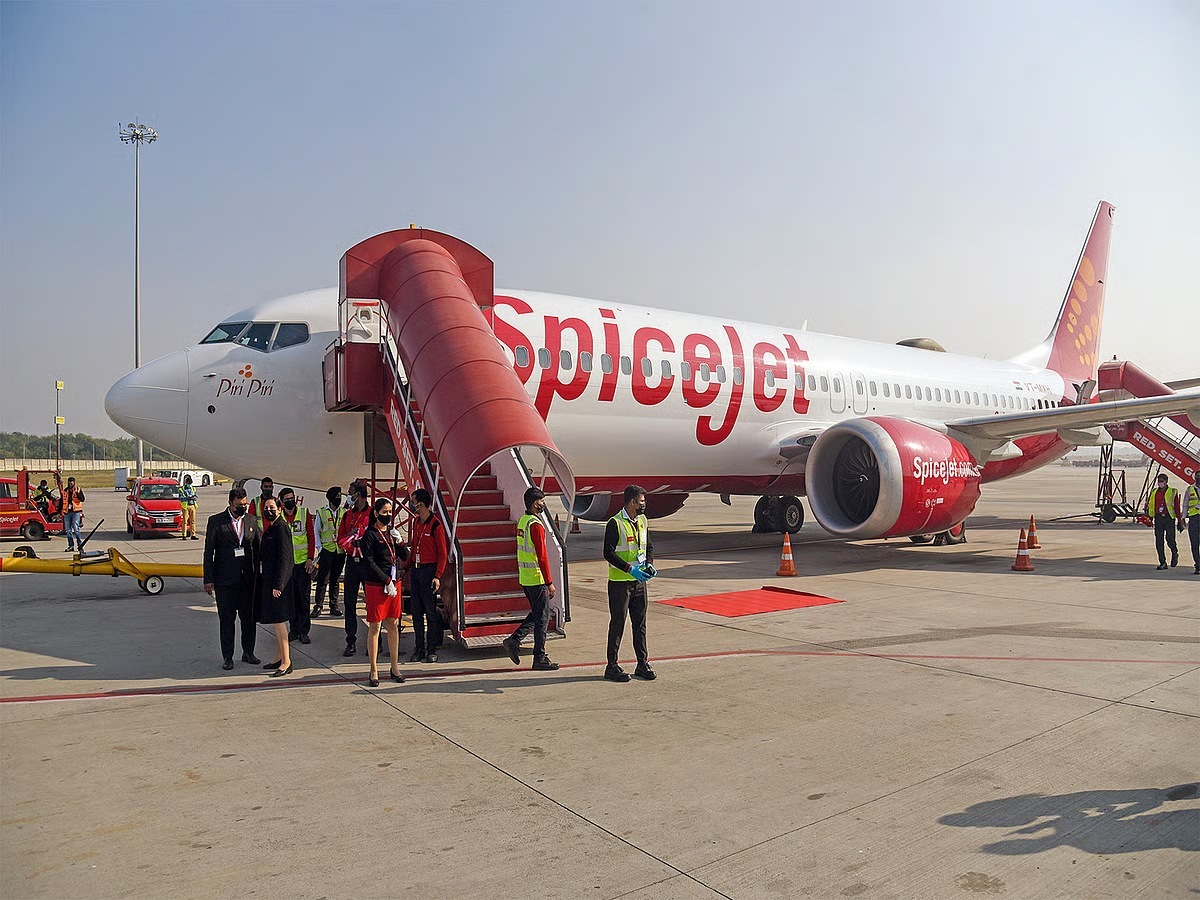
1. At a Glance
SpiceJet Ltd (BSE: 500285, NSE: SPICEJET) – India’s once-fiery low-cost airline that promised “Red. Hot. Spicy.” flights – now seems to be serving turbulence with extra masala. As of November 14, 2025, the stock closed at ₹35.5, giving it a market cap of ₹5,015 crore. The company reported a Q2FY26 standalone loss of ₹634 crore on sales of ₹781 crore — that’s a whopping 58% negative operating margin. Meanwhile, it’s sitting on ₹4,209 crore of debt, with a ROCE of 9.1%, and an EPS of ₹ -3.65.
It’s like the Bhagavad Gita meets aviation finance — “Karmanye vadhikaraste ma phaleshu kadachana” — SpiceJet has done plenty of karmas (leases, settlements, fund raises), but the phal (results) are nowhere to be seen yet.
Three months return? +10%. One-year return? -36%. So yes, investors flying with SpiceJet are now well-versed in both economy turbulence and portfolio turbulence.
2. Introduction
Once upon a runway, SpiceJet was the darling of Indian skies. It had cheap tickets, funny in-flight announcements, and an aggressive market presence. Then reality struck — a fleet grounded, a promoter legal war, and balance sheets that looked like they’d been through an engine fire.
In its golden days (FY18-FY19), it flew with swagger and profits. Fast-forward to FY25, and it’s running survival drills more than flights. The company’s sales crashed from ₹8,869 crore in FY23 to ₹4,565 crore TTM FY25, and losses have been recurring like an annoying boarding announcement — “Your flight is delayed due to financial turbulence.”
While rivals like IndiGo (₹2.28 lakh crore market cap) are flying first-class with 17% ROCE, SpiceJet’s engines are sputtering to even taxi to profitability.
But give credit where it’s due — few Indian companies have survived so many near-bankruptcy experiences. SpiceJet has been grounded, revived, sued, settled, and now plans to double its fleet again by FY26-end. Every time you think it’s done for, it reappears with a “Press Release: We’re back, baby!”
3. Business Model – WTF Do They Even Do?
At its core, SpiceJet is a low-cost airline, primarily engaged in passenger air transport and cargo services. Think of it as the budget dhaba of the sky — less comfort, more convenience, and definitely more drama.
Segments:
- Air Transport Services (~96% of revenue) – Regular passenger flights and add-ons like seat selection, food, and baggage.
- Freighter & Logistics (4%) – Operated under SpiceXpress, its air cargo and logistics arm (now demerged).
The company’s fleet as of late FY25 includes Boeing 737-700/800/900ERs, 737 MAX 8s, and Q400s. Unfortunately, out of 54 aircraft, 21 were non-operational due to unpaid lease rentals. So yes, almost 40% of their planes are basically “parked assets.”
In FY23, they sold off