1. At a Glance
If steel had a sense of humour, it would probably laugh watching Rolex Rings Ltd right now — a ₹3,050 crore market cap auto-components heavyweight that’s literally forged its way into both glory and controversy. Once the pride of Rajkot’s foundry belt, Rolex is one of India’s top five forging companies and a global supplier to automakers like Ford, Schaeffler, and SKF.
But the latest quarterly numbers (Q2 FY26) reveal a company running on mixed fuel — solid fundamentals but an unexpected detour into corporate drama. Sales for the quarter dipped to ₹271 crore, down 9.6% YoY, with PAT falling ~10% YoY to ₹44 crore. And just when investors were dozing off, a board meeting note dropped like a hammer: a ₹2,278.6 million bank demand and ₹506 million provision recognised in the books.
The cherry on top? A stock split (10-for-1) right before this chaos. Market sentiment reacted faster than hot metal on a cold die — the stock tanked 45% in the past year.
Still, Rolex Rings remains a beast in operating efficiency — ROCE of 22.8%, ROE of 19%, Debt/Equity 0.01x, and a near debt-free balance sheet. But as every desi investor knows, even the best machines need regular lubrication — and Rolex’s bearings are squeaking from stress.
2. Introduction – From Rajkot to Ringlords, and Back to Reality
The story of Rolex Rings is the perfect mix of metallurgy, market cycles, and mild masochism. Founded decades ago in Gujarat’s industrial heartland, the company turned raw steel into precision rings that power cars, trains, and windmills. You name it — if it rotates, Rolex probably has a part in it.
But like every desi hero who gets too comfortable after success, Rolex is facing its midlife crisis. The forging legend that supplied to 15 countries — from Germany to Thailand — is now grappling with a domestic growth hangover and European slowdown. While export revenue (49% of total) has cooled, the domestic business (51%) has picked up some slack.
In FY25, Rolex generated ₹1,155 crore in sales with ₹174 crore PAT. The numbers look decent on paper, but the stock tells another story — down nearly 45% YoY and 22% in the last six months. For a company with zero pledges, 99x interest coverage, and 90% renewable power dependency, that’s a puzzling punishment.
Maybe investors are spooked by the ₹2,278.6 million “bank demand” revelation — a fancy way of saying, “The bank wants its money back, and we’re figuring it out.” The management did the sensible thing by provisioning ₹506 million, but in Dalal Street terms, this is like serving a biryani with extra masala — tasty but suspicious.
So, should we call this a speed bump or a slow puncture? Let’s dive in.
3. Business Model – WTF Do They Even Do?
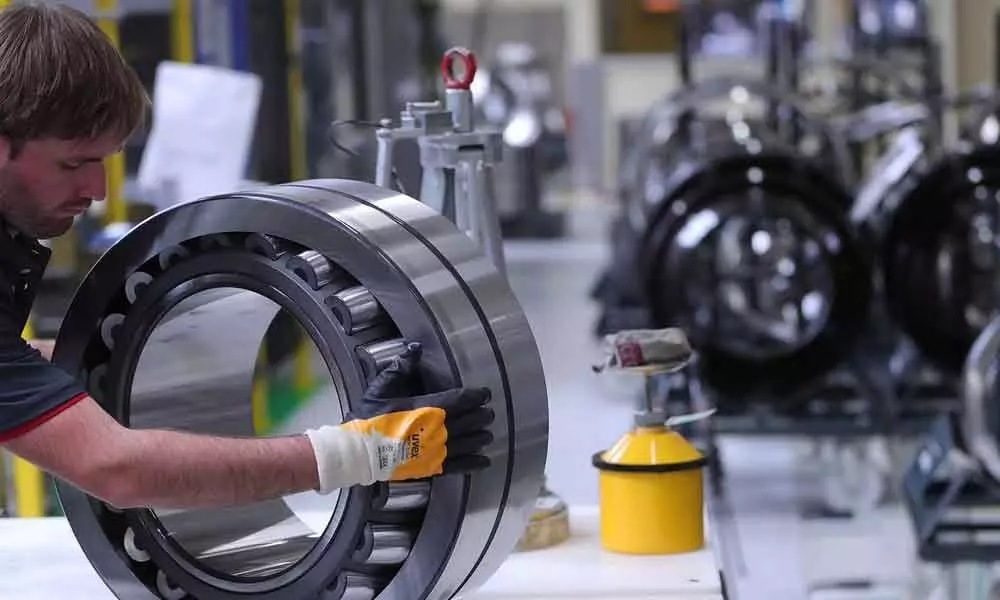
Rolex Rings manufactures forged and machined components — essentially turning hot metal into precision-engineered rings, gears, and bearing components. Sounds simple, but it’s a symphony of fire, force, and forging finesse.
They cater to:
- Auto Components (54% of revenue, Q1 FY25): Engine parts, transmission components, chassis elements, and gear blanks — basically, everything your car depends on but you never see.
- Bearing Rings (46% of revenue): TRBs, CRBs, SRBs, and other alphabet soup of rolling bearings that keep machines spinning.
The product lines serve four key industries:
- Passenger Vehicles (46%)
- Commercial Vehicles (27%)
- Industrial Machinery (18%)
- BEV & Hybrid (9%)
With three massive plants in Rajkot, Rolex operates 24 forging lines and 594 spindles with 1,65,000 MTPA forging capacity and 75 million machining capacity annually.
Now here’s the twist — despite being deeply industrial, Rolex is surprisingly green. 90% of its energy comes from renewable sources — 8.75 MW wind + 15.5 MW solar, saving ₹13.5