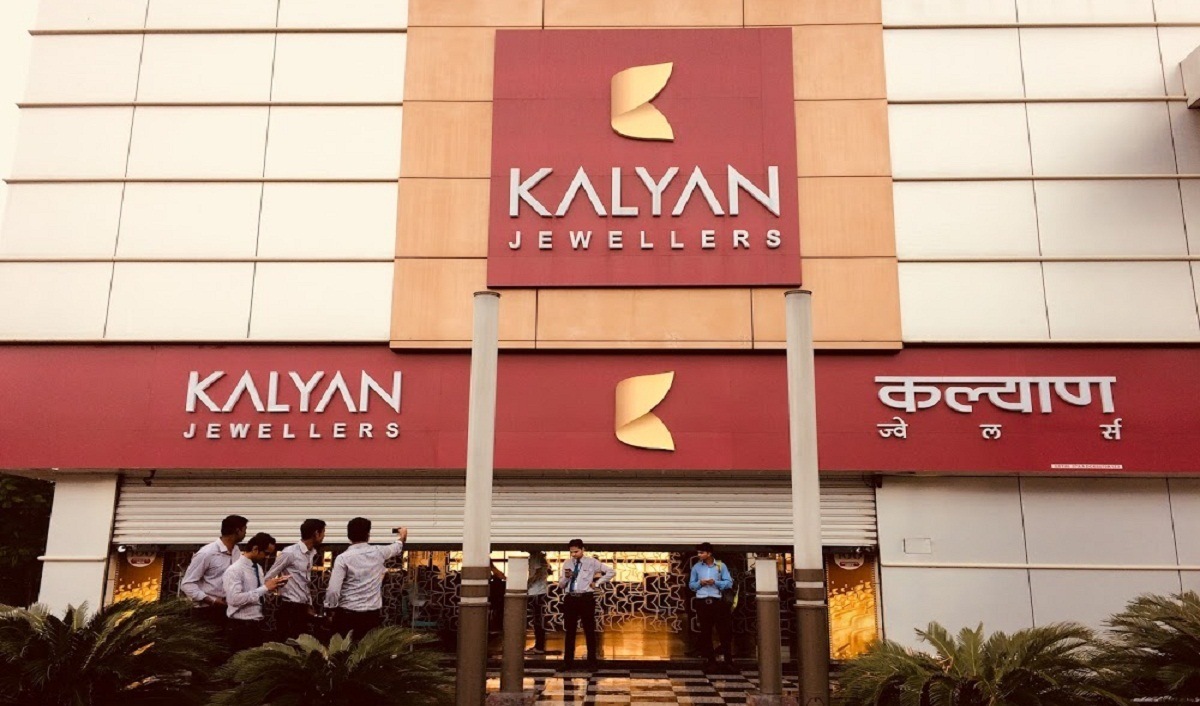
(Where gold shines brighter than promoter pledges and margins sparkle just enough to distract from debt.)
1. At a Glance
Let’s start with the kind of bling SEBI can’t regulate — numbers! Kalyan Jewellers India Ltd, trading at ₹513 (as of 7th Nov 2025), sits on a glittery market cap of ₹52,949 crore. This gold bazaar behemoth reported a Q2 FY26 revenue of ₹7,856 crore and a PAT of ₹261 crore, a massive 99.5% YoY jump in profit. That’s not a sparkle — that’s a blinding flash!
Operating margin stood at 6%, which for a jeweller in India basically means “ghar sambhal gaya.” The stock P/E of 56.9 is nearly double the industry average P/E of 29.8, proving investors believe Kalyan’s karigar is secretly a magician. The ROE of 16% and ROCE of 15% suggest the company’s gold inventory is working harder than most MBA interns.
Yet, it’s not all royal gold polish — the stock is down 26% over the past year (Titan fans, stop smiling), trading at 9.9x book value, and debt remains ₹5,335 crore, roughly equal to the weight of all their catalogues combined. Still, they keep paying dividends with a yield of 0.29%, because Kalyan’s motto seems to be: “Thoda sona lo, thoda return bhi lo.”
So, what happens when an Indian jewellery empire meets scale, debt, and a dash of global ambition? Buckle up, we’re opening this treasure chest — audit style.
2. Introduction – The Great Indian Gold Rush, Rebranded as Retail
Once upon a time in Thrissur, a man named T.S. Kalyanaraman decided to turn weddings, temples, and bad investment decisions into a ₹50,000+ crore retail empire. Fast-forward to FY26, and Kalyan Jewellers has become one of India’s most recognizable gold retailers — part emotional brand, part wedding essential, part debt repayment plan.
From the outside, it’s a family-run empire wrapped in shining satin and “Mahurat” ads. Inside, it’s a high-velocity, margin-juggling, inventory-heavy business that dances between weddings, seasons, and GST filings.
Their 46% revenue growth between FY22 and FY24 wasn’t just from selling more necklaces — it came from an expansion blitz. Showrooms grew from 154 to 240+, including the Middle East, where Kalyan seems to be as common as a NRI wedding invite.
While Titan sells dreams, Kalyan sells traditions — gold bangles with a side of ROI. But can emotion-driven demand and FOCO (Franchisee Owned, Company Operated) dreams sustain margins? Or will the “MyKalyan” network soon become “MyMargin”? Let’s decode.
3. Business Model – WTF Do They Even Do?
Kalyan’s business model can be summarized in three words: gold, trust, and timing.
They design, manufacture, and sell gold, diamond, and studded jewellery — covering the entire wedding cycle from haldi to honeymoon. Their portfolio screams diversity:
- Wedding jewellery (Mahurat) – for brides who believe in carats and karma.
- Aspirational and antique (Mudhra, Rang) – handcrafted drama for people who want to look “royal but relatable.”
- Budget lines (Aishwaryam) – for those whose love is eternal but EMIs aren’t.
- Studded collections (Nimah, Tejasvi, Ziah) – diamond bling for Instagram reels.
- Digital-first brand (Candere) – where millennials buy “lightwear” jewellery that costs less than their EMI.
With over 204 Kalyan showrooms in India, 36 in the Middle East, and 13 Candere outlets, the company operates a total retail area exceeding 7.5 lakh sq ft — that’s more gold than all your WhatsApp wedding invites combined.
And the secret sauce? A hyperlocal model. They source designs and jewellery from regional artisans through 13 procurement centres, customizing collections for local tastes. South India gets temple jewellery, North India gets bridal sets,