1. At a Glance
Prince Pipes & Fittings Ltd (NSE: PRINCEPIPE) — a ₹3,485 crore market cap polymer powerhouse — is having what we’d call a “PVC hangover.” The company, once a market darling in the piping sector, is now dripping slower than a leaking bathroom tap. Q2 FY26 results show quarterly sales at ₹595 crore, down 4.4% YoY, and a net profit of ₹14.6 crore, down 0.5% YoY. The stock trades around ₹315, a far cry from its ₹475 high — proving that plumbing profits can sometimes get clogged.
Despite its 8 manufacturing facilities, global tie-ups (Lubrizol, Hauraton, Skolan Safe), and expansion into the bathware business through the Aquel acquisition, the company’s return ratios remain under pressure — ROE at 2.73% and ROCE at 3.85%, which is basically the financial equivalent of a slow drip from a rusty tap.
At 150x P/E, the market is clearly valuing it like a premium imported faucet — all shine, little flow. The only good news? Zero promoter pledges, a steady 60.9% promoter holding, and the new Bihar plant operational from Q1 FY26. But let’s just say the water pressure in the earnings pipe is currently… underwhelming.
2. Introduction
Every home has that one pipe that looks good from the outside but leaks when you least expect it. Prince Pipes is that corporate version. Born in 1987, this Mumbai-based company has grown from humble PVC origins to become an integrated multi-polymer player making everything from CPVC and UPVC to HDPE and PPR pipes.
On paper, they’re “integrated piping solution providers.” In reality, they’re fighting for elbow room in a market dominated by Supreme Industries, Astral, Finolex, and Time Technoplast — all of whom seem to be flexing sturdier pipes. Prince Pipes’ sales over the last five years have grown a sluggish 9% CAGR, and profits have been slipping like soap on a wet floor.
Their bathware dreams looked steamy — acquiring Aquel for ₹55 crore and launching fancy brands like Aurum, Titanio, Platina, Tiara, and Marquise. But investors haven’t been impressed. The stock’s down 32% in a year, turning bathroom luxury into a cold shower.
Still, there’s a silver lining — a nationwide network of 1,500+ channel partners, 7,200 SKUs, and a presence in both North and South India. The company continues to push new products like Skolan Safe (premium drainage systems with German tech). So while profits are trickling, the company’s product pipeline is at least well… piped.
3. Business Model – WTF Do They Even Do?
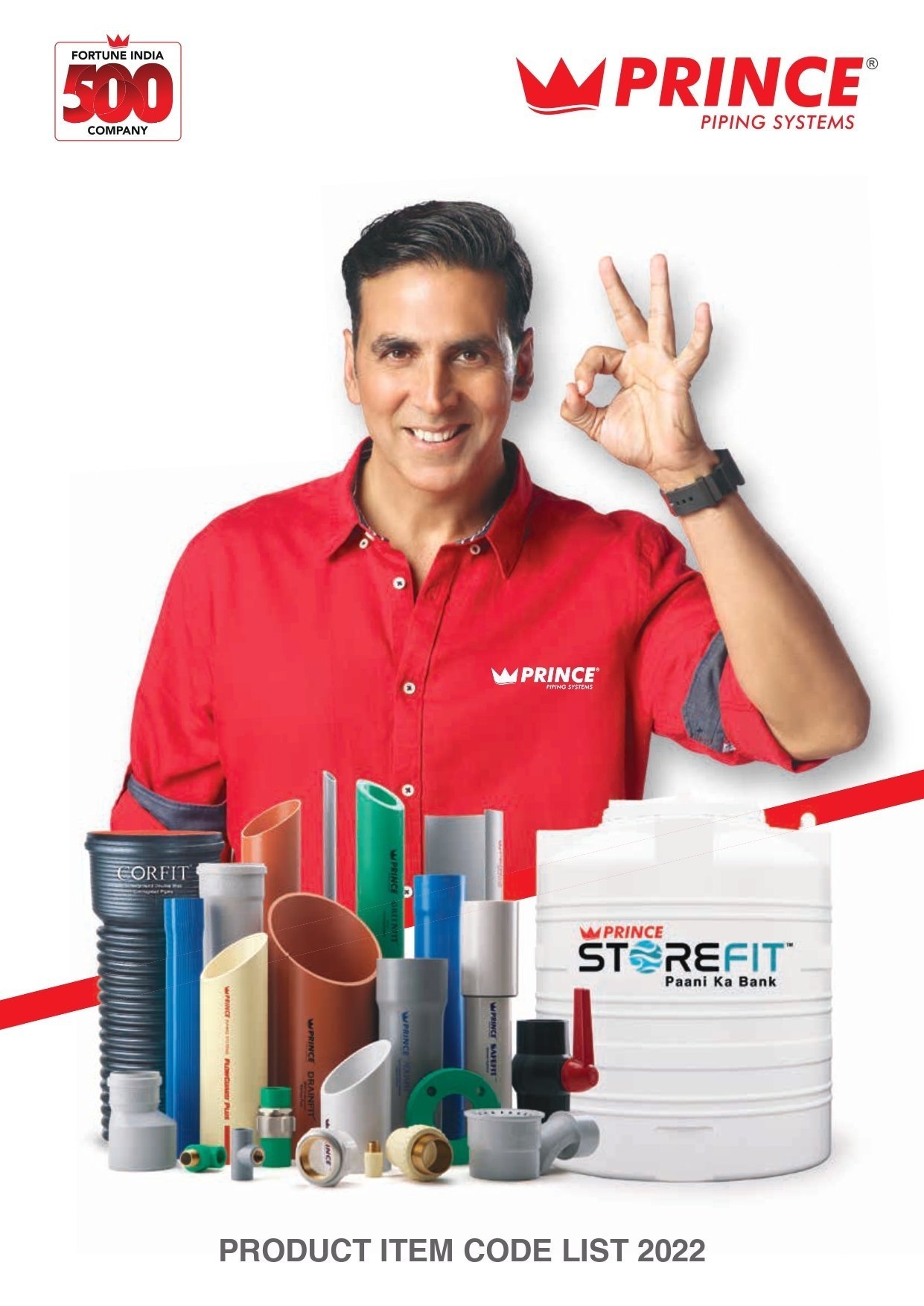
Prince Pipes’ business is simple — they make pipes, fittings, and tanks from various polymers (CPVC, UPVC, HDPE, PPR, and LLDPE). Their customers include plumbers, farmers, and builders — basically, anyone who needs water to move from point A to B without turning their house into a swimming pool.
They operate two major brands:
- Prince (main brand) – targets urban infrastructure and modern plumbing.
- Trubore – aimed at the agri and borewell segments, because farmers also deserve classy water flow.
The product bouquet includes plumbing, sewage, cable ducting, storage, and industrial pipes — plus the recently acquired bathware division.
Their collaborations are impressive — Lubrizol (USA) for CPVC compounds, Hauraton (Germany) for drainage systems, Skolan Safe for low-noise pipes, and Tooling Holland for high-precision molds.
It’s like the United Nations of polymers — except half the members are fighting margin wars.
The company’s strategy is clear: expand product portfolio, penetrate Tier 2 and 3 cities, and keep upgrading plant capacity. With 8 plants across India (Athal, Dadra, Haridwar, Kolhapur, Jaipur, Telangana, Chennai, and