1. At a Glance
Imagine Salman Khan smashing a wall tile in a “Being Human” ad — that’s roughly the energy Somany Ceramics brings to your bathroom and portfolio these days. The ₹1,800 crore market-cap company, once the prince of polished vitrified pride, is now wrestling with rising gas prices, muted demand, and a P/E ratio (31.5x) that screams optimism louder than a Diwali ad campaign.
As of Q2 FY26 (Sep’25), Somany clocked ₹685 crore in sales and ₹12 crore PAT, which looks decent until you realize it’s down 12.6% QoQ. Revenue grew a mild 2.8% QoQ, so basically the company ran harder to stay in the same place — like a treadmill, but with tiles.
The ROCE of 11.5% and ROE of 8.17% tell us this isn’t a “flooring the accelerator” story — it’s more like a slow drive through Tier-4 markets on a rainy day. Debt stands at ₹327 crore, and with a current ratio barely above 1, liquidity feels tighter than a builder’s margin in a new township project.
Stock performance? Brutal. Down -34.9% YoY, even Kajaria (the sector’s elder cousin with a ₹17,930 crore cap) must be smirking. But hey — tiles crack, not dreams, right?
2. Introduction: A Tile of Two Halves
Once upon a time, tiles were boring. Then Somany came along and told middle-class India: “Why settle for white when you can have ‘Somany Durastone Beige Opal Marble Finish’?”
Somany Ceramics has built its identity as the complete décor solution brand — from ceramic wall and floor tiles to bath fittings and sanitary ware. Its glossy catalog could make even your plumber feel fancy. Yet beneath the glamour lies a story of tight margins and endless competition.
The company has six manufacturing facilities and multiple joint ventures. North India is its fortress — contributing 46% of FY23 revenue — while the rest of India politely chips in. The capacity game is serious: over 80 million square meters (MSM) of tiles produced annually. But capacity means nothing if consumption slows, and the housing slowdown post-COVID has been like spilling acid on fresh grout.
Somany isn’t just making tiles; it’s juggling energy costs, working capital, dealer incentives, and marketing spends (yes, 2% of revenue just for Salman Khan’s smile). Meanwhile, peers like Kajaria have mastered the “premium + efficiency” game, leaving Somany hustling harder in mid-tier towns.
Still, this brand’s survival instinct is strong. You don’t last 73 years (since 1952) in Indian manufacturing without learning how to handle cracks — both literal and metaphorical.
3. Business Model – WTF Do They Even Do?
Alright, let’s break this down for the lazy investor:
Somany Ceramics sells decor dreams in hard, shiny form. The portfolio spans:
- Ceramic Tiles (34%) – The regular wall and floor tiles. Bread and butter.
- Polished Vitrified Tiles (26%) – Premium floor tiles that look like marble but cost like compromise.
- Glazed Vitrified Tiles (29%) – Mid-luxury sheen for those who want “Italian looks” without the visa.
- Sanitary Ware (6%) – Toilets, basins, and washbowls — where all analysis eventually ends up.
- Bath Fittings (4%) – Taps, mixers, and all those shiny chrome things you forget exist until they leak.
The company’s multi-brand portfolio — Duragres, Glosstra, Vitro, Vistoso, and more — covers every budget and ego segment.
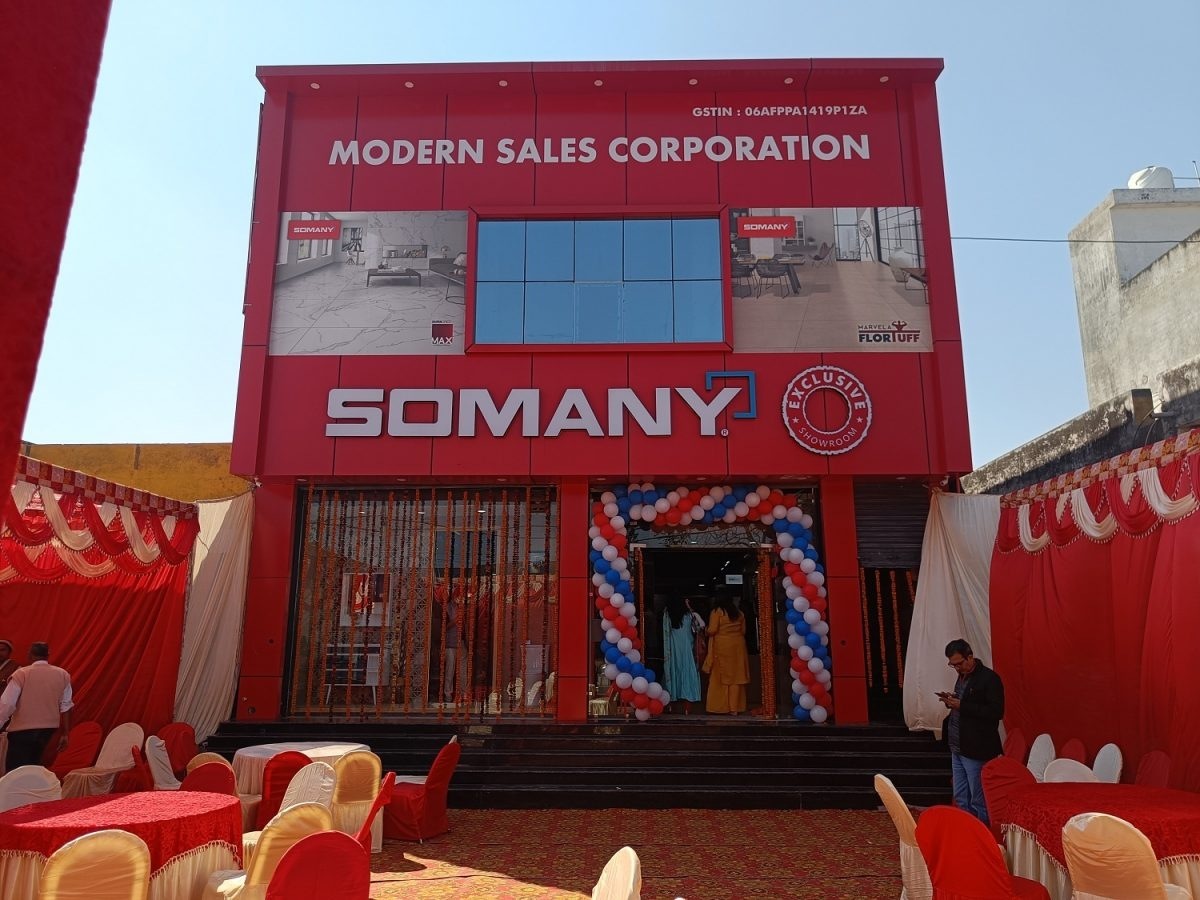
How do they sell? Through a 3,000+ dealer network and 450+ showrooms, spread widely across the country. In Q3FY24, Somany expanded deeper into Tier-3 and Tier-4 towns, where aspirations rise faster than