1. At a Glance
Once known as Lloyds Steels Industries (the OG boiler builder of the 80s), the company has now rebranded as Lloyds Engineering Works Ltd (LEWL) — because, let’s face it, “Steels” wasn’t sexy enough when you’re signing drone MoUs with Poland.
As of Nov 2025, the stock trades at ₹ 58.7, giving it a market cap of ₹ 8,128 crore. Quarterly revenue jumped to ₹ 317 crore, and PAT hit ₹ 54 crore, translating into an EPS of ₹ 0.44. That annualises to ₹ 1.76, implying a lofty P/E ≈ 34x on FY26 run-rate earnings.
In the last six months, the stock is up 17.6 %, but down 12 % in three months — basically the investor equivalent of doing cardio and still gaining fat. The company’s OPM stands at 14.9 %, Debt ₹ 189 cr, Debt-to-Equity 0.16, and ROE/ROCE are still “coming soon” to a ratio table near you.
The latest flex? A ₹ 613 crore + € 18.26 million contract from SAIL-IISCO for a 4.2 MTPA pellet plant. With an order book of ₹ 904 crore, drones, naval tie-ups, and a rights issue worth ₹ 1,050 crore, Lloyds now moonlights as India’s engineering all-rounder.
2. Introduction
Remember when Lloyds was just another sleepy boiler fabricator from Thane? Fast-forward to 2025 — they’re doing UAVs with Poland, propulsion with Italy, pellet plants for SAIL, and an ESOP party big enough to make startup bros jealous.
This company has quietly evolved from “weld-and-ship” to “design-integrate-deliver,” covering everything from nuclear reactors to naval gear. Their rebrand from Lloyds Steels Industries Ltd to Lloyds Engineering Works Ltd (w.e.f. 25 July 2023) wasn’t just marketing fluff — it was signalling: “Boss, we’ve entered the multi-engine zone.”
Yet, while expansion brings clout, it also brings complexity. Promoters have shuffled shareholding like IPL squads (down from ~60 % in FY24 to 49 % now), and a ₹ 1,050 crore rights issue in June 2025 has diluted equity to ₹ 132 crore.
So, what exactly is Lloyds building, and are these machines minting margins — or just noise? Let’s unbolt the numbers.
3. Business Model – WTF Do They Even Do?
LEWL is a one-stop fabrication circus catering to Power, Steel, Hydrocarbon, Marine, and Nuclear sectors.
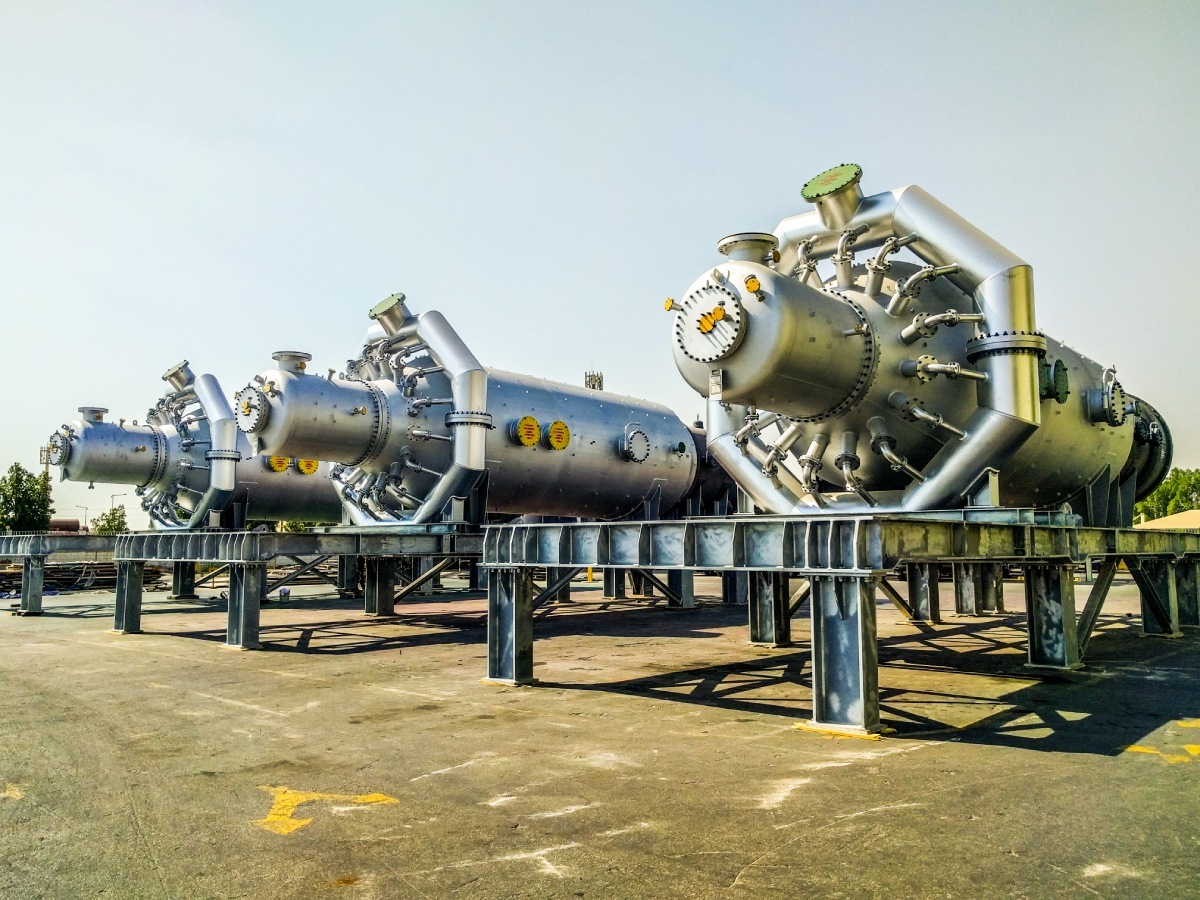
- Hydrocarbon Sector: Designs pressure vessels, heat exchangers, and waste-heat recovery boilers. In short, they build the metal intestines of refineries.
- Steel Sector: Rolling mills, melting shops, and miscellaneous heavy gear. Basically, if it rolls, melts, or leaks, Lloyds has welded it.
- Nuclear Power: Registered with BARC and NPCIL — supplying specialised seismic-tested equipment where one loose bolt can cause national news.
- Marine & Defence: Makes fin stabilisers, steering gear, and now, through MoUs with Fincantieri (Italy) and FlyFocus (Poland), is flirting with drones and naval propulsion systems.

One Response
4. Financial overview – sept 24 and june 25 numbers are same but QoQ ratio’s different, needs a check