Birla Corporation Ltd Q2FY26 – 71% EBITDA Jump, Mukutban Magic & a ₹4,335 Cr Cement Binge Plan: When the MP Birla Group Turns Its Kilns into Money Printers
Date of Publishing -
Spotted a factual error — a wrong number, date, or fact? Tell us and we will check the source.
1. At a Glance
If cement had a personality, Birla Corporation would be that old uncle who still lifts sacks like a 25-year-old — slow, sturdy, and surprisingly strong when the time comes. The MP Birla Group’s flagship cement and jute maker just dropped its Q2FY26 results with a bang that echoed across its 11 cement plants.
Revenue stood at ₹2,207 crore this quarter, up 13% YoY, while net profit jumped 459% YoY to ₹90.5 crore. EBITDA came in at ₹332 crore — a healthy 71% surge. The stock, priced at ₹1,217, carries a modest P/E of 17.8, far below UltraTech’s Himalayan 47x, suggesting the market still thinks it’s the “cousin from Rewa” rather than a true cement prince.
With a market cap of ₹9,378 crore, ROCE of 7.08%, ROE of 4.79%, and a dividend yield of 0.82%, Birla Corp is the conservative elder sibling in a room full of caffeine-charged cement teens. But don’t yawn yet — a ₹4,335 crore capex bomb and a 27.6 MTPA expansion plan by FY29 may just change that family dynamic.
2. Introduction
Once upon a time, the MP Birla Group was known more for its Kolkata legacy, lawsuits, and the mysterious Priyamvada Devi Birla estate drama than for profit charts. But Birla Corporation Limited (BCL) has quietly morphed into one of India’s key cement hustlers, grinding limestone while dodging boardroom boulders.
The cement industry is like a desi reality show: everyone claims to be “setting new benchmarks,” yet half the game is about who can manage power costs, coal linkages, and logistics better. Birla Corp’s recent quarters prove it’s learning to play smarter.
From premium brands like Ultimate Ultra and Perfect Plus to its underdog jute business that still clings to nostalgia and Calcutta’s colonial warehouses, BCL is balancing legacy with expansion. Mukutban — its shiny 3.89 MTPA plant in Maharashtra — has turned out to be more than just a capacity stat. It’s now contributing meaningfully to EBITDA, thanks to WHRS (Waste Heat Recovery System) savings and coal from its own captive mine.
And while giants like UltraTech and Shree Cement flex in the ₹1 lakh crore club, Birla Corp is quietly eyeing ₹10,000 crore in annual sales and plotting its next big leap to 30 MTPA capacity by FY27. Slow and steady, or just sneaky smart? Keep reading.
3. Business Model – WTF Do They Even Do?
Birla Corporation is exactly what its name screams — a corporation that loves cement. 95% of its revenue in FY23 came from cement, with the remaining 5% from jute goods (yes, jute — that brown fibre your grandmother’s shopping bag was made from).
The company’s cement universe is divided into three personalities:
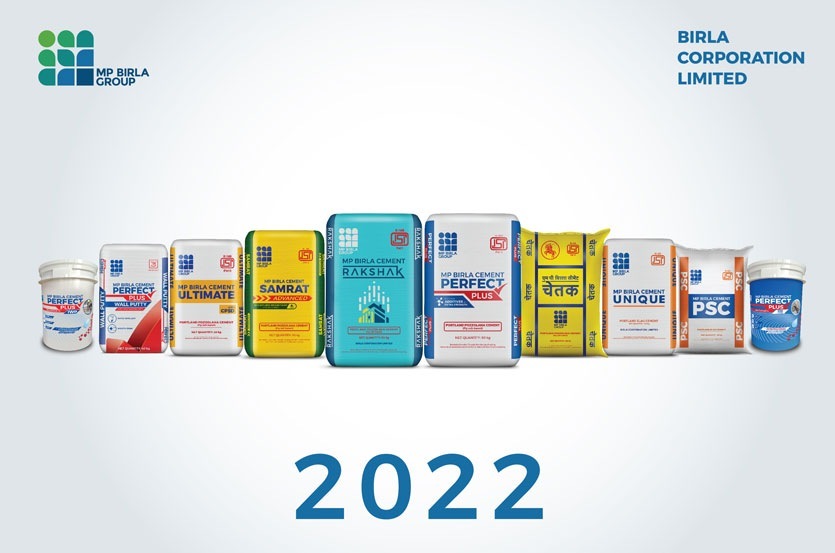
Popular Cement:Chetak, PSC, Samrat — your everyday cement that builds India’s walls, roofs, and arguments with masons.
Premium Cement:Unique, Ultimate, Ultimate Ultra, Perfect Plus — the aspirational range that lets dealers charge a few rupees extra while convincing you it’ll make your plaster immortal.
Institutional Cement:Concrecem, Multicem — for big government or private infra projects that actually read tender documents.
It also makes wall putty and construction chemicals — the supporting cast that gives cement its Instagram filter finish.
The company operates 11 plants across India with 20 MTPA installed capacity, thanks in part to its acquisition of Reliance Cement Company in 2016 for ₹4,800 crore. The Mukutban plant launched in FY23 added nearly 4 MTPA to the tally, while the Gaya plant in Bihar is now on the assembly line.
In a market where UltraTech and Ambuja dominate volumes, Birla Corp’s differentiation lies in regional focus — 60% of its cement sells in Central India (Madhya Pradesh, Uttar Pradesh), 20% in East, and the rest up North. With 9,800 dealers and 37,500 sub-dealers, its distribution web could rival the tangle of wires outside an Indian railway station.