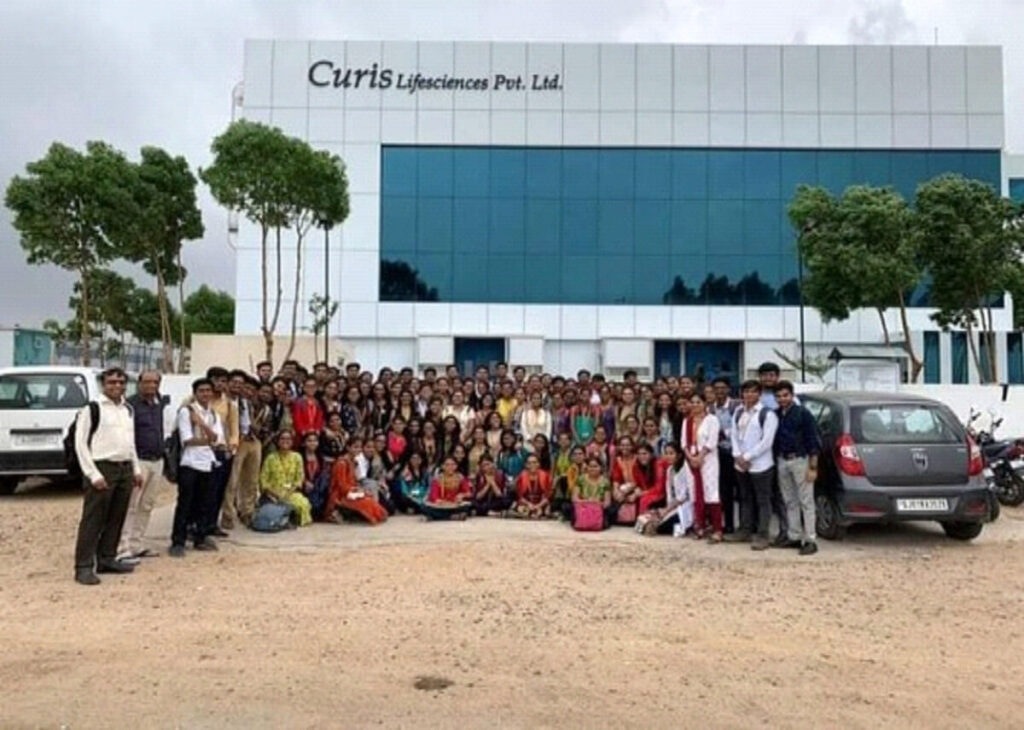
1. At a Glance
Curis Lifesciences Ltd. has decided to step into the stock market spotlight with a ₹27.52 crore book-built IPO listed on the NSE SME. The Ahmedabad-based pharma player is offering 0.22 crore fresh shares at a price band of ₹120–₹128 per share, and if you think that sounds like small money, think again — at full subscription, the company lands a market cap of about ₹103.5 crore.
In FY25, Curis pulled off a 38% revenue jump to ₹49.65 crore and grew PAT by 25% to ₹6.11 crore. Not bad for a company that calls itself a “global pharmaceutical manufacturer” but has just 95 employees — that’s like one employee per molecule of profit!
With an ROE of 55.25% and ROCE of 27.83%, Curis’ numbers scream “efficient,” though skeptics might call it “too good to be sustainable.” Borrowings hover around ₹15 crore, net worth rose to ₹16.23 crore in FY25, and post-IPO, promoter holding drops from 92.68% to 68.03% — that’s a serious equity detox.
The IPO opened Nov 7, 2025, closes Nov 11, and lists Nov 14. Anchor investors already cheered it up with ₹7.8 crore. QIBs have gone all-in (4.84x subscribed on Day 1), while retail investors are still finding their UPI pins.
2. Introduction – The Curious Case of Curis
If pharma IPOs were a cricket league, Curis Lifesciences would be the rookie all-rounder — a good average, decent strike rate, but untested on turning pitches.
Founded in 2010, the company’s business model revolves around loan license and contract manufacturing. In English: it makes medicines for other companies and occasionally for itself when it’s feeling ambitious. With over 100 corporate clients and a couple of its own brands in Yemen and Kenya, Curis seems to have found its way into global pharma lanes without ever shouting “Make in India” from the rooftops.
Its Sanand (Gujarat) manufacturing unit is its castle — GMP-certified, tech-equipped, and possibly cleaner than most government offices. The facility churns out tablets, capsules, oral liquids, ointments, and even sterile ophthalmic products — because why stop at one drug form when you can do five?
The company is raising ₹27.52 crore to upgrade facilities, repay debt, build a new storage site, register products abroad, and fill working capital gaps. Translation: “We need cash, but don’t worry, we’ll spend it responsibly.”
But the real kicker? Those FY24–FY25 profit leaps. Some call it “strong execution,” others whisper “pre-IPO glow-up.” Whatever it is, it worked — the financials look like they’ve just come from a detox camp.
3. Business Model – WTF Do They Even Do?
Curis Lifesciences does what every small-to-mid pharma company dreams of: make medicines for others, avoid marketing costs, and pocket margins quietly.
The company earns its keep in three ways:
- Contract Manufacturing / Loan Licensing – Producing for over 100 clients who prefer outsourcing instead of sweating in their own factories.
- Own Brand Sales (International) – Selling its brands in Yemen and Kenya. Two countries might sound small, but for a 95-person team, that’s two more countries than your local chemist chain operates in.
- Domestic & Global Pharma Partnerships – A flexible B2B structure that can scale when orders flood in and hide when the market slows down.
Its product suite covers:
- Tablets, Capsules, and Oral Liquids – Everyday pharma bread and butter.
- External Preparations & Ophthalmic Ointments –