Indigo Paints Ltd Q2FY26 – When MS Dhoni’s Paint Bucket Meets Margin Pressure and Jodhpur Expansion Drama
Date of Publishing -
Spotted a factual error — a wrong number, date, or fact? Tell us and we will check the source.
1. At a Glance
Let’s start with the colour palette: Indigo Paints Ltd, the smallcap that once painted the IPO street bright blue, is now trading at ₹991, roughly 40% off its 52-week high. The market cap stands at ₹4,716 crore, with a P/E of 32.5x and a Book Value of ₹228. It’s debt-light, with borrowings of just ₹17.6 crore, and a Debt-to-Equity ratio of 0.02 — practically a corporate monk in financial discipline.
The company posted Q2FY26 revenue of ₹312.1 crore (up a modest 3.45% YoY) and PAT of ₹25.2 crore, reflecting a 5.85% QoQ growth. The Operating Profit Margin (OPM) has stayed sticky around 15%, a decent shade considering paint input volatility.
But the colour seems to be fading a bit — stock returns over the past 3 months are -14% and over 1 year -39.6%, showing investors might have lost interest in the once “disruptive” tint.
And yet, despite being bruised, Indigo remains a company with 19.5% ROCE, 14.6% ROE, and a dream to enter India’s top-3 paint league by FY28. It’s the Dhoni of mid-cap paints: calm, strategic, but occasionally stuck defending spinners named “Asian Paints” and “Berger”.
2. Introduction – The Midcap That Wanted to Paint the Sky
Once upon a time in the world of beige walls and predictable PEs, Indigo Paints stormed in with metallic emulsions, glitter, and Dhoni’s helmet shine. The company positioned itself as the cool cousin at the paint family gathering — the one who arrives in denim while Asian Paints wears a tuxedo.
Founded in 2000, Indigo Paints became a case study in “how to sell premium without legacy baggage”. From being a regional player in Kerala to reaching 28 states with 18,556 active dealers and 11,301 tinting machines, the company’s distribution playbook has been executed with precision.
But here’s the twist: while expansion dreams are bright, execution costs money. Freight, raw material prices, and advertisement expenses (a cool 6.8% of revenue) eat into margins. For FY25, PAT stood at ₹145 crore, barely 2% higher than last year. Flat profits in a growing decorative paints market? That’s like scoring 40 not out while chasing 300 — technically solid, emotionally disappointing.
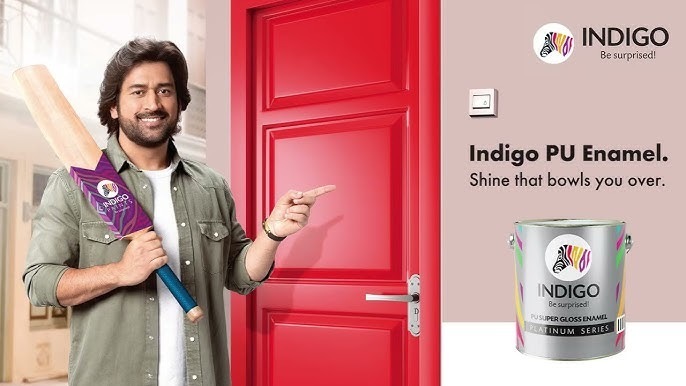
And if you’re wondering who’s still cheering, it’s Dhoni and Mohanlal — brand ambassadors of a company that knows how to market emotion as well as emulsions.
3. Business Model – WTF Do They Even Do?
Indigo Paints manufactures and sells decorative paints and waterproofing solutions across India. That’s fancy talk for: “We make the stuff that makes your walls Instagrammable.”
Their product portfolio is a buffet — emulsions, enamels, primers, putties, distempers, and wood coatings. But what sets them apart are the “category-creator” innovations — Metallic Emulsions, Tile Coat Emulsions, and Dampseal XT Primer — niche products where Indigo holds a commanding 80–90% market share.
In short:
Core Business: Decorative paints & emulsions
Add-ons: Waterproofing & Construction Chemicals (WPCC)
Manufacturing: Five plants — two in Pudukottai, two in Jodhpur, one in Kochi
Their WPCC expansion got a steroid boost in FY23 through the Apple Chemie acquisition (51% stake for ₹29.3 crore), adding industrial and retail waterproofing capabilities.
In English? They don’t just paint — they also patch leaks, repair cracks, and now dream of painting India leak-proof.