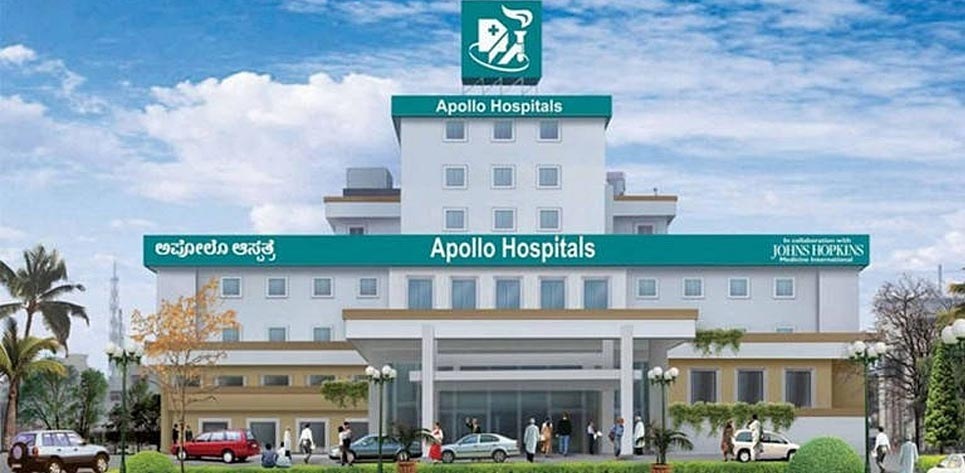
1. At a Glance
If “health is wealth,” then Apollo Hospitals is clearly the Ambani of wellness. At ₹1.12 lakh crore market cap and a stock price of ₹7,782, Apollo doesn’t just run hospitals—it practically owns half your medical records, your pharmacy orders, and probably your step count too. The Q2FY26 results showed consolidated revenue of ₹63,035 million (₹6,304 crore) — a 13% YoY growth and 26% surge in PAT to ₹4,772 million (₹477 crore). The operating profit margin held firm at a healthy 15%, proving Apollo can make a killing (figuratively, not literally) even in the age of free online consultations and AI doctors.
In six months, the stock delivered nearly 10% returns, outpacing most large-cap peers in healthcare. The ROE stands tall at 18.4%, with ROCE at 16.6%. It’s not cheap—P/E of 66.9 screams “premium,” but so does your MRI bill at Apollo Chennai. Debt has crept up to ₹7,987 crore, but when you’re building hospitals faster than politicians build flyovers, a little leverage is just cardio.
So, is Apollo Hospitals just India’s biggest hospital chain—or India’s next healthcare super app wearing a stethoscope? Strap in. This diagnosis is going to be entertaining.
2. Introduction – When Healthcare Becomes HealthcareCorp
Back in 1983, when Dr. Prathap C. Reddy founded Apollo Hospitals, India’s healthcare scene looked like a government hospital corridor—long, confusing, and always out of stock. Fast forward four decades, and Apollo has become the first corporate hospital to turn health anxiety into shareholder value.
From being a single hospital in Chennai to a ₹1.1 lakh crore healthcare empire, Apollo’s evolution reads like a Bollywood rags-to-riches story—if “rags” were white coats and “riches” were insurance settlements.
But let’s give credit where it’s due. Apollo has built a healthcare ecosystem that runs from your hospital bed to your medicine drawer to your smartphone screen. Their 10,000+ beds, 6,228 pharmacies, and a digital health platform (Apollo 24×7) with 36 million registered users basically mean that somewhere in India, every second, a patient is either lying on an Apollo bed or buying a strip of Apollo paracetamol.
And yet, beneath the success lies a strategic surgery. The group is slowly merging its pharmacy and digital units, raising funds from Advent International, and prepping a new listed entity—Apollo Healthtech. It’s the classic corporate diet: demerge, merge, and monetize.
The real question is, can Apollo balance its twin life as both a hospital operator and a digital tech unicorn? Or will it catch the dreaded corporate fever of over-diversification? Let’s diagnose.
3. Business Model – WTF Do They Even Do?
Apollo Hospitals isn’t just about white coats and ICUs anymore. It’s more like a healthcare Thali—something from every category, all served hot and premium-priced.
(A) Healthcare Services (52% of revenue)
The OG business. 73 hospitals, 10,134 beds, and a proud 70% occupancy rate in H1 FY25. Out of this, 8,709 beds are owned, while 790 are under management contracts. The Average Revenue Per Occupied Bed (ARPOB) stands at ₹59,053, which is roughly equal to a week’s salary for many of its patients.
The specialty mix is dominated by Cardiology (19%) and Oncology (17%), followed by Neurology and Orthopaedics (10% each). So yes, they literally profit from your heart problems and your back pain.
(B) Digital Health & Pharmacy Distribution (41%)
Apollo HealthCo (AHL) runs India’s largest pharmacy chain—6,228 stores across 22 states and 5 union territories. Their digital platform Apollo 24×7 has 7.7 lakh daily active users, more engagement than most dating apps. This unit is merging with Keimed Pvt Ltd, a wholesale pharma distributor serving 70,000 outlets—creating a pharmacy Godzilla aiming for ₹25,000 crore revenue by FY27.
(C) Retail Health & Diagnostics (7%)
This is their preventive and lifestyle division—2,203 diagnostic centres, 183 dental centres, 133