JK Lakshmi Cement Q2FY26 – Cement, Clinker & Corporate Yoga: How ₹1,532 Cr of Sales, ₹82 Cr PAT, and a ₹3,000 Cr Expansion Plan All Fit in One Bag of Cement
Date of Publishing -
Spotted a factual error — a wrong number, date, or fact? Tell us and we will check the source.
1. At a Glance
JK Lakshmi Cement Ltd has just dropped its Q2FY26 results like a fresh batch of concrete – ₹1,531.77 crore in revenue, ₹80.9 crore profit after tax, and a capacity expansion plan that’s as ambitious as a Delhi builder’s brochure. The company, currently trading at ₹871 with a market cap of ₹10,816 crore, runs on a decent ROCE of 10.5% and an ROE of 8.7%.
The quarter saw a 24.1% YoY sales jump and a thalaiva-level 364% profit surge. Cement prices may be dull, but JK Lakshmi’s profit curve surely isn’t. The expansion plan is no joke either—₹3,000 crore to push total capacity to 18 MTPA. For a company that once called itself “Lakshmi” (goddess of wealth), this quarter finally looks like a mild blessing from above.
Debt stands at ₹2,673 crore, which for cement companies is basically a gym membership—everyone has one, just depends how they use it. Promoter holding dipped to 45.12%, and dividend yield sits at a humble 0.75%, but the expansion narrative has the street watching closely.
So, is JK Lakshmi Cement turning from a dusty small-cap to a concrete growth story? Let’s dig (pun intended).
2. Introduction
Ah, cement stocks—the unsung heroes of India’s GDP growth story. While IT firms get fancy headlines about AI and fintech, cement companies quietly keep India literally standing. And in this category, JK Lakshmi Cement is like that middle sibling—reliable, overlooked, but surprisingly competent.
The company, part of the mighty JK Organisation (yes, the same empire that birthed JK Tyre and JK Paper), manufactures cement, RMC, and AAC blocks across India. While other players like UltraTech and Shree Cement fight over who can be the “Ambuja of the North,” JK Lakshmi just keeps stacking plants, mergers, and limestone mines like a veteran builder upgrading from bamboo scaffolding to steel.
FY24 was a bit of a “grind”—revenues touched ₹6,667 crore, profit after tax ₹466 crore, and an OPM of 16%. The key headline, though, is expansion. JK Lakshmi wants to grow from its current 18 MTPA to a muscular 30 MTPA by FY30. That’s not just ambition—it’s a cemented vision (okay, last pun for now).
Its capacity utilization stood at 86%, with the East region flexing the most muscle. And while others burn money on buying green power, JK Lakshmi’s 117 MW captive setup already meets three-fourths of its energy needs. That’s ₹3.5–₹4 per unit saved—basically funding the next bag of cement.
3. Business Model – WTF Do They Even Do?
JK Lakshmi Cement’s business is as straightforward as its slogan: make cement, sell cement, build India.
It runs two integrated plants—one in Sirohi (Rajasthan) and one in Durg (Chhattisgarh)—plus grinding units in Gujarat, Haryana, and Odisha. Together, they churn out 11.7 million tonnes of cement and 7 million tonnes of clinker annually. Post recent expansion and the merger of subsidiaries like UCWL and Hansdeep, that figure has already jumped to 18 MTPA.
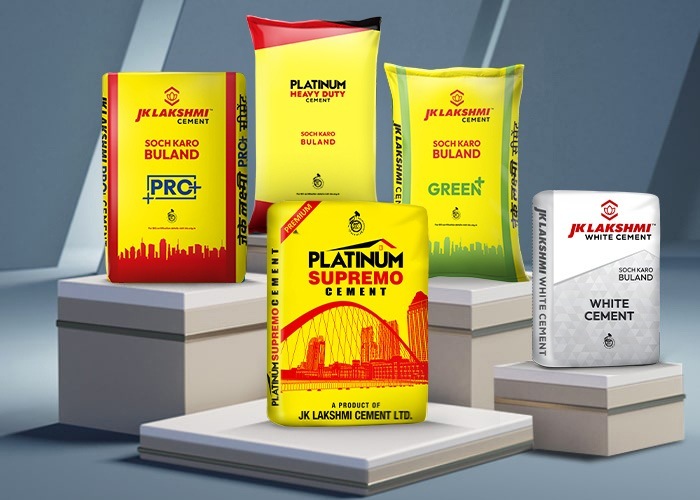
They produce different grades—Ordinary Portland Cement (OPC), Portland Pozzolana Cement (PPC), and even the fancy branded stuff like JK Lakshmi PRO, Heavy Duty, and Super Sixer (which sounds more like a T20 player than a building material).
The product portfolio also includes Gypsum Plaster, Wall Putty, JK Smartblox (AAC blocks), and JK PowerMix (ready-mix concrete). Basically, if it sticks, hardens, or builds, JKLC has a brand name for it.
Their regional sales split tells the story of an efficient logistics game—Gujarat and Maharashtra together form 51% of revenue, Rajasthan and MP 33%, and North India 16%. JKLC’s proximity to limestone mines gives it cost advantages, while captive power and WHR systems keep it among the lowest-cost producers.
Still, margins swing like a pendulum because, let’s face it, cement pricing is the mood swing of the infrastructure sector.