1. At a Glance
Once the “King of Bedsheets,” Bombay Dyeing & Manufacturing Company Ltd (BDMC) has done a full ghar-waapsi from the fabric aisles of Indian households to the skyscraper skyline of Mumbai. And now, it’s debt-free, thanks to a ₹5,200 crore land deal that would make even Mukeshbhai smile approvingly.
As of Q2FY26, the company’s market cap stands at ₹3,300 crore, with a current price of ₹160, having seen a dramatic tumble from its ₹242 high. The P/E ratio at 55.3x makes it look more like a tech stock than a textile stock, while ROE at 1.37% and ROCE at 2.61% remind you that glamour and returns are still inversely correlated here.
The company reported Q2FY26 revenue of ₹362.63 crore (down 4.73% QoQ), but net profit grew 107% QoQ to ₹1.92 crore. Clearly, Bombay Dyeing’s turnaround journey has moved from “Dyeing” to “Trying.” The cherry on top? The company is now debt-free after selling its Worli land to Sumitomo Realty in two tranches worth ₹4,685 crore + ₹534 crore.
Now debt-free but still drama-heavy, the Wadias are back in the spotlight — this time, not for airline turbulence, but for polyester resilience and real estate revival.
2. Introduction
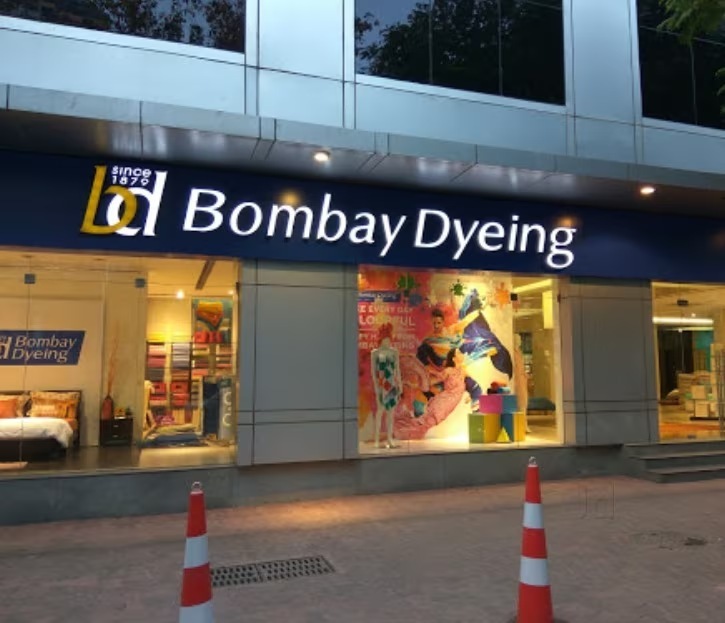
Bombay Dyeing is that legacy cousin who went from being the most famous in the 90s to quietly surviving midlife crises — one polyester strand at a time. Founded in 1879, the company has seen India’s economic booms, bans, and the rise of Ambanis and Adanis. It has dyed everything from curtains to reputations.
Today, the company stands at a peculiar crossroads — its real estate arm “Bombay Realty” has become the savior, while its polyester business remains the cash cow that refuses to moo loudly. The retail textile business, once synonymous with every Indian household’s bedsheets, is now more nostalgia than necessity.
The most defining chapter in Bombay Dyeing’s modern saga came with its debt clean-up through the massive Worli land monetization, transforming its balance sheet faster than a Wadia family WhatsApp chat changes topic from SEBI orders to South Bombay soirées.
And yet, this comeback is not without controversy. SEBI’s 2022 order accusing the company of misrepresentation (with a ₹2.25 crore fine and temporary ban) might have been stayed by SAT, but it lingers like an unsolved family dispute at Diwali dinner.
As Q2FY26 numbers roll in, BDMC’s polyester plant at Patalganga is humming at 86% capacity, the real estate team is prepping Phase 3 of Island City Centre (ICC), and the retail stores — all 350+ of them — are still trying to convince you that thread count equals luxury.
3. Business Model – WTF Do They Even Do?
If you thought Bombay Dyeing just made fancy bedsheets, congratulations — you’re living in 2008. Today’s BDMC is a tri-sector mashup of polyester, real estate, and retail textiles — or as the markets call it, “three ways to test patience.”
1. Polyester (88% of H1FY25 revenue)
This is the backbone of the business. The company manufactures 100% virgin Polyester Staple Fibre (PSF) and PET chips using NGSSS technology licensed from the US. These fibres are used in textiles, furnishings, and industrial applications. With a 12% national market share in PSF and an 86% capacity utilization, it’s a quiet but steady contributor. Think of it as the reliable accountant sibling in the Wadia family.
2. Real Estate (9%)
Once an afterthought, now the golden goose. The company’s Island City Centre (ICC) towers at Dadar East — complete with marble floors and “Wadia glamour” — have been fully sold. Phase 3 of ICC,