1. At a Glance
Ola Electric Mobility Ltd — the enfant terrible of India’s EV revolution — just dropped its Q2FY26 numbers, and let’s just say: it’s half shock, half sci-fi. The company pulled in ₹690 crore in revenue for the quarter, but still managed to burn through ₹418 crore in losses. Yet, plot twist — auto EBITDA turned positive for the first time. Yes, Bhavish finally found the “profit” button on his dashboard, even if it’s still hidden behind a few red warning lights.
With a market cap of ₹20,982 crore, the stock now trades at ₹47.6 (down 4.97% on results day), roughly 4.8× its book value and nowhere near the ₹102 highs. The company’s ROE is an abysmal -108%, ROCE -28.1%, and Debt-to-Equity 0.72. Its latest OPM is -50.2%, but hey — you can’t spell “Ola” without “loss.”
In the world of two-wheelers, Ola’s Q1FY26 market share nosedived to 19.6%, down from a royal 50% in FY24. Yet, its Gen 3 scooters still account for 80% of total sales, and deliveries of 52,666 units in Q2 hint at demand that refuses to die.
This quarter’s twist? The 2.5 GWh Bharat Cell gigafactory went live, Ola Shakti (its battery-energy-storage business) launched, and PwC came on board as internal auditors — because someone finally realized Excel sheets can’t fix ₹2,000 crore losses.
2. Introduction
Once upon a startup, in 2017, a ride-hailing company woke up and said, “You know what? Let’s build bikes and batteries too.” That’s Ola Electric for you — the Tesla-wannabe with a desi twist and a meme archive for every press release.
Since its 2021 debut scooter, the S1 Pro, Ola has gone from “Make in India” poster boy to “Make investors nervous” poster child. From building a ₹10,000 crore mega-factory in Krishnagiri to launching motorcycles named Diamondhead and Roadster Pro, the company now wants to electrify every street, garage, and rooftop battery in Bharat.
But somewhere between the giga-dreams and IPO glamour, reality struck. Market share halved, competition doubled, and customer complaints tripled (2,994 on product quality alone in FY24 — that’s about eight complaints a day). And now, the company faces a post-IPO hangover where revenues dropped 43% QoQ, even as it boasts of “EBITDA positivity.”
Still, Bhavish Aggarwal isn’t backing down. Ola’s Q2 letter reads like a Bollywood comeback script — new bikes, new cells, new auditors, and a ₹1,500 crore fundraise on the horizon. The message is clear: they’re down 418 crore, but not out.
3. Business Model – WTF Do They Even Do?
Ola Electric isn’t just about scooters anymore; it’s building a vertically integrated EV empire that covers everything from battery cells to charging guns.
Core Segments:
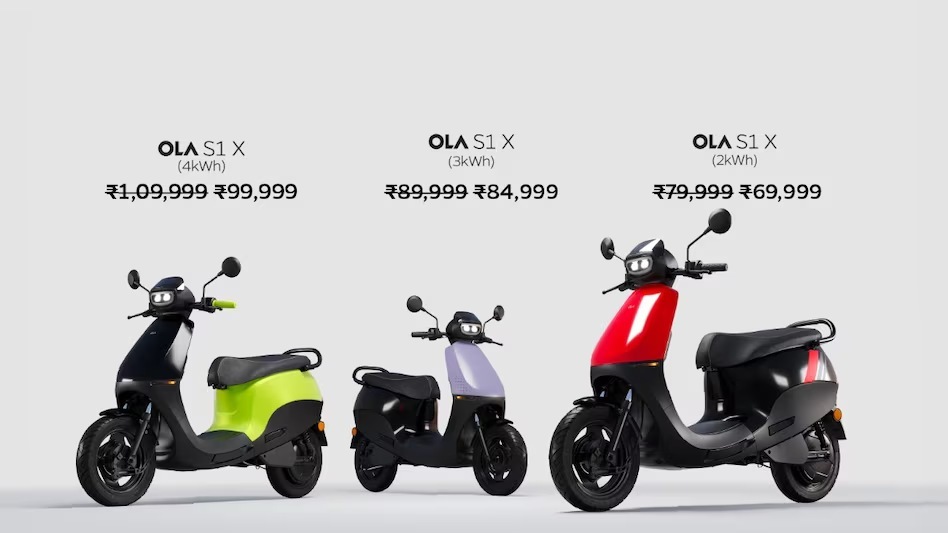
- Electric Two-Wheelers: The flagship S1 series — S1 Pro, S1 Air, S1 X+, and S1 X — all produced at the Ola Futurefactory. Ranges from 151 km to 195 km.
- Upcoming Motorcycles: Roadster X, Roadster Pro, and the futuristic Diamondhead, scheduled for deliveries before Navratri FY26.
- Cell Manufacturing: The Bharat Cell Gigafactory produces 4680-format lithium-ion cells using dry-electrode tech — 90% less water, 40% less energy.
- Energy Storage Solutions: Ola Shakti, a residential BESS launched Oct 2025, priced ₹29,999–₹1,59,999.
- Charging Infrastructure: 4,000 Ola Touchpoints, 1,000+ public chargers, and growing.
- Distribution: 870 experience centres + 431 service hubs across India — all company-owned, no dealer