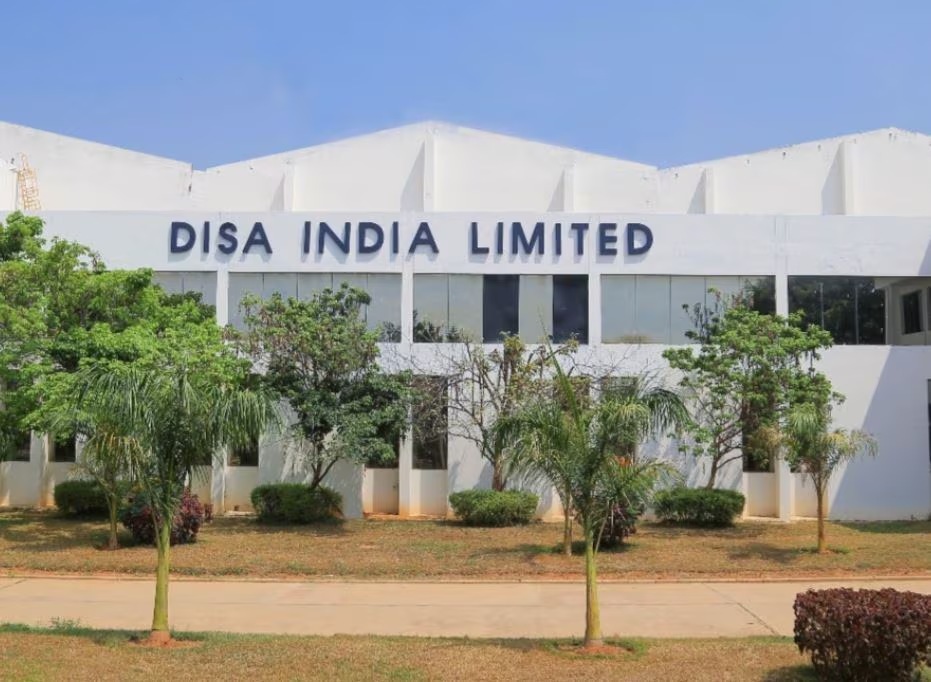
1. At a Glance
Welcome to Disa India Ltd (BSE: 500068), the company that builds the machines that build your machines — and still somehow manages to be more profitable than half the startup ecosystem. As of November 4, 2025, the stock trades at ₹13,543, sporting a market cap of ₹1,970 crore and a price-to-earnings (P/E) ratio of 37.3x — because apparently, even foundry dust can sparkle when investors smell high return on equity.
In Q2FY26, the company reported revenue of ₹104 crore, up 21.4% YoY, but with PAT of ₹12.2 crore, down a modest 1.3%. That’s what we call the “engineer’s heartbreak”: when your machine performs beautifully, but your margins don’t. Still, ROE at 21.7% and ROCE at 29.2% are as shiny as a freshly polished casting mold.
The balance sheet looks so clean, it could make even the RBI blush — debt: ₹0.11 crore (basically lunch money), current ratio: 2.16, and a dividend yield of 1.48%. The only smudge? A 7.2x price-to-book ratio. Expensive? Yes. Deserved? We’ll see.
So what’s the story behind this ₹13,000 stock that turns sand into profit and engineers into believers? Let’s cast this metal right.
2. Introduction – The Foundry Fairy Tale
Once upon a furnace, in the industrial alleys of Karnataka, stood a company that quietly built the backbone of India’s manufacturing: Disa India Ltd, the foundry equipment magician. While IT companies were getting all the headlines and IPO hype, Disa was busy making the literal molds that shape the economy’s metal parts — from auto to aerospace.
Unlike your typical small-cap chaos, Disa doesn’t flirt with leverage, dilution, or financial drama. Its biggest scandal? Possibly that it’s too boringly efficient. The company is part of the Norican Group, a global behemoth in foundry and surface preparation tech — meaning it’s the Indian cousin who actually does the work while the European uncle takes credit at conferences.
And just when competitors like Kaynes Tech and Honeywell Automation are burning investor cash to chase growth, Disa quietly expands its Tumkur facility, buys more land, and even opens up shop in Qatar through DISA Foundry Doha. The foundry world isn’t glamorous, but Disa is what happens when precision engineering meets German discipline and Indian cost efficiency.
But wait — what’s cooking under this ₹2,000 crore crucible? A company that’s compounding quietly, paying dividends generously, and delivering 14–16% profit CAGR over 5–10 years. And yet, it’s down 27% in the past year. Either the market doesn’t understand metal, or investors forgot that quality compounding doesn’t come with a neon sign.
3. Business Model – WTF Do They Even Do?
Let’s be honest: explaining foundry equipment to most investors is like explaining quantum physics to your dog. But here’s the human version.
Disa India Ltd designs and manufactures foundry machinery — the kind that helps foundries (where molten metal is poured into molds) produce castings efficiently. Their machines handle molding, sand mixing, surface cleaning, and environmental control systems. Think of it as the full-service spa for metal.
The product portfolio includes:
- Foundry systems: molding machines, sand plants, mixers, and casting systems.
- Surface preparation: shot blast equipment that cleans and preps metal surfaces.
- Industrial filters: the unsung heroes preventing dust explosions in plants (cassette, cartridge, pulse jet, silo vent types).
The company earns ~98% of its revenue from foundry machinery and just ~2% from filters and services — proving it knows what pays