Enkei Wheels India Ltd Q2FY26 – From Flat Tyres to Spinning Profits: 274% YoY Jump, CFO Musical Chairs & the Japanese Discipline Showdown
Date of Publishing -
Spotted a factual error — a wrong number, date, or fact? Tell us and we will check the source.
1. At a Glance
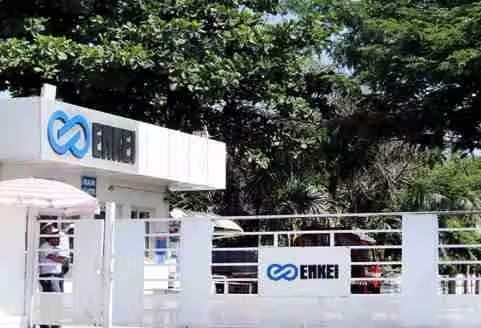
If alloy wheels had a gossip column, Enkei Wheels India Ltd (EWIL) would be the star this quarter. The ₹859 crore market cap subsidiary of Japan’s Enkei Corporation just delivered a Q2FY26 (Sept 2025) performance that made analysts rub their eyes twice. Revenue hit ₹265 crore, marking an 11.1% YoY growth, while net profit skyrocketed 274% to ₹7.94 crore.
That’s right — a company that’s been quietly struggling with thin margins suddenly pulled off a dramatic turnaround, despite a lowly ROCE of 3.94% and ROE of barely 1.06%. The current market price stands at ₹478 (as of Nov 4, 2025), which is down 31% YoY, making this one of those “you hate to love it” stocks.
Debt? A bit chunky at ₹250 crore (Debt/Equity = 1.1). Dividend? None. Management churn? Oh, plenty — new MD, new CFO, same story: Japanese discipline meets Indian paperwork. The Pune plant is revving with an expanded MAP 2 line, adding 20,000 wheels/month capacity from March 2025.
Will the new leadership steer Enkei out of the slow lane, or is this just a wheelie of hope? Let’s roll.
2. Introduction
In India, we don’t buy cars — we buy “status symbols with four wheels.” And who makes those wheels shine? Companies like Enkei Wheels India Ltd.
Born in 2009 as the Indian arm of Japan’s Enkei Group, the company has been supplying aluminium alloy wheels to some of the country’s biggest OEMs — Honda, Toyota, Maruti Suzuki, Suzuki Motorcycles — basically, half the vehicles that zip past you on a Monday morning.
But behind those shiny alloys lies a tale of struggle. Margins thinner than papad, profits more volatile than your crypto portfolio, and return ratios that could make even auditors yawn.
Still, this quarter, something clicked. The Pune plant’s capacity expansion started bearing fruit, demand from both two-wheeler and four-wheeler segments stabilized, and the numbers started to move up. After years of low single-digit returns and “we’ll do better next quarter” conference calls, Enkei finally posted a quarter that deserves a slow clap.
But is this the start of a sustainable uptrend or just a short pit stop before the engine sputters again? Let’s pop open the bonnet.
3. Business Model – WTF Do They Even Do?
In plain English: Enkei Wheels India makes aluminium alloy wheels — those fancy rims that make your Honda City look like it’s auditioning for Fast & Furious: Pune Drift.
Their business is split into two main segments:
Four-Wheeler Wheels (~67% of FY24 revenue) – Supplies to Honda, Maruti Suzuki, Toyota.
Two-Wheeler Wheels (~31% of FY24 revenue) – Supplies to Honda, Suzuki, and Kawasaki.
Scrap & Other Sales (~2%) – Because in manufacturing, even the leftovers have a resale value.
The company runs a manufacturing facility in Pune, capable of churning out 1.1 lakh four-wheeler wheels and 1.2 lakh two-wheeler wheels every month. In 2025, they juiced up production with the MAP 2 line upgrade and MAT facility, adding another 20,000 wheels/month to capacity.
Sounds smooth? Not quite. It’s a low-margin, high-capex business, where any slowdown in auto sales or raw material price spikes (read: aluminium tantrums) can throw profits off the road.
But Enkei plays the long game — Japanese tech, strict quality control, and OEM stickiness. Once Honda loves your wheel, it’s not switching easily. Think of it as an arranged marriage between metallurgy and trust.