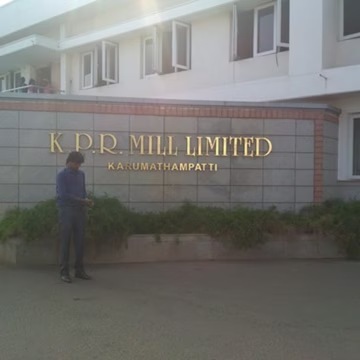
K.P.R. Mill Ltd Q2FY26 Results – ₹21,803 lakh PAT, 19% OPM, and Solar Power Dreams: The Textile Titan That Also Sells Audi Cars
1. At a Glance
K.P.R. Mill Ltd — the Coimbatore-born textile powerhouse that refuses to sit quietly in one vertical — just dropped its Q2FY26 numbers. The company reported a consolidated PAT of ₹21,803 lakh (₹218.03 crore) for the quarter ended September 2025, up 6.36% QoQ on revenue of ₹1,632 crore. Market cap? A hefty ₹36,104 crore, with a P/E of 43.1x. ROE stands at 17%, ROCE at 19.8%, and the company sits on a mountain of reserves worth ₹5,313 crore, with a debt of just ₹345 crore — making it one of India’s cleanest balance sheets in the textile space.
The stock trades at ₹1,056 (as of 4 Nov 2025), and while it’s down ~11% in six months, it’s still strutting with a 47% five-year CAGR. Dividend yield? A modest 0.47% — clearly, KPR prefers spinning yarns over distributing them as cash.
2. Introduction
K.P.R. Mill is not your average “cotton-to-yarn” story. It’s the desi version of a textile empire that diversified so aggressively it now sells Audi cars, sugar, ethanol, and underwear — all under the same umbrella. If business schools ever teach “horizontal expansion,” KPR deserves its own chapter titled From Viscose to Vehicles.
Founded by the charismatic K.P. Ramasamy and co-promoted by P. Nataraj and K.P.D. Sigamani, this Coimbatore trio managed to weave together threads of garments, wind turbines, and ethanol distilleries — proving that cash flow doesn’t discriminate between fashion and fuel.
In FY23, textiles accounted for 78% of revenue, sugar 20%, and “others” (read: everything from ethanol to Audi cars) for the remaining 2%. The group exports to 60+ countries, and domestically serves 1,300+ regular clients.
Still wondering how a textile mill got into solar power and luxury car dealerships? Welcome to the KPR multiverse — where garments meet green energy, and cotton meets combustion engines.
3. Business Model – WTF Do They Even Do?
At its core, KPR Mill is a vertically integrated textile manufacturer — meaning it controls the entire process from cotton ginning to garment export. But that’s just Act 1.
Act 2 introduces its sugar and ethanol operations, a sweet twist added in FY18 when India’s ethanol-blending policy became the new gold rush. Act 3 stars renewable energy, because every mill these days wants to say they’re carbon neutral while spinning polyester.
Their business structure looks like this:
Textiles (78%): Yarn, knitted fabric, and ready-made garments.
Sugar & Ethanol (20%): Crushing capacity of 20,000 TCD, and ethanol production now upgraded to 250 KLPD after a ₹150 crore expansion.
Others (2%): Power generation and Audi dealerships via subsidiary Jahnvi Motors.
Oh, and don’t forget their retail brand “FASO”, which sells men’s innerwear and athleisure. Think of it as India’s homegrown Calvin Klein — but backed by solar panels.
Manufacturing muscle:
Yarn: 1,00,000 MT
Garments: 157 million pieces
Fabric processing: 25,000 MT (expanding to 37,000 MT by FY26)
Power: 61.9 MW wind + 90 MW co-gen + 12 MW solar, with another 25 MW solar incoming.
If textile mills had an Olympics, KPR would compete in every event — and still win Best Costume.