1. At a Glance
Kalyani Steels Ltd (NSE: KSL, BSE: 500235) just dropped its Q2FY26 results like a well-tempered hammer on hot iron — ₹4,561 million in revenue and ₹625 million in PAT. That’s a cool ₹62 crore net profit for the quarter, only slightly down from last year’s ₹67 crore, because apparently even steel needs a coffee break. The market didn’t seem too panicked though — stock trades at ₹855, giving a market cap of ₹3,732 crore and a P/E of 14.5x.
With a book value of ₹451 per share and an ROE of 14%, the company feels like that dependable uncle who drives a 2008 Fortuner but keeps it spotless — not flashy, but solid.
Debt stands at ₹428 crore (Debt/Equity = 0.22), ROCE is a respectable 15.6%, and dividend yield sits at a comforting 1.17%. The share price has cooled about 6% in the last three months after a fiery run earlier, probably digesting all that iron and coke.
If you like companies that are equal parts metal and metaphor, buckle up. Because Kalyani Steels is not just a “steel stock.” It’s the story of a slow burn in an overheated sector — with the Kalyani family still pulling the levers like old-school industrial royalty.
2. Introduction – The Tempered Truth of Indian Steel
Every Indian family has that one person who insists, “Beta, real assets are gold and land.” Well, the Kalyanis quietly whisper from the forge, “And don’t forget steel, beta.”
Founded as part of the Kalyani Group — the same dynasty behind Bharat Forge — Kalyani Steels has carved (and forged) its niche in the world of specialized steel manufacturing. While the Tata Steels and JSWs of the world swing at infrastructure and rebar, Kalyani sticks to what it knows best: precision-grade alloy and engineering steel for automobiles, engineering, and seamless tubes.
The company’s DNA is automotive — camshafts, gears, transmission shafts, axle beams, and connecting rods — the bones and sinews of every machine that moves. Nearly 98% of its revenue comes from domestic customers, proving again that steel might be global, but demand is still local.
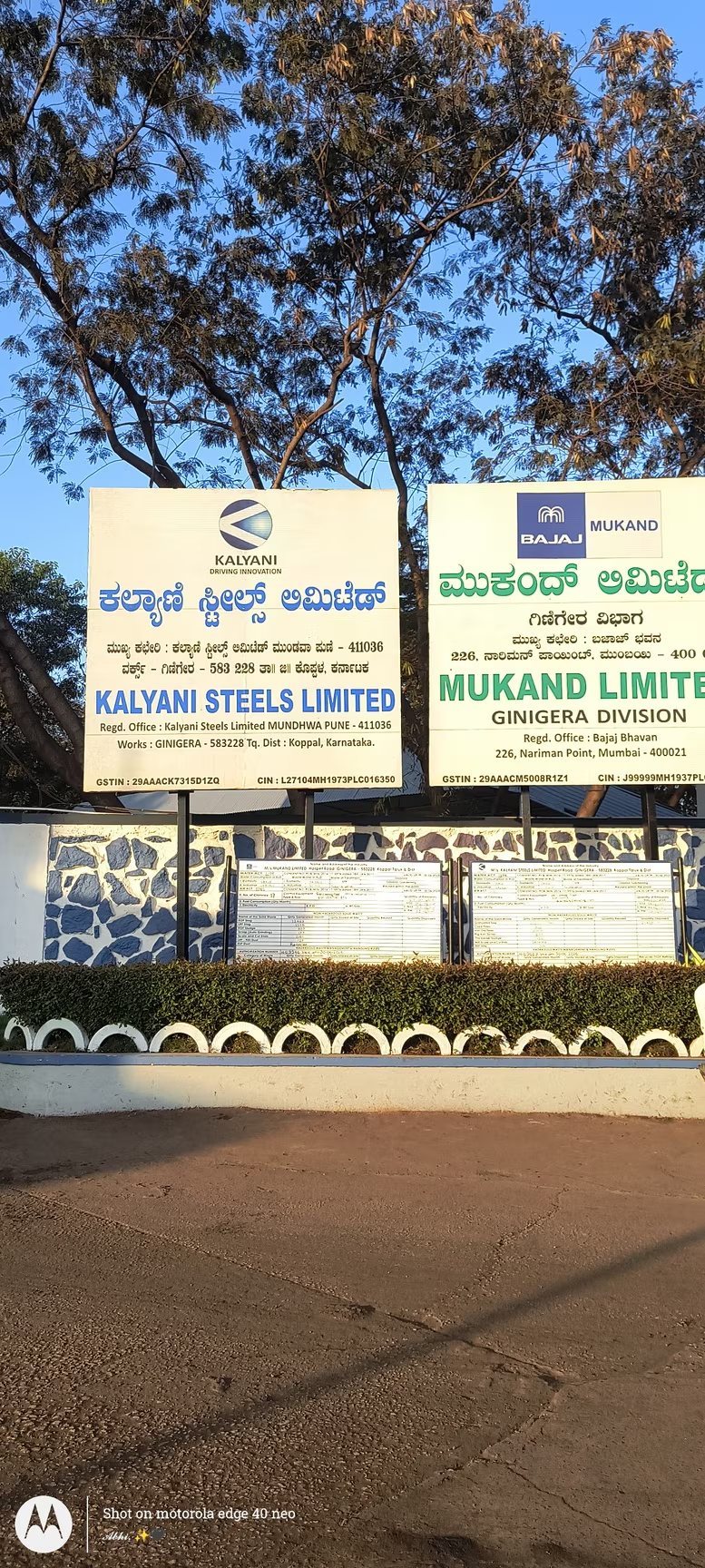
In an industry where scale often trumps sense, Kalyani Steels doesn’t try to be the biggest — just the smartest. With 7 lakh MTPA capacity and a Ginigera plant in Karnataka that looks like an industrial temple, the company plays the long game. Add to that a cozy alliance with Mukand Limited (Bajaj Group), where assets are shared like samosas at a board meeting, and you’ve got a compact steel operation that punches way above its weight.
The last five years? A measured growth story. Sales up from ₹1,707 crore in FY22 to ₹1,927 crore in FY25. Profits hovering around ₹250–₹260 crore. No fireworks, but no disasters either — like a well-maintained blast furnace.
3. Business Model – WTF Do They Even Do?
Let’s break it down. Kalyani Steels doesn’t just “make steel.” It makes critical steel — the kind that goes into parts you never see but depend on daily. Their clientele includes automotive OEMs, seamless tube manufacturers, and heavy engineering firms — basically, the guys who make the stuff that makes other stuff.
Core Divisions
- Forged & Rolled Steel Bars – For auto components, engineering, and seamless tubes. Think of it as the raw muscle of the industrial world.
- Alloy Steel Products – These go into transmission shafts, gears, camshafts, and axles — the very soul of machinery.
- Strategic Integration – Through a 41% shared facility with Mukand Ltd, they optimize asset use — Mukand and Kalyani share the oven, but cook different recipes.
Client Ties That Bind
The Kalyani Group companies (like Bharat Forge) alone account for ~58% of its total revenue — a textbook case of “keep it in the family.” It’s not risky when your cousin is one of