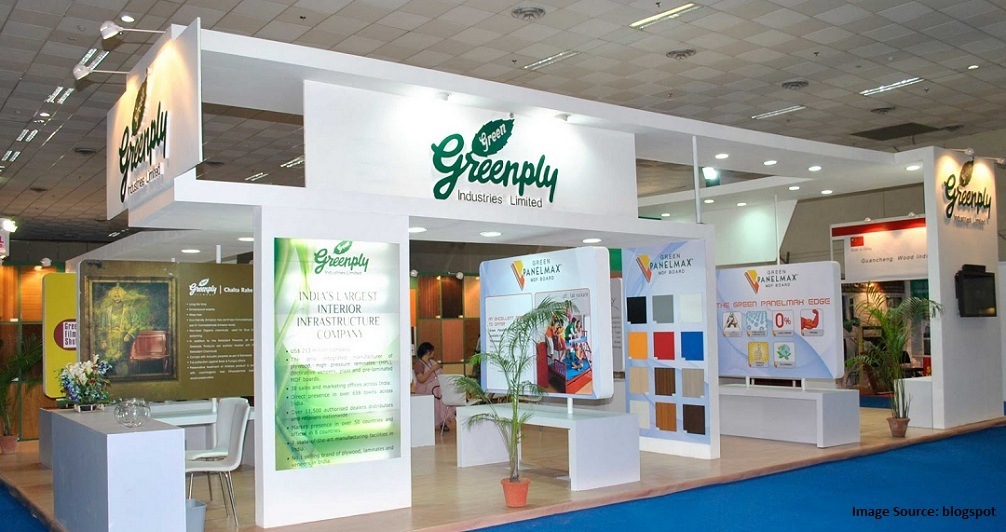
1. At a Glance
If plywood could talk, Greenply Industries would probably sound like an overworked carpenter humming “Aashayein” under his breath. The company – India’s plywood poster child with a 26% share in the organized market – reported Q2 FY26 consolidated revenue of ₹688.6 crore and a PAT of ₹16 crore, down 9.25% QoQ, even as sales grew 7.5%. The operating profit margin stood at a humble 7%, which is basically the finance equivalent of saying, “We’re surviving, bro.”
At a current price of ₹299, Greenply carries a market cap of ₹3,740 crore and a P/E ratio of 45.7x, proving that optimism in Indian markets is thicker than its blockboards. The company’s ROCE is 12.4%, ROE 12.0%, and debt at ₹542 crore, translating to a debt-to-equity of 0.64.
So while your carpenter haggles for ₹200, Greenply’s investors are paying over 45 times earnings for the privilege of owning a slice of the same wood. And yet, in India’s growing housing and interior boom, plywood continues to sell like samosas at a monsoon party.
2. Introduction
Let’s talk about Greenply Industries — the brand that has probably seen more Indian walls, doors, and wardrobes than most of us have seen relatives at weddings.
Established in 1990, this Rajesh Mittal–led plywood powerhouse has weathered industry cycles, GST, demonetization, and the occasional termite of governance. Despite its decades of service, Greenply refuses to age like the polished veneer it sells.
The numbers, however, hint at a mild midlife crisis. In FY25, sales stood at ₹2,553 crore, growing at 6% YoY, but profits have slipped 19% YoY, thanks to rising raw material and logistic costs. Yet, capacity utilization in plywood improved from 77% in FY21 to 90% in FY22, a reminder that the company knows how to sweat its assets.
And while other players like Century Plyboards or Greenlam are flexing premium products and décor trends, Greenply seems to be in its “asset-light enlightenment” phase – outsourcing some manufacturing through partner units in Bareilly and Hapur to stay nimble. The plywood war is not about who cuts trees better; it’s about who cuts costs smarter.
So what’s the story here? A solid old-school manufacturer trying to MDF-fy its future, diversify its portfolio, and stay relevant in a world where home interiors are becoming as Insta-worthy as brunches.
3. Business Model – WTF Do They Even Do?
If you’ve ever leaned against a door and trusted it not to fall off, you’ve likely encountered Greenply’s handiwork. The company manufactures and sells plywood, blockboards, veneers, flush doors, and decorative laminates. In simpler words – if it’s wooden and flat, they probably make it.
Here’s how they stack their business (pun fully intended):
- Plywoods and Blockboards: Their bread and butter. Used in furniture, homes, and offices across India.
- Decorative Veneers: The fancy surface finish that helps plywood pretend it’s rich.
- Flush Doors & Specialty Panels: The mid-segment play for modern construction.
- PVC & Allied Products: Because plastic is the new plywood, at least in bathrooms.
The company has a 4-unit owned network spread across Gujarat, West Bengal, Nagaland, and Uttar Pradesh, with a total capacity of ~48 million sq. meters per annum, plus an offshore face veneer plant in Gabon (yes, they cut trees in Africa too).
Then comes the asset-light model — two partner units in Bareilly and a new one at Hapur with 7.5 million sq. meter capacity, proving that outsourcing isn’t just for IT.
And since plywood is slowly turning into a commoditized game, Greenply is diversifying into MDF (Medium Density Fibreboard). Its Vadodara greenfield project (₹555 crore capex)