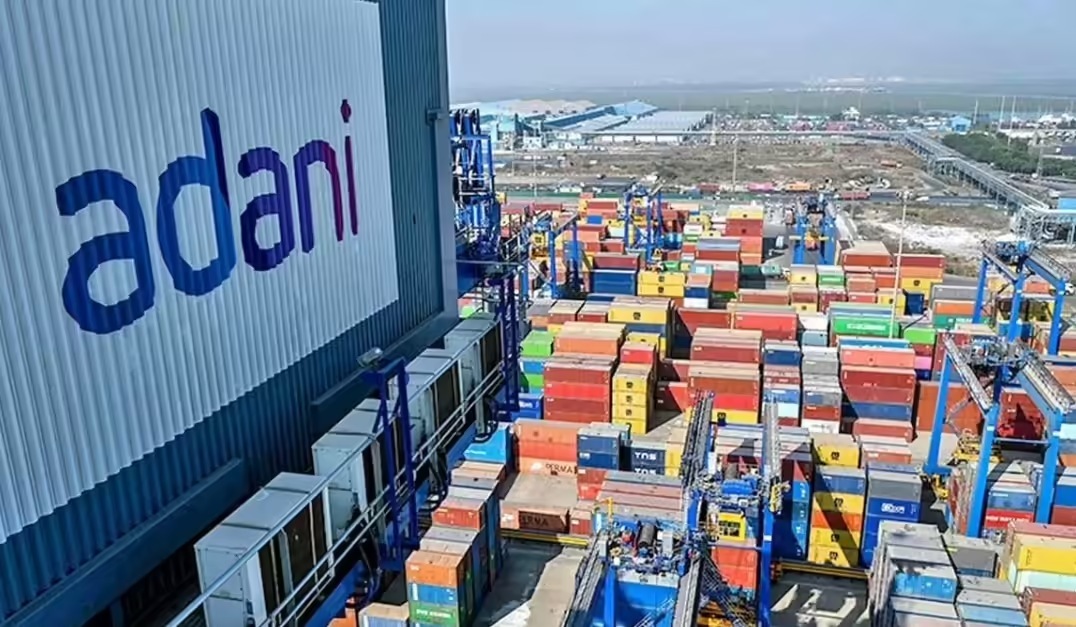
1. At a Glance
Adani Ports & Special Economic Zone Ltd (APSEZ) is basically India’s logistics overlord disguised as a port company. With 15 ports across India, three international bases, and a ₹3,12,000 crore market cap, this beast moves about 27% of India’s cargo and nearly half the country’s container traffic. The latest quarter (Q2 FY26) delivered ₹9,167 crore revenue and ₹3,120 crore PAT, both up ~30% YoY, with an operating margin of 58% — which, let’s be honest, would make even the Ambanis peek over the fence.
At ₹1,444 per share, investors seem to have parked their yacht in a calm bay — with a P/E of 26x, ROE of 18.8%, and zero promoter pledge, because Adani apparently prefers pledging headlines instead of shares. Meanwhile, debt stands at ₹56,851 crore, but hey — in Adani land, debt isn’t a problem, it’s an ingredient.
So what’s new this quarter? Oh, just a casual acquisition of North Queensland Export Terminal (NQXT) in Australia, a merger of Adani Harbour Services, and a Fitch rating upgrade to “Positive.” For a company once accused of “overreach,” APSEZ seems to be rewriting what reaching everywhere actually looks like.
2. Introduction – The Ports Empire That Treats Oceans Like Monopoly Tiles
Imagine if Monopoly had a “Ports Edition,” where one player owned 15 harbours, three foreign docks, and the dice were replaced with bulldozers. That’s Adani Ports.
From Mundra to Haifa, from Dhamra to Dar-es-Salaam, APSEZ isn’t just running ports — it’s running the concept of ports. India’s largest private port operator now handles more cargo than the GDP of several small nations. You can’t escape it — even your imported Nutella might have crossed an Adani pier.
The story started modestly — a port in Gujarat, a dream of global logistics supremacy, and a few tonnes of coal. Fast forward, and now Adani Ports owns everything from container yards to dredging fleets. The logistics arm moves everything from auto parts to agri silos. Even your onions are probably more well-travelled than you.
But while the empire expands, the financials still matter. With FY25 revenue of ₹34,746 crore and a profit of ₹12,002 crore, APSEZ has turned infrastructure into a cash machine. The company’s operating margin of ~59% would make most SaaS companies jealous. However, behind the efficiency lurks a silent mountain of capex — and that ₹56,000 crore debt pile waiting for more refinancing parties.
3. Business Model – WTF Do They Even Do?
If you thought Adani Ports just moved containers, think again. These folks don’t run ports — they run ecosystems. Think of it like Jio for shipping, but with cranes instead of cables.
Here’s how the empire divides its loot:
- Ports (Core Business): 15 ports in India and 4 overseas. Handles 27% of India’s total cargo and 45.5% of container cargo. Mundra alone is a monster — India’s largest commercial port and the heart of Adani’s logistics dominance.
- Marine Services: They don’t just operate ports; they also help others do it. With 115 tugs and offshore vessels, 28 dredgers, and 46 harbour support ships, Adani Harbour Services is like Uber for ships — but with a lot more horsepower.
- Logistics: 12 multi-modal logistic parks, 132 rakes, 937 trucks, and 3.1 million sq. ft of warehouses. Also building agri silos worth 1.2 MMT with another 2.8 MMT