1. At a Glance
If paper could talk, JK Paper would currently be saying, “Main toh packaging mein chala gaya, bhai!” Once the undisputed king of office paper, this ₹6,747 crore market cap veteran is now on a serious packaging board trip. Trading at ₹398 a share, the company has delivered a 15% return in three months—because nothing says “investor optimism” like a pulp company pretending to be a packaging startup.
But beneath the glossy coating (pun intended), numbers whisper a different story. Q2 FY26 consolidated turnover hit ₹1,870 crore, while PAT stood at ₹74.75 crore—down nearly 42% YoY. Operating profit margins (OPM) slumped from 33% glory days to a paper-thin 13%. The company’s P/E ratio at 22.7 is higher than the industry’s 18.9, meaning investors are paying extra for nostalgia.
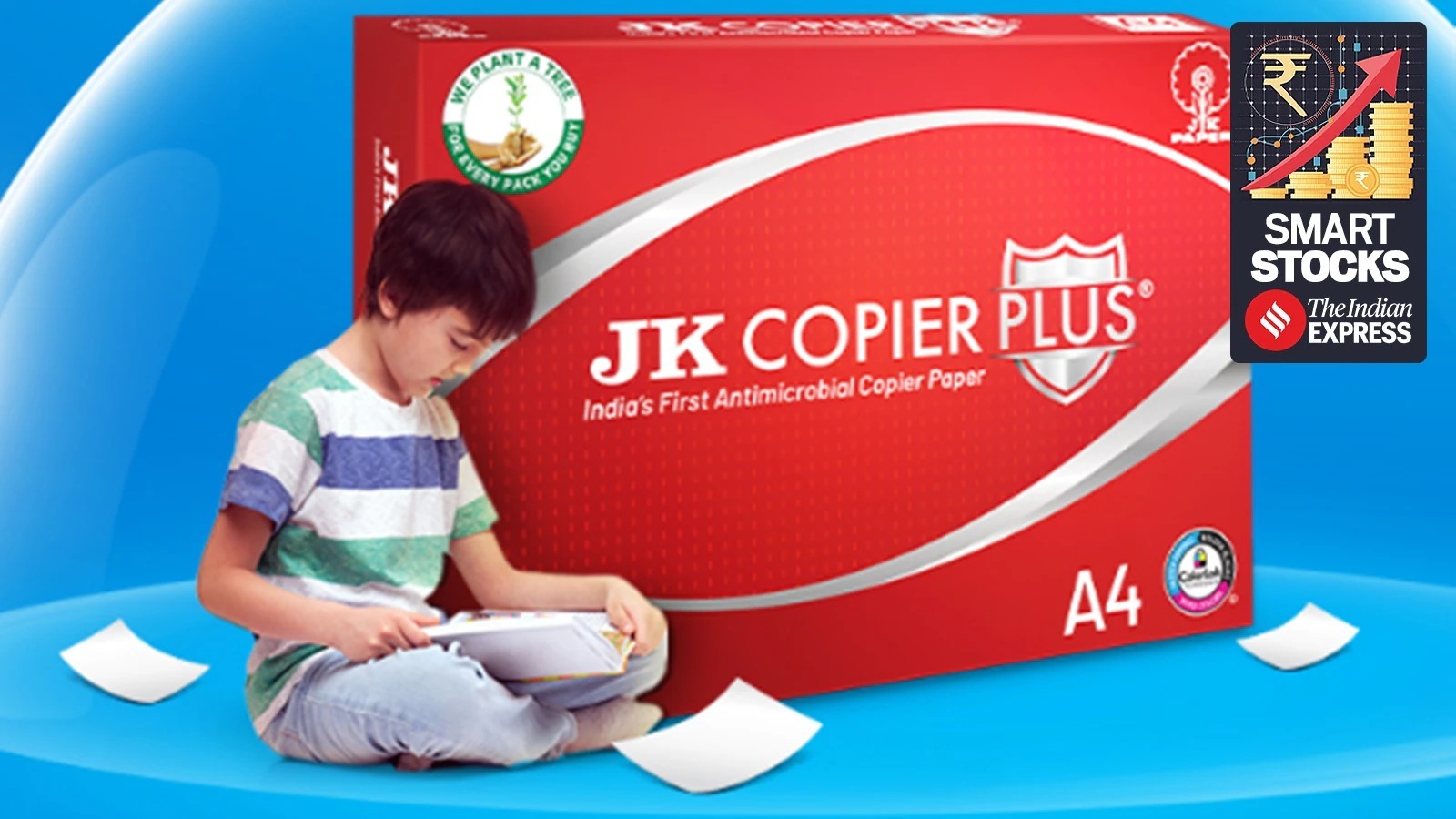
ROE at 7.04% and ROCE at 8.63% don’t exactly scream capital efficiency either. With debt at ₹2,118 crore and an EV/EBITDA multiple of 9.32, JK Paper is no longer the “JK Copier” of your childhood—it’s now trying to copy the packaging ambitions of West Coast and ITC.
And while it’s printing positive free cash flow and a modest 1.25% dividend yield, its earnings yield of 6.77% hints that the excitement may be mostly in the marketing brochures.
So the headline? JK Paper’s packaging dreams are glossy, but the financials look more like a recycled sheet—thin, crumpled, and waiting for a turnaround story.
2. Introduction
Remember when “JK Copier” was the default paper for every school project, office photocopy, and college notice board? Those were the days when JK Paper was the darling of stationery cupboards across India. Fast-forward to 2025, and the same company now wants to be the next packaging powerhouse—because let’s be honest, no one prints anymore except your nosy landlord.
The shift makes sense. Demand for office paper is fading faster than a toner cartridge, while e-commerce, FMCG, and pharma packaging are booming. JK Paper saw this plot twist early and reinvented itself like a Bollywood hero in a second half redemption arc. From 90% writing and printing paper revenue in FY16, it now earns just 60% from that segment in FY24—thanks to its shiny new packaging board capacity of 2,91,000 MT.
But reinvention doesn’t come cheap. Margins fell from a juicy 33% in FY23 to 27% in FY24, raw material costs ballooned, and realizations dipped 17–18% across product lines. The result? Profits that feel like a soaked newspaper.
Still, credit where it’s due—JK Paper isn’t sitting idle. It’s acquiring packaging companies like Borkar and Horizon Packs, adding pulp mills, and prepaying ₹164 crore of loans like a good boy scout. Whether this script turns into a blockbuster or a soggy re-run will depend on execution, margin recovery, and how soon the company can pulp its debt down.
So grab a cup of chai, dear reader. We’re about to decode how a paper company is trying to wrap itself in a new future—literally.
3. Business Model – WTF Do They Even Do?
JK Paper’s business model can be summed up as: “We cut trees, turn them into pulp, and sell dreams wrapped in glossy sheets.”
But the breakdown is actually quite interesting—and strategic:
- Packaging Paper (40% of FY24 revenue): The rising star. Used in pharma, food, beverages, and FMCG, this segment’s market share jumped from 24% in FY22 to 40% in FY24. JK Paper holds a solid 17% in India’s virgin packaging board segment.
- Copier & Office Paper (35%): The OG money-maker now facing midlife crisis. Once 42% of FY22 sales, now shrinking as offices go digital. Still, it commands a 28% market share.
- Writing & Printing Paper (15%): Used in books and notebooks. Margins are okayish, but volume growth is flat. Market share around 8–10%.
- Other Products (10%): Includes niche papers like OGR, Ecosip, and bond papers—basically the “character actors” of JK Paper’s portfolio.
Manufacturing