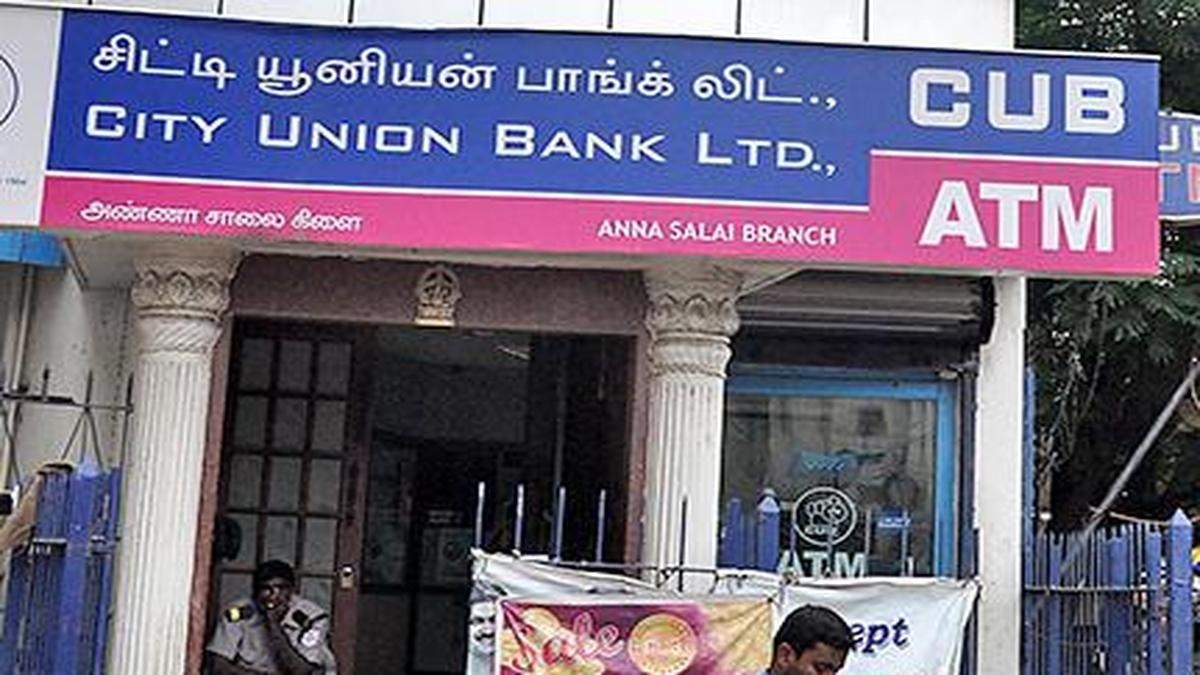
1. At a Glance
City Union Bank Ltd (CUB) has been around since before India had income tax, cricket leagues, or fintech influencers pretending to be Warren Buffett. The 121-year-old Tamil Nadu-based lender just dropped its Q2FY26 results, and surprisingly, the old-timer’s still got some swagger left.
PAT for the quarter came in at ₹329 crore, up 15% year-on-year. Revenue (interest income) stood at ₹1,653 crore — a modest but respectable 15.3% YoY bump. The Net Interest Margin (NIM) eased slightly to 3.6% from 3.65%, but the bank compensated with tight cost control and falling NPAs.
At a market cap of ₹17,459 crore, stock price ₹236, and P/E of 14.4x, the bank trades around fair industry multiples. Its book value of ₹134 and ROE of 12.6% make it a solid mid-tier performer in the private banking zoo.
In short, CUB is that seasoned uncle who still brings sweets at Diwali — dependable, conservative, but with enough energy to shame younger fintech cousins burning cash for UPI stickers.
2. Introduction
City Union Bank isn’t new to India’s banking drama. Founded in 1904, when Madras Presidency was still a thing, this bank has lived through empires, demonetization, and more RBI circulars than most of us have had dinners.
Unlike glamour banks chasing unicorns and tech tie-ups, CUB thrives in the shadows of MSME lending, retail banking, and wholesale trade. Its primary turf is South India, especially Tamil Nadu, which houses 550 of its 875 branches — about 73% of its total business. If you’re in Thanjavur, there’s a good chance your friendly neighborhood loan officer knows your family’s entire credit history — and your favorite dosa joint.
The bank’s DNA screams prudence over panic. While peers went berserk on unsecured loans, CUB preferred gold-backed loans and short-term MSME working capital lending. It’s not sexy, but it works.
And despite being 121 years old, the bank has gone digital too — 95% of its transactions now happen online. They even launched co-branded credit cards with Chennai Super Kings and Sunrisers Hyderabad — because nothing says “financial prudence” like earning points while your team collapses chasing 180.
3. Business Model – WTF Do They Even Do?
CUB’s business model is like a disciplined middle-class dad — no nonsense, low-risk, and allergic to drama.
Primary income source: interest on loans to MSMEs, traders, and retail borrowers. Their loan book of ₹53,066 crore (FY25) grew 14% YoY. Around 65% of that is cash credit and demand loans, 34% term loans, and a humble 1% in bills discounted — basically, no wild bets on long-term infra projects or cryptic overseas ventures.
Sector exposure looks like this:
- MSME & Trade: 30%+ (the bread and butter)
- Agriculture: 17%
- Gold Loans: 27% of gross advances, worth ₹14,270 crore (of which ₹7,629 crore are agri-gold loans)
- Retail housing & personal loans: a modest 7% combined
The gold loan business is particularly shiny — with an average LTV of 61% and negligible NPAs (just 0.04% of gold loan portfolio). In other words, they’d rather hold your grandmother’s bangles than your startup’s business plan.
On the liability side, deposits stood at ₹63,526 crore (FY25), up from ₹55,600 crore. CASA dipped slightly to 28.5%, but overall deposit growth was steady at 14%.
CUB’s style is old-school: lend small, lend