1. At a Glance
If India’s highways had a loyalty program, VRL Logistics Ltd (NSE: VRLLOG | BSE: 539118) would be platinum tier by now. This Hubballi-based logistics veteran just dropped its Q2 FY26 numbers, flaunting Revenue of ₹797 crore (flat QoQ, -0.3%) and a PAT of ₹49.9 crore, up a spicy 39.3% YoY, thanks to tighter wheels, smarter fuel management, and a renewed focus on core freight.
At a current market cap of ₹4,908 crore and price of ₹281/share, VRL sits neatly in the small-cap zone but drives like a mid-cap veteran. With ROE at 17.4%, ROCE at 15.7%, and a 2.67% dividend yield, it’s the kind of company that doesn’t honk much — just quietly overtakes competitors in the less-than-truckload (LTL) race.
And yes, management just doubled the equity through a 1:1 bonus issue in Q2FY26, turning long-term shareholders into accidental collectors of extra trucks — or shares, depending on how you see it.
The best part? Amid India’s logistics tech frenzy, this one remains proudly old-school owned-asset heavy, debt still in control, vehicles still gleaming, and the board still allergic to pledging shares.
2. Introduction
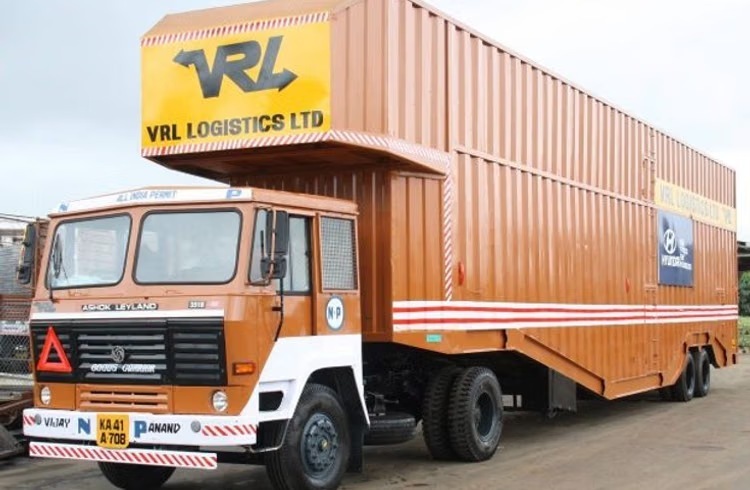
Imagine running 6,000 trucks across 24 states, 5 UTs, 50 hubs, and 1,200+ branches — and still complaining about diesel prices. That’s VRL Logistics for you. Born in Karnataka, raised on ambition, and now spread across every dust-caked highway from Salem to Surat, VRL is India’s largest “owned fleet” logistics operator and the undisputed king of the less-than-truckload (LTL) sector.
While everyone else dreams of becoming “India’s Amazon of logistics,” VRL quietly owns the ground beneath — literally. Its fleet, hubs, and warehouses are mostly owned, not leased, giving it a deep moat in a capital-heavy industry. The company’s old-school model may look boring in a VC pitch deck, but it works — just like that loyal Tata 407 still purring after two lakh kilometers.
It’s not just scale; it’s discipline. The company’s receivables cycle is barely 11 days, which in Indian logistics terms is like finding a trucker who arrives on time and gives change.
Over the years, VRL flirted with bus operations, air chartering, and even windmills, but has now returned to its roots: moving parcels, not people. The exit from passenger air transport and bus divisions was a much-needed decluttering move.
So, what’s the vibe? A logistics company that’s acting like a marathoner — occasionally tired, occasionally grumpy about diesel, but always getting to the finish line before the others.
3. Business Model – WTF Do They Even Do?
VRL’s business is simple: move India’s small and medium-sized cargo efficiently. The fancy term is “Less Than Truckload” (LTL) — meaning your consignment doesn’t fill a full truck, so VRL fills the rest with someone else’s goods.
That’s where the magic lies. The company uses a hub-and-spoke model, where goods from multiple customers converge at central hubs, are sorted, and then dispatched to their destinations. Think of it as India’s offline version of Amazon’s Fulfilment Centers, except with more grease and fewer data scientists.
Here’s the mix as of FY24:
- 91% of revenue comes from LTL services.
- 9% from Full Truck Load (FTL) and others.
VRL’s biggest strength? Ownership. The company doesn’t rent trucks — it owns 5,994 vehicles with a total carrying capacity of 86,405 tons, and 216 trailers with 5,433-ton capacity. Roughly 85% of its vehicles are debt-free, and a quarter are already fully depreciated.
The result: lower maintenance costs, better utilization, and higher reliability. Their in-house vehicle maintenance system, combined with direct tie-ups with tyre, lubricant, and OEM suppliers, makes sure trucks don’t sit idle for long.
While competitors like Delhivery burn investor