1. At a Glance
The egg just cracked a new record, and SKM Egg Products Export (India) Ltd is the chef behind it. The ₹1,018 crore Madurai-based company just served a quarter so sizzling, even omelettes would envy it. The stock’s up nearly 30% in the last 3 months, and the company’s Q2FY26 revenue flew to ₹202 crore (up 58% YoY) while PAT ballooned 186% to ₹24.8 crore. For a company whose core raw material literally clucks, these numbers are no yolk.
At ₹387 a share, SKM now trades at a P/E of 18.6x with ROCE 13.1% and ROE 11.8% — making it look like the FMCG version of a desi dairy farmer who just discovered global trade. The company’s egg-processing empire now cracks 1.8 million eggs per day, and exports roughly 80% of its product to 30+ countries. For perspective, Japan, Russia, and Europe alone form nearly 60% of its sales basket. And yes, the 1:2 stock split recently announced will make this yolky delight even more liquid in the market.
So, is SKM just an egg-seller gone global, or the next FMCG dark horse that went from coop to capital markets glory? Strap in, we’re about to fry some data sunny-side up.
2. Introduction – The Curious Case of the Egg Exporter from Erode
Let’s start with the irony. In a land where half the population argues about vegetarianism and the other half argues about the egg in Maggi, SKM Egg Products Export (India) Ltd quietly built one of Asia’s largest egg processing plants. Founded in 1996 as a joint venture between the SKM group and TIDCO (Tamil Nadu Industrial Development Corp.), it now processes 1.8 million eggs daily—that’s more protein per minute than your gym influencer can digest in a year.
In FY23, SKM’s revenue stood at ₹662 crore, but what caught the market’s eye was its comeback story: from dull single-digit margins to a consistent 14–22% operating margin range. After years of being the quiet egg supplier to global bakers, ramen makers, and pharma firms, SKM has now become a poster child of India’s export-oriented manufacturing success.
From Whole Egg Powder to Frozen Liquid Eggs, SKM has turned the humble breakfast item into a globally traded commodity. And unlike some startups that burn cash faster than eggs on a tawa, SKM’s operating cash flow has been a solid ₹65 crore in FY24, indicating this hen really does lay golden eggs — or at least ones with high EBITDA.
But here’s the fun part: while FMCG giants spend crores on celebrity endorsements, SKM’s PR team is a flock of chickens doing all the marketing by simply existing.
3. Business Model – WTF Do They Even Do?
In one sentence: SKM takes eggs, turns them into powders, liquids, and mixes, and ships them across the globe faster than Zomato can deliver an omelette.
The company is a fully integrated egg products manufacturer — meaning it owns poultry farms, feed units, and an automated egg processing plant. It doesn’t just crack eggs; it dissects them with military precision. Each egg’s yolk, white, and shell are separated, dried, or liquified for different uses:
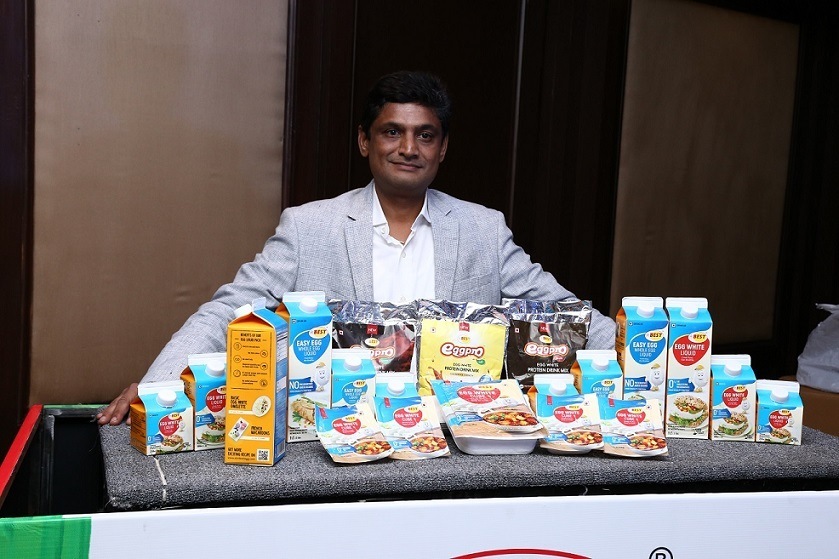
- Whole Egg Powder, Yolk Powder, Albumen Powder – for bakeries, noodles, pasta, mayonnaise, and pharmaceuticals.
- Liquid Eggs – for the lazy but health-conscious Western world that prefers pouring protein from a carton.
- Bakery Mixes – pre-dried, blended powders with sugar, salt, or flour — basically the 5-star chef’s shortcut.
What’s the twist? Nearly 80% of its revenue is export-driven, and 60% comes from Japan, Russia, and Europe, where SKM products quietly sit inside baked goods, ice creams, and noodles you probably ate without realizing they came from Tamil Nadu.
The company’s top 10 customers account for ~49% of sales, which sounds risky but also shows that SKM has deep B2B stickiness. Their export certifications — ISO 22000, HALAL, BRC, ISO 17025 — make them eligible suppliers to large global FMCG brands.
To simplify: SKM is like Amul for the non-vegetarian world — except instead of cows, it manages chickens that don’t unionize.
4. Financials

One Response
It is not Madurai based, It is Erode based. Can you pls check