1. At a Glance
Blue Dart Express Ltd, the DHL-backed delivery overlord, reported yet another quarter of “speed with some turbulence.” The company clocked ₹1,549 crore in revenue for Q2 FY26, up 6.9% YoY, while PAT hit ₹81.4 crore, up 29.5% YoY — the kind of courier delivery that even Amazon’s drone division would envy.
At a market cap of ₹13,138 crore and a P/E ratio of 49.3x, Blue Dart is valued like it’s delivering not just parcels but GDP growth. The current price at ₹5,538 has been stuck in traffic lately — down 27% YoY and 10% in the last 3 months. Still, it’s an express operator, not a scooter delivery start-up. ROE stands at a solid 16.2%, proving that Deutsche Post’s Indian child hasn’t completely lost its German discipline.
The company runs 56,400+ locations, 8 aircraft, and over 2,000 vehicles, which apparently still manage to get delayed when you’re waiting for your new iPhone. Let’s unpack Blue Dart — the courier that delivers profits, GST notices, and sarcasm in equal measure.
2. Introduction
If India’s economy were a party, Blue Dart would be that friend who insists on charging delivery fees for bringing the snacks. Founded in 1988, it has evolved from a scrappy courier company into South Asia’s largest integrated air and ground express logistics player. But unlike Swiggy, its deliveries actually reach before your food goes cold.
Blue Dart’s history is basically a DHL fairy tale — acquired by the German logistics godfather in 2005, it became the local express arm of Deutsche Post AG. That’s like Sachin adopting a talented gully cricketer — and then sending him to Germany for fielding lessons.
The company’s revenues have compounded at 12% CAGR over 5 years, but profits have been doing their own mood swings, with a 16% decline over the last 3 years. Still, its network is so vast that it could deliver a parcel from Shillong to Kanyakumari faster than some ministries approve a file.
And now, as India’s e-commerce boom continues to explode, Blue Dart stands at the crossroads of growth and fuel costs — one carrying packages, the other burning cash.
So, question for the audience: When your courier company makes ₹5,920 crore in annual revenue but delivers a 0.45% dividend yield — is that speed or stinginess?
3. Business Model – WTF Do They Even Do?
Imagine India’s logistics landscape as a giant relay race. Blue Dart is the athlete who runs both the ground and air legs — and then still bills you for “handling charges.”
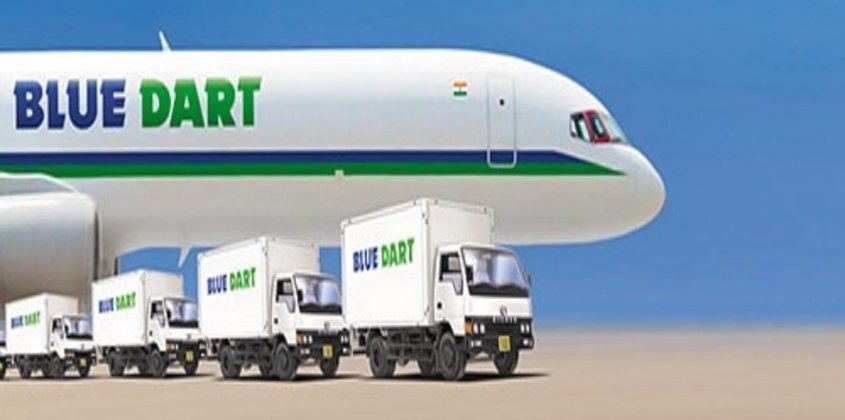
The company’s two key arms — Blue Dart Express (surface and courier) and Blue Dart Aviation (cargo airline) — form the country’s only truly integrated express logistics network. That’s right: it owns 8 dedicated cargo aircraft (6 Boeing 757-200s and 2 Boeing 737-800s), which is more than most regional airlines can brag about.
Here’s how the business breaks down:
- Domestic Priority Services: Passport, tender, certificate — basically, “if it’s important enough to make you sweat,” they’ll deliver it.
- Temperature Controlled Logistics: For pharma and healthcare, because vaccines don’t like heat.
- Critical Express: Secure movement for time-sensitive documents and valuables.
- Dart+ and