1. At a Glance
SBI Cards & Payment Services Ltd — India’s largest pure-play credit card company — just dropped its Q2FY26 numbers like a new EMI offer no one asked for. Total revenue clocked in at ₹5,136 crore, up 13% YoY, and PAT ₹445 crore, up 10% YoY. Market cap sits at a cool ₹88,400 crore, and the stock, perched around ₹929, trades at a P/E of 46x — which is basically the equivalent of buying Maggi noodles for ₹100 and telling your mom it’s “premium.”
The company’s Gross NPA eased to 2.85% this quarter, slightly down from 3.07% in June — a relief, because for a while it looked like customers were maxing out cards to pay other cards. Meanwhile, interest income forms 45% of total revenue, because Indians have truly mastered the art of paying late fees as a subscription. With 1.85 crore cards in force, SBI Cards continues to be India’s “default” credit habit — both literally and figuratively.
So here we are, watching a 27-year-old NBFC with ROE at 14.8% and ROCE at 10.4%, trying to look sexy in a market where everyone else is a fintech in shiny hoodies. The company’s slogan should just be: “Why pay once, when you can pay with interest?”
2. Introduction
There’s something deeply Indian about SBI Cards — it’s the lovechild of middle-class aspirations and upper-class interest rates. You see it everywhere — from the Reliance Mall checkout line to that uncle who pays his LIC premium using a credit card just to get “reward points.”
Since its 1998 origin (back when people still used floppy disks and pagers), SBI Cards has gone from being a niche GE-SBI JV to a household name that runs on a mix of algorithms, anxiety, and annual fees. The company went public in March 2020, right before COVID hit — impeccable timing, because lockdown boredom meant everyone started swiping online.
But as competition thickens with Axis, HDFC, and ICICI Cards flexing their digital muscles, SBI Cards stands at an interesting inflection point: still growing, but slowly. Spends growth has slipped, and while the number of cards increased, their spend share fell from 19.4% in FY21 to 18.3% in Dec 2023.
Still, you can’t ignore the brand power. Backed by State Bank of India, the company enjoys cheaper borrowings and access to millions of SBI loyalists who will click “Apply Now” faster than they read the 42% annual interest clause.
So the big question is — can this financial institution stay relevant in a UPI-saturated world where even your local momo stall accepts QR codes? Or will it just become the Netflix of NBFCs — familiar, expensive, and quietly losing market share?
3. Business Model – WTF Do They Even Do?
SBI Cards basically does one thing — helps people borrow to feel rich for 30 days, and then reminds them they’re not.
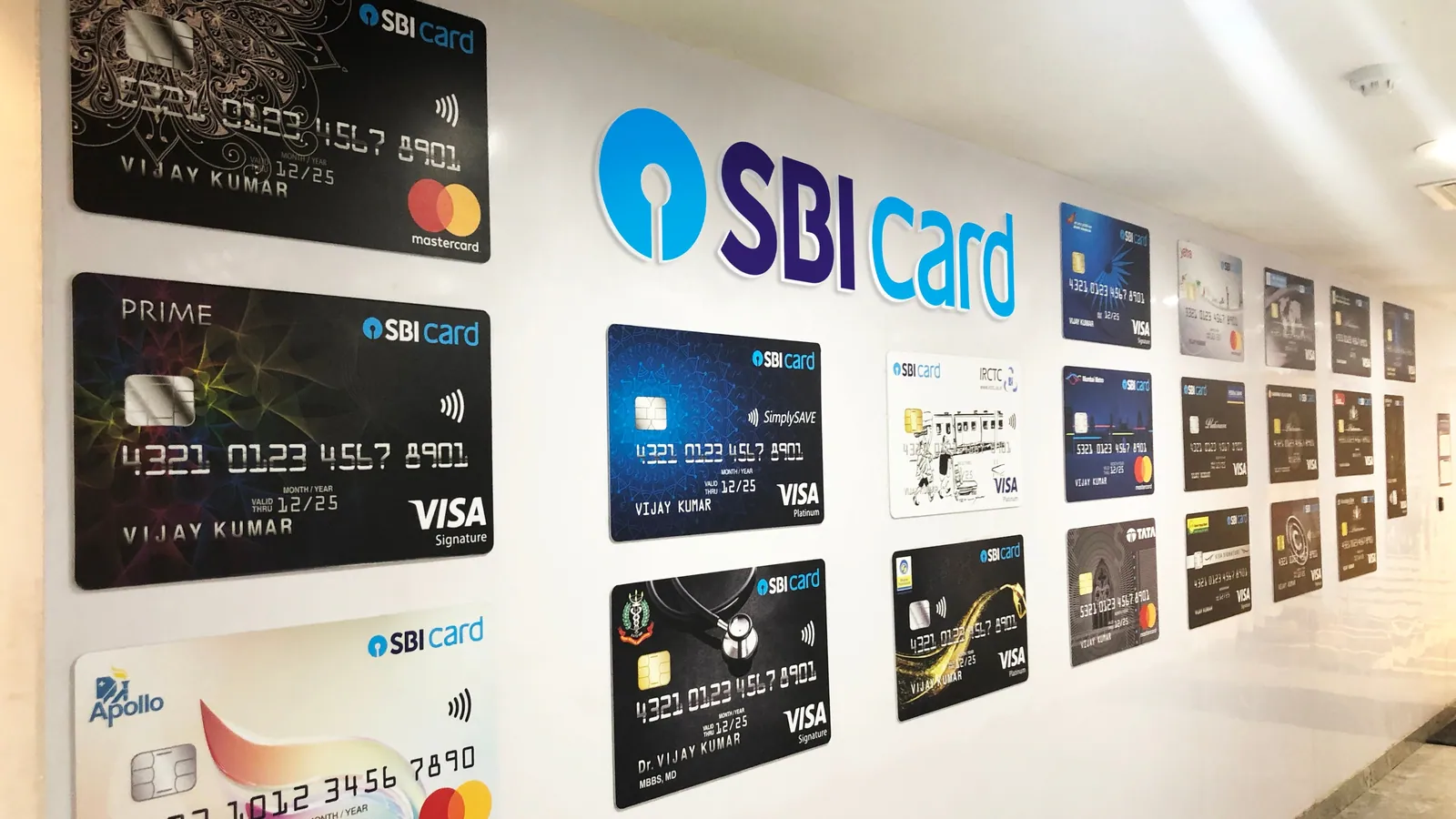
The company issues credit cards under three umbrellas:
- Super Premium (1 card) – For those who think they’re Virat Kohli.
- Core Cards (8 cards) – For middle India who believes cashback is passive income.
- Co-Brand Cards (15 cards) – In partnership with giants like Reliance Retail, Tata Neu, Aditya Birla, Apollo HealthCo, and Punjab & Sind Bank.
Its money comes from three golden sources:
- Interest income (45%) – Because EMIs are the new Indian yoga — monthly, repetitive, painful.
- Spend-based income (29%) – Every time you swipe, SBI Card earns.
- Subscription & instance-based fees (26%) – For those who don’t pay, forget to pay, or dare to withdraw cash.
The model is simple: acquire