1. At a Glance
Once upon a freight terminal, Navkar Corporation Ltd was the quiet middleman between ports, trains, and paperwork. Now, after being courted by JSW Port Logistics Pvt Ltd for a ₹1,012 crore buyout, the company’s story has gone full Bollywood – complete with debt repayment flashbacks, resignations, and a credit rating makeover.
As of October 2025, the stock sits around ₹122 with a market cap of ₹1,842 crore. The company finally reported a Q2FY26 PAT of ₹4.35 crore, a sharp swing from red ink last year. Quarterly revenue stood at ₹162 crore, up 19.5% QoQ, while profit grew a ridiculous 437% (yes, after being almost dead, even sneezing looks like growth).
ROCE and ROE remain underwater at -1.83% and -1.96%, reminding investors that “recovery” and “profitability” are still in long-distance relationship mode. But with JSW’s ₹30,000 crore capex plans and logistics integration, Navkar suddenly looks like that forgotten kid in class the topper just befriended.
2. Introduction
If Indian logistics were a family drama, Navkar would be the middle child—never as glamorous as Delhivery, not as well-behaved as CONCOR, and definitely not as rich as Blue Dart. But when JSW Infrastructure walked in with a fat cheque and said, “Bhai, tu ab hamara hai,” the story changed.
Once debt-free after selling its Tumb ICD to Adani for ₹831 crore in FY23, Navkar relapsed into some moderate leverage again (₹213 crore net debt in FY24). Why? Because logistics without rolling stock is like Maggi without masala—flat and useless. So, it bought trains, trailers, and containers like a kid hoarding Hot Wheels after payday.
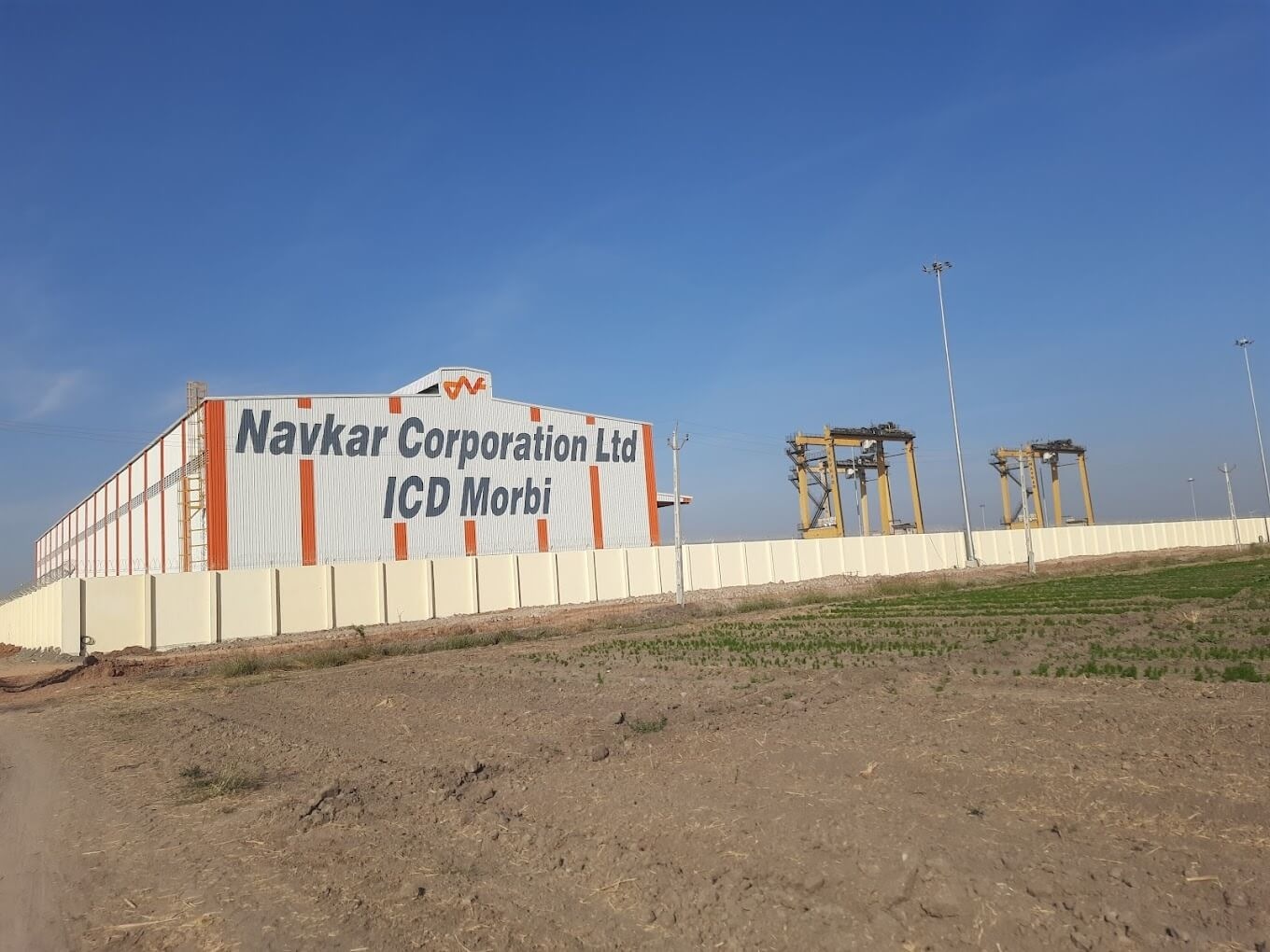
The business still revolves around Container Freight Stations (CFS) near Nhava Sheva, an ICD at Morbi, and Private Freight Terminals (PFT). The company also runs a Container Train Operator license – meaning it can legally move your goods while complaining about the railways.
But here’s the juicy twist: FY25 brought JSW’s acquisition—a full 70% stake transfer. Overnight, Navkar became part of a steel-to-ports-to-logistics conglomerate. The result? New directors, CEO resignations, and a series of SEBI filings that read like breakup letters.
3. Business Model – WTF Do They Even Do?
Navkar’s business model is basically “move boxes efficiently and pray exporters behave.”
The company earns money from four main activities:
- CFS (68% of FY24 revenue): Think of it as a customs-approved hostel for containers. Ships unload at Nhava Sheva, Navkar stores them, clears the papers, and sends them onward. Unfortunately, when exports of agro commodities slowed due to government bans, even Navkar’s warehouses looked empty enough to host cricket matches.
- Transportation (30%): Trucks and trailers. With 602 owned trailers, Navkar is less Ola, more Indian Railways’ sidekick.
- Others (2%): Miscellaneous services, repairs, warehousing—basically whatever earns some change.
It also operates:
- ICD Morbi (Gujarat): A growing inland logistics hub that serves ceramic exporters from Morbi and nearby areas. Still new, still learning to walk