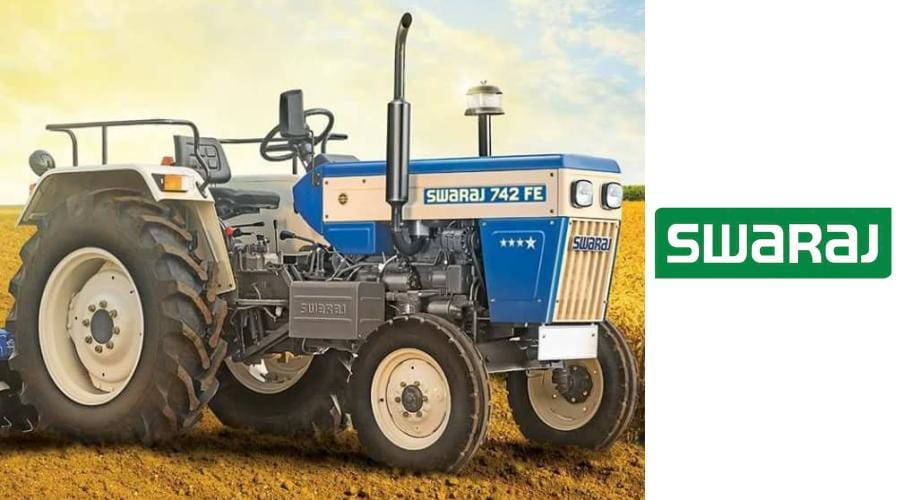
1. At a Glance
If efficiency had a brand ambassador, it would probably wear a turban and work at SAS Nagar, Punjab. Swaraj Engines Ltd (SEL) just reported another solid quarter in Q2FY26 — revenue of ₹504 crore and PAT of ₹49.7 crore, up 8.6% and 9.4% YoY, respectively. The stock currently trades at ₹4,086, giving it a market cap of ₹4,964 crore, and a P/E ratio of 28x. That’s not “cheap diesel,” but when your ROE is a mouth-watering 41.9% and ROCE a blistering 56.2%, investors don’t mind paying a few extra rupees per horsepower.
The company’s operating margin remains stable at around 13.5%, dividend yield at a generous 2.56%, and debt nearly zero — just ₹0.65 crore, which is probably the accountant’s rounding error. After announcing a new capacity expansion to 2,40,000 engines per year, this small-cap seems to be turning into Mahindra’s silent turbocharger. But hold on, because beneath the calm hum of the diesel engine lies a corporate reshuffle — Chairman Rajesh Jejurikar just resigned mid-October 2025, passing the baton to Rajya Vardhan Kanoria, while a new director Gaganjot Singh joined the board. Something’s cooking at the tractor kitchen.
2. Introduction – The Engine Whisperer from Punjab
Every time an Indian farmer fires up his Swaraj tractor, somewhere in Mohali an engineer smiles smugly. Swaraj Engines Ltd, the lesser-known powerplant of Mahindra’s farm empire, is that friend who never shows off yet tops every exam. Established in 1989, the company quietly builds diesel engines that go into Mahindra’s Swaraj brand tractors, covering the 20–65 HP segment — the rural equivalent of a 1.5-litre turbo for the fields.
You might think, “Engines for tractors? What’s the big deal?” But here’s the twist — while automobile firms cry about EV disruption, Swaraj Engines is busy printing double-digit ROEs by literally selling noise and smoke. Its FY24 numbers scream consistency: record engine sales (1.38 lakh units), record revenue (₹1,788 crore), and record profits (₹177 crore). It’s like that unassuming student from Ludhiana who quietly scores 98% while the IIT crowd argues over NEET vs. JEE.
The cherry on top? Mahindra & Mahindra owns 52%, having bought out Kirloskar’s 17% stake in 2024. So the “Kirloskar to Mahindra” transfer was basically an engine swap — only this time, the fuel was pure corporate synergy.
Still, with recent boardroom musical chairs and diesel norms tightening, will the next few years run smooth, or will the crankshaft of destiny throw a curveball?
3. Business Model – WTF Do They Even Do?
Picture this: one factory, a bunch of greasy overalls, and a lot of diesel perfume in the air. That’s Swaraj Engines’ temple. Their business is beautifully boring — manufacture and supply of diesel engines and high-tech engine components, primarily for Swaraj tractors built by Mahindra’s Farm Equipment Division.
Let’s decode it:
- Engines (97% of revenue): The bread, butter, and the entire tandoor. These engines power tractors ranging from 22 HP to 65 HP.
- Spares (3%): For when your tractor sneezes and needs a mechanical aspirin.
Their only