1. At a Glance
Imagine a company that literally powers tractors but metaphorically tows the portfolios of patient investors. Swaraj Engines Ltd (SEL) – M&M’s little diesel-pumping child – has been coughing out engines since 1989. As of October 1st close, the share trades at a lofty ₹4,130, with a market cap of ₹5,017 crore. Over the last 3 months, the stock has pulled a gym-rat performance: +4.24% (abs, not six-pack yet). One-year returns? A muscular 28.5%. Five-year CAGR? 23.1%, enough to shame your bank FD and your cousin’s crypto gamble.
Ratios? Hold your seatbelt – ROCE 56%, ROE 42%, and debt so low it could fit inside a college student’s wallet (₹2 crore only). Dividend yield? A juicy 2.53% – better than your savings account, and delivered with tractor torque.
So, the question: is this Punjab-based engine maker just flexing muscles or is it tractor-pulling its way into over-valued cardio?
2. Introduction
Swaraj Engines is like that obedient topper in your engineering class: never makes headlines, but keeps topping the charts. Founded by Punjab Tractors + Kirloskar in the 1980s, it now sits firmly under Mahindra & Mahindra’s tractor umbrella. It doesn’t sell directly to you and me – no, this is a pure B2B kid – it only supplies to Swaraj tractors (Mahindra’s farm arm).
Think of it like that friend who only dates within their building complex – loyal but limited. Yet, even with this “ek hi customer” syndrome, the company has posted its highest-ever engine sales in FY24 – 1,38,761 units. Capacity? Already expanded from 1.5 lakh to 1.95 lakh engines/year, now stretching to 2.4 lakh units with a ₹220 crore capex. Funded fully by internal accruals. Translation: They’re basically financing growth by printing engines, not by borrowing from banks.
The story writes itself: tractors are boring, diesel is dying, but the numbers keep rising. Why? Because in India, farmers trust Swaraj tractors like desi uncles trust Parle-G with chai.
3. Business Model – WTF Do They Even Do?
Let’s simplify:
- Core Business: Diesel engines (22HP to 65HP) for Swaraj tractors = 97% revenue.
- Side Business: Spares = ~3% revenue (pocket money).
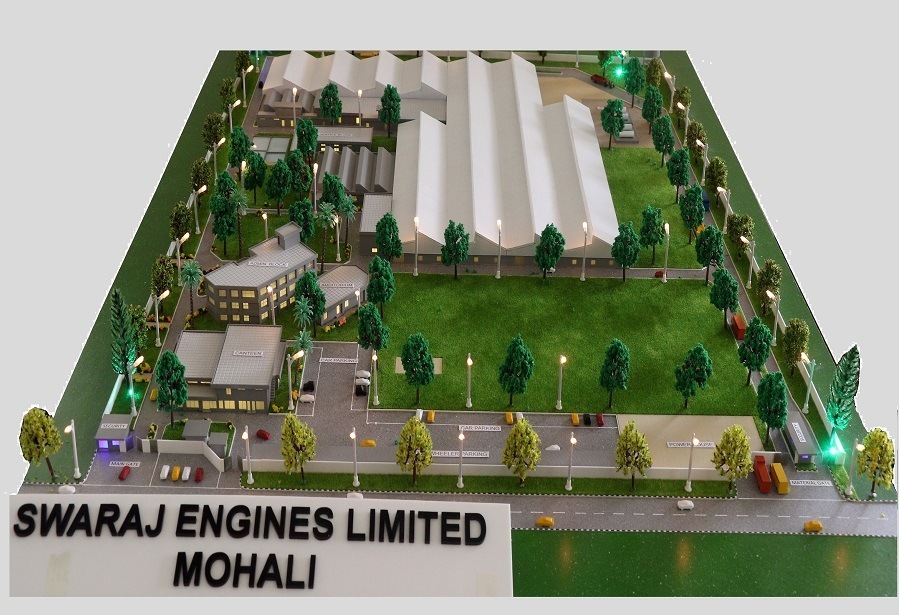
- Facilities: One plant in SAS Nagar (Punjab), one “matching shop” for hi-tech components.
- Customers: Only Mahindra’s Swaraj brand tractors.
- Technology: Adopted emission compliance (TREM V engines in pipeline).
- Expansion: 2.4 lakh engines per year = future volumes locked.
So imagine they are basically the engine ka thekedar for M&M’s farm division. Their revenue model is as predictable as a saas-bahu serial: M&M sells tractors → M&M buys engines from Swaraj → Swaraj books profits → distributes fat dividend → retail investors clap.
Funny part? They’ve got zero debt, insane margins, and ~80% dividend payout. Which means this is not a company, it’s practically a fixed-income scheme disguised as