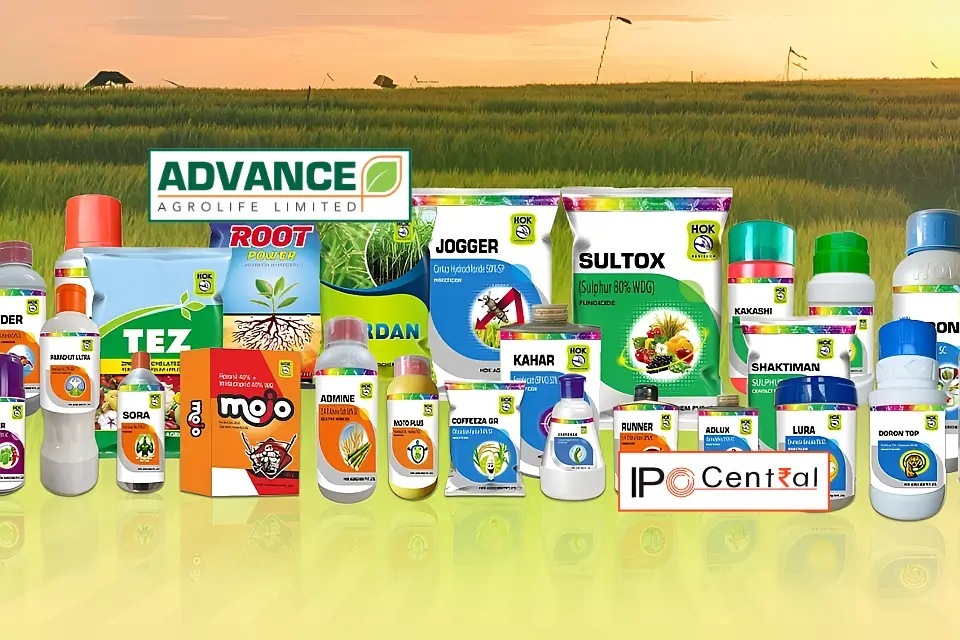
Advance Agrolife Q1FY26 IPO – ₹502 Cr Revenue, ₹25 Cr Profit, P/E Shooting to 25x! Agrochemical ka naya khet, ya shareholders ke liye aur ek beej–roast?
Date of Publishing -
Spotted a factual error — a wrong number, date, or fact? Tell us and we will check the source.
1. At a Glance
Ladies and gentlemen, sharpen your sickles—Advance Agrolife is coming to the market with a ₹192.86 crore IPO. This isn’t a rights issue to buy new tractors, this is a fresh issue of 1.93 crore shares, promising retail investors a minimum ₹15,000 “seed investment” for just 150 shares. Current financials? Revenue touched ₹502.88 crore in FY25, PAT a humble ₹25.64 crore, and margins thinner than your friendly neighbourhood halwai’s samosa layer. At the upper price band of ₹100 per share, the company commands a market cap of ₹642.86 crore. Pre-issue P/E looked like a decent 17.5x, but thanks to dilution, post-issue it blossoms into a rich 25x. Promoters—Om Prakash, Kedar, Manisha, and Geeta Choudhary—currently hold a combined 99.84%, practically running this like a family-owned mithai shop. After IPO, they’ll still own the kadhai.
2. Introduction
Agrochemicals: the magic dust sprinkled on fields so crops don’t wither and farmer votes stay alive. Advance Agrolife Limited wants to ride this tractor straight into Dalal Street. Founded in 2002, they manufacture everything from insecticides, herbicides, fungicides, to growth regulators. In short, anything that makes plants look more Instagrammable.
But let’s not sugarcoat—India’s agrochemical space is a busy mandi. You’ve got global giants, local Jugaad brands, and chemical factories doubling as cousins’ tuition centres. Into this mess walks Advance Agrolife, flexing three plants in Jaipur, 543 employees, and exports to faraway places like Bangladesh and Kenya (basically wherever Indian serials have good TRPs).
Their story is a familiar desi soap opera: consistent revenue growth (10% YoY), slightly sleepy PAT growth (4% YoY), and borrowings that jumped from ₹25 crore in FY23 to ₹80 crore in FY25. Nothing screams ambition like taking more loans and then asking the public for more paisa.
But hey—aren’t IPOs exactly about selling tomorrow’s story today? The “object of the issue” is funding working capital—translation: they need more cash to keep buying raw materials and paying bills. Will this IPO make you rich, or just fund someone’s fertilizer factory canteen samosas?
3. Business Model – WTF Do They Even Do?
Think of Advance Agrolife as your friendly neighbourhood “pesticide uncle.” Their portfolio includes:
Fertilizers: micronutrients and bio-fertilizers. Plants also need supplements—think Centrum Silver, but for wheat.
Technical Grade Products: the raw masala (active ingredients) used by other companies to make the actual sprays and powders.
They mostly run on a B2B model—selling directly to corporate customers. So, you won’t see Advance Agrolife ads starring Salman Khan with a pesticide bottle. Instead, they quietly supply the raw power behind bigger brands who splash crores on TV.
Their export markets? UAE, Bangladesh, China, Turkey, Egypt, Kenya, Nepal. Basically, if your cricket team has played India, they’ve sold something there.
And their competitive strengths sound straight out of an MBA project report: “diversified portfolio,” “integrated plants,” and “healthy growth track record.” Translation: we sell many things, we make them in one place, and we’ve not yet been caught in a scandal.
But the real question—how big is their moat? Or is this just another Jaipur chemical factory trying to look sexy in an RHP?
4. Financials Overview
Let’s do some number-crunching. Below table shows latest quarter vs YoY vs QoQ. (Annualised EPS is just the quarterly EPS x 4).