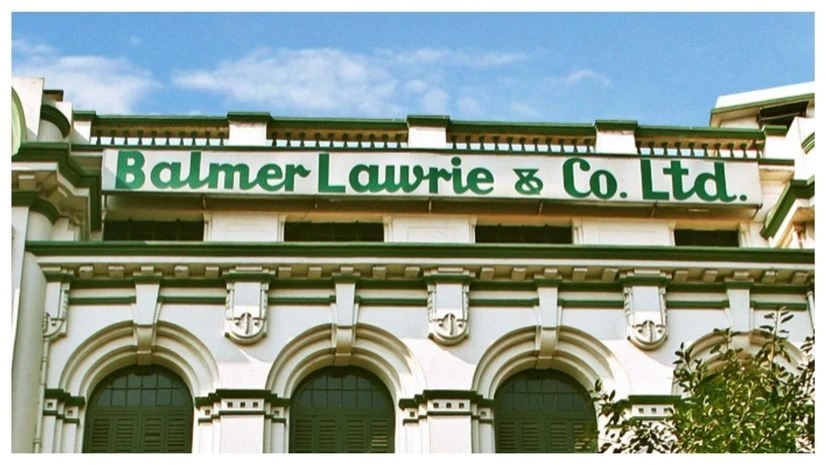
1. At a Glance
Balmer Lawrie Investments Ltd (BLIL) is that rare PSU offspring which doesn’t do much, but still earns more than your neighborhood SME — all thanks to its 62% holding in Balmer Lawrie & Co. Ltd. Think of it as a middleman company whose sole job is to collect dividends, sip chai, and pass the cash to shareholders.
Market Cap: ₹1,732 Cr
CMP: ₹78 (52W High: ₹95.8 | Low: ₹60)
P/E: 9.9 (cheap for PSU standards)
Dividend Yield: 5.5% (basically a better FD if you can ignore PSU drama)
Book Value: ₹62 (P/B = 1.26)
Debt/Equity: 0.08 (almost debt-free, unlike your cousin’s startup)
PAT FY25: ₹175 Cr | Sales FY25: ₹2,569 Cr
ROE: 13.2%, ROCE: 17.2%
Bottom line: This company is less of a business and more of a dividend ATM, but with occasional SEBI fines as “service charges.”
2. Introduction
Balmer Lawrie Investments is like that government babu relative you have: doesn’t run marathons, but still lives comfortably off pension. Formed in 2001 after the GoI decided to demerge IBP’s stake in Balmer Lawrie & Co, this company became the “holding arm.” Today, the President of India owns ~60% of BLIL, and it reports to the Ministry of Petroleum & Natural Gas.
Now, here’s the kicker: BLIL itself has no real operations. Its standalone income is mostly 91% dividend income and 9% FD interest. The heavy lifting is done by its child — Balmer Lawrie & Co. Ltd, which sells everything from industrial packaging to greases, lubricants, leather chemicals, travel services, and even logistics infra.
So investing in BLIL is like ordering Domino’s via Zomato. You’re not eating directly from the kitchen, but you’ll still get the pizza. The only difference is: here, the delivery boy is a government entity, and sometimes SEBI fines them for late delivery.
3. Business Model – WTF Do They Even Do?
Simple: They sit, collect, and distribute.
- Core Business: Holding ~62% in Balmer Lawrie & Co. Ltd.
- Revenue Source:
- Dividend income from Balmer Lawrie & Co (~91%).
- Interest from fixed deposits (~9%).
- Value Chain: They’re literally the pass-through entity. Think of it as LIC’s younger cousin who never got a job but still shows up in family functions wearing gold.
The irony: their “subsidiary” Balmer Lawrie & Co. has revenues of ~₹2,500 Cr every year across multiple industrial businesses, while the parent BLIL is just waiting for its share of the dividend cheque.
So, WTF do they do? Basically: Hold → Collect → Distribute → Get fined