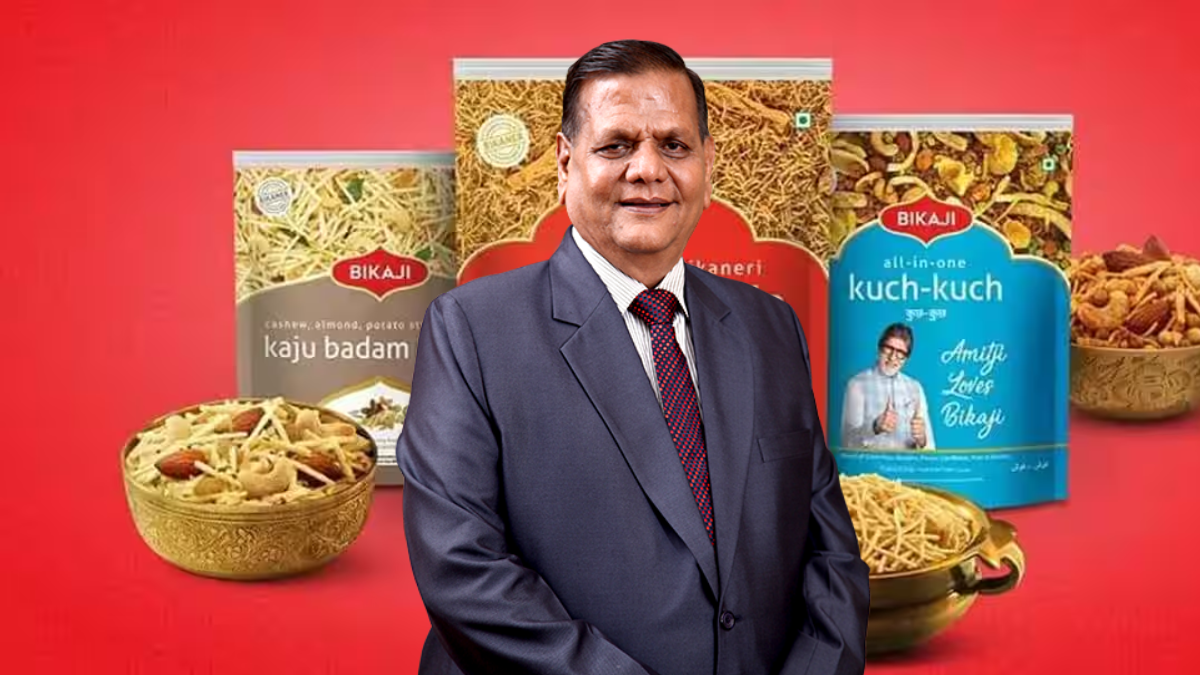
Bikaji Foods Q1 FY26 + Masala Numbers that Taste Spicier Than the Snacks
1. At a Glance
Bikaji Foods, the self-crowned emperor of bhujia, just served Q1 FY26 with revenue of ₹653 crore and profit of ₹59.9 crore. Sales rose 14.2% YoY, but profit growth came like a diet-sized samosa—just 2.8%. P/E is sitting at a comedy-club-level 96x, proving India’s love for namkeen is pricier than dating apps on Valentine’s Day.
2. Introduction
Imagine walking into a Kirana store in Bihar, you ask for chips, and the shopkeeper instead pushes a Bikaji family pack namkeen into your hand like it’s the last rasgulla at a Bengali wedding. That’s Bikaji’s business model—soaked in culture, spiced in scale, and sprinkled with Amitabh Bachchan’s endorsement.
But hold your bhujiya strings. The company is trading at 14x book value, profits dipped 28% YoY TTM, and enforcement agencies are already calling the MD for tea and samosa chats about Rajasthan Premier League sponsorships. A company selling bhujia now needs to convince ED that the money trail isn’t masala-coated.
Still, Bikaji isn’t a random mithai shop. It’s the 3rd largest ethnic snacks brand in India, pumping out over 35,000 tonnes of Bikaneri bhujia annually. From sweets to papads to western snacks, it has a buffet ready. But are margins as crunchy as their sev, or soggy like yesterday’s jalebi? Let’s find out.
3. Business Model – WTF Do They Even Do?
Bikaji runs the “desi snack unicorn” playbook. They take wheat, besan, ghee, sugar, add salt of nostalgia, and distribute it through 10.5 lakh outlets. Six business legs carry this snack empire:
Ethnic snacks (67%) – Bhujia and namkeen. If Rajasthan had an official currency, it would be bhujia strings.
Sweets (15%) – Soan papdi (the forced Diwali gift economy runs on this).
Western snacks (8%) – Chips & puffs because Gen-Z thinks “namkeen = chhote papa snacks.”
Papad (5%) – Both handmade (your dadi approves) and machine-made (your CA approves).
Others (4%) – Cookies, khakhras, gift packs for when you forget anniversaries.
Their moat? Gigantic capacity of 299,820 tonnes, more factories than your local mithai chain can dream of, and Amitabh Bachchan saying “Bikaji le lo” on TV.
But here’s the kicker: family packs (59% of sales). Indians apparently want bhujia by the kilo—portion control is for salads, not snacks.
Question for you: when was the last time you finished a family pack alone and blamed “guests” for it?
4. Financials Overview
Source table
Metric
Latest Qtr (Q1 FY26)
YoY Qtr (Q1 FY25)
Prev Qtr (Q4 FY25)
YoY %
QoQ %
Revenue (₹ Cr)
653
572
611
14.2%
6.9%
EBITDA (₹ Cr)
96
92
74
4.3%
29.7%
PAT (₹ Cr)
59.9
58
40
3.3%
49.8%
EPS (₹)
2.39
2.33
1.78
2.6%
34.3%
Commentary: Revenue is scaling like a startup, but PAT refuses to run—crawling at 3% YoY. QoQ looks good thanks to festive demand building up. Annualised EPS = ₹9.56. At CMP ₹776, your P/E is a dinner-table joke: 81x. That’s Nestlé-like pricing without Nestlé-like OPMs.
5. Valuation Discussion – Fair Value Range Only
P/E Method EPS (Annualised) = ₹9.56 Industry average P/E ~64 Range: ₹610 – ₹765
EV/EBITDA EV = ₹19,464 Cr. EBITDA (TTM) ~ ₹333 Cr. EV/EBITDA = 58.4x vs industry ~35–40x Fair EV range = ₹11,655 – ₹13,320 Cr. Per share = ₹465 – ₹530
DCF (simplified masala math) Assume FCF ~ ₹90 Cr., growth 12%, discount 12%. Intrinsic range = ₹500 – ₹650.
Fair Value Range = ₹465 – ₹765 Disclaimer: This range is for educational purposes only and not investment advice.
6. What’s Cooking – News, Triggers, Drama
ED Summons: Managing Director asked to explain Rajasthan Premier League sponsorship. Bhujia may be crunchy, but financial disclosures better not be.