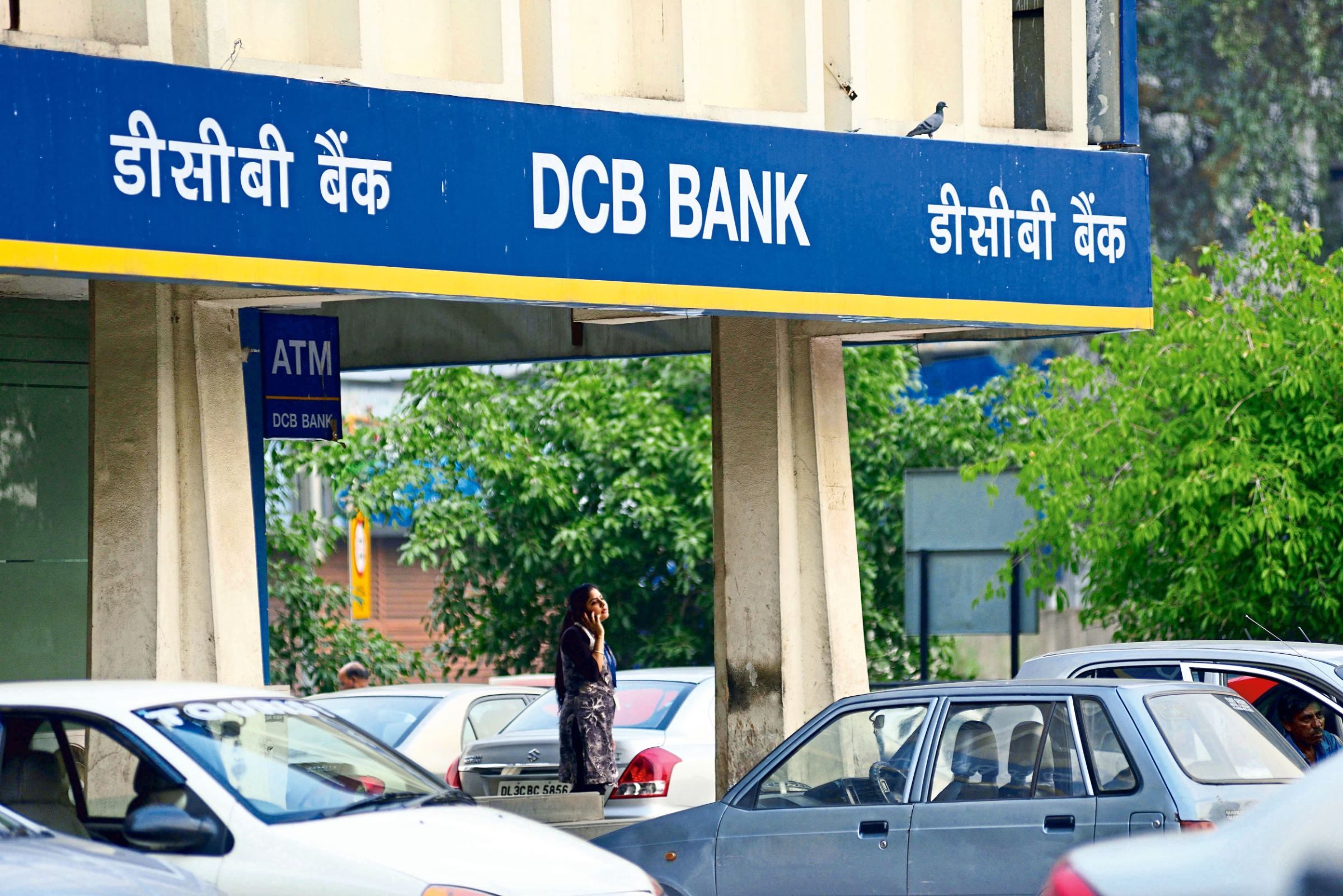
DCB Bank Ltd – EPS ₹20.4, P/B 0.69, ROE 11%: Small Bank, Big Drama
1. At a Glance
DCB Bank is that small private sector bank which insists it is “different” while looking suspiciously like every other midlife-crisis lender. With a market cap of just ₹3,900 crore, a book value bigger than its market price (P/B 0.69), and ROE limping at 11%, the bank is basically a clearance-sale item in the financial mall. NPAs? Stable but not sparkling – Gross at 3.23%, Net at 1.11%. CASA ratio? Barely 26% – about as loyal as Indian voters during state elections.
2. Introduction
Once upon a time in 1995, a sleepy cooperative bank (Development Co-operative Bank Ltd) decided to rebrand itself as Development Credit Bank – like a local kirana store painting itself blue and calling itself “Mini Big Bazaar.” Fast forward, today’s DCB Bank is still fighting for relevance in a market dominated by giants like HDFC, ICICI, Axis, and Kotak.
On paper, it looks respectable: 442 branches, 418 ATMs, and presence in 20 states. On the ground, it’s still hustling in Tier-2 to Tier-6 locations, lending to farmers, small businessmen, and anyone who doesn’t immediately qualify for HDFC’s platinum credit card.
But here’s the kicker – despite 20% revenue growth and ₹641 crore PAT in FY25, the stock is priced like a leftover samosa at 4 pm. Why? Because markets don’t trust small banks easily – especially ones with NPAs hovering above 3%, CASA stuck below 30%, and the occasional RBI penalty for auctioning gold ornaments without proper notice.
So, is this the underdog Rocky Balboa of banking or just another mid-tier player waiting to be merged, acquired, or quietly forgotten? Let’s investigate.
3. Business Model – WTF Do They Even Do?
DCB Bank runs on a simple formula: give loans where big banks won’t bother, collect deposits where people are still excited to see a passbook, and then pray the NPAs don’t spiral.
Mortgages (45%) – The main meal of the house, plain dal-chawal.
Agri & Inclusive Banking (25%) – From tractors to Kisan Credit Cards, because no political speech is complete without “farmer empowerment.”
Corporate Banking (8%) – The side hustle, mainly SMEs and MSMEs.
Co-lending (8%) – Borrowed business model from fintech bros.
Gold Loans (3%) – Because Indians keep gold even if they don’t keep promises.
Commercial Vehicles (1%) – The crumbs.
Others (4%) – Translation: “Stuff we can’t classify properly.”
Basically, DCB Bank is your neighbourhood general store of banking – little bit of everything, nothing world-class, but you’ll find something useful when HDFC tells you “Sir, we cannot process your loan at this time.”
4. Financials Overview
Metric
Latest Qtr (Jun’25)
YoY Qtr (Jun’24)
Prev Qtr (Mar’25)
YoY %
QoQ %
Revenue
₹1,814 Cr
₹1,489 Cr
₹1,742 Cr
21.8%
4.1%
EBITDA*
₹1,209 Cr (NII)
₹993 Cr
₹1,184 Cr
21.7%
2.1%
PAT
₹157 Cr
₹131 Cr
₹177 Cr
19.8%
-11.3%
EPS (₹)
5.0
4.19
5.63
19.3%
-11.2%
(*Here EBITDA = NII + Other income – Opex equivalent)
Commentary: Profit growth looks healthy on YoY, but sequentially PAT slipped. EPS annualised at ~₹20. The stock trades at 6x earnings – which is basically “value stock” territory or “no-growth trap,” depending on your optimism level.
5. Valuation – Fair Value Range Only
Method 1: P/E
EPS TTM = ₹20.4
Industry P/E = 12x
Range = 0.5x industry (6x) to 1.0x industry (12x)
Fair Price = ₹122 – ₹245
Method 2: EV/EBITDA
EV = ~₹70,700 Cr (includes deposits as debt equivalent)
EBITDA proxy = NII + Other Income – Opex ~₹5,500 Cr
EV/EBITDA ~12.9x vs peers at 10–14x
Range = Fair value broadly aligned at CMP.
Method 3: DCF (Simplified)
PAT growth assumption 12% CAGR, COE 14%, terminal growth 3%
Intrinsic value range = ₹130 – ₹210
👉 Fair Value Range: ₹120 – ₹220 Disclaimer: This fair value range is for educational purposes only and not investment advice.
6. What’s Cooking – News, Triggers, Drama
CEO Change: Murali M. Natrajan retired after 15 years; Praveen Kutty took charge in April 2024. New bosses usually bring PowerPoint optimism, but results will take years.
Capital Infusion: Aga Khan Fund (AKFED) to pump ₹83 crore, raising stake to 15.66%. Basically, Aga Khan is still betting on this underdog.
Penalties: RBI slapped ₹63.6 lakh fine in Mar’24, another ₹86.5 lakh in Feb’25. Gold ornament auction without