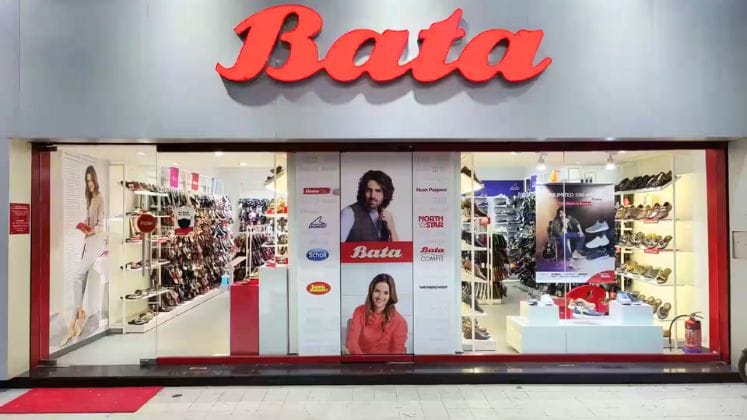
Bata India Ltd – From Shoes to Show Cause: When 72x P/E Meets 2% Sales Growth
1. At a Glance
Bata India – the brand that taught us “surprisingly comfortable shoes can also be surprisingly expensive.” The company’s stock trades at a lofty P/E of 72.5, despite crawling at a five-year sales growth of just 2.7%. With 1,860+ stores across 1,500 towns, Bata has mastered the art of retail expansion — but investors are wondering whether the balance sheet is running a marathon while the P&L is just power-walking.
2. Introduction
Once upon a time, Bata was the default Indian footwear. School kids wore Bata shoes, office-goers trusted Hush Puppies, and the unlucky ones got hand-me-downs that had survived three siblings.
But the retail scene changed. Flipkart, Myntra, and sneaker-obsessed Gen-Z began hunting for Jordans and Yeezys instead of North Star. Bata responded with a makeover — from remodeling 180 stores in FY24 to diversifying into athleisure apparel. Yet, the company still feels like that relative who insists on wearing socks with sandals: respected, reliable, but not exactly trendy.
To its credit, Bata hasn’t sat idle. Franchisee stores have boomed (from 170 in FY20 to 500+ now), it tied up with ABG Brands to bring Nine West into India, and even launched “Power apparel” for athleisure fans. But are these initiatives enough to justify a P/E that would make even Zomato’s valuation blush?
3. Business Model – WTF Do They Even Do?
In simple terms, Bata makes and sells shoes. Lots of them. About 21 million pairs a year from four factories — Kolkata, Bihar, Bangalore, and Hosur. Then it sells them across a retail empire of COCO stores, franchises, MBOs, and e-commerce channels.
The portfolio reads like a footwear buffet — Bata, Hush Puppies, Power, Marie Claire, North Star, Comfit, and even Scholl. They’re also experimenting with new flavors: athleisure apparel, Nine West premium fashion, and Sneaker Studios in nearly 700 stores.
The model is now asset-light — because running company-owned stores is passé. Franchises handle the grunt work while Bata earns steady margins. Non-retail channels (like B2B and exports) add some spice, but retail is still king.
In short, Bata is your friendly neighborhood cobbler — except he’s backed by a ₹15,891 crore market cap and charges a consultancy fee to himself through Singapore R&D partners.
4. Financials Overview
Metric
Latest Qtr (Jun’25)
YoY Qtr (Jun’24)
Prev Qtr (Mar’25)
YoY %
QoQ %
Revenue (₹ Cr)
942
945
788
-0.3%
19.5%
EBITDA (₹ Cr)
199
185
178
7.6%
11.8%
PAT (₹ Cr)
52
174
46
-70.1%
13.0%
EPS (₹)
4.05
13.54
3.57
-70.1%
13.4%
Commentary: Revenue is running in circles, EBITDA is holding ground, and PAT has collapsed faster than a fake Adidas sole. EPS annualized is ~₹16.2, giving us the comically stretched P/E of 72x. For context: that’s richer than Metro Brands, and Metro actually grew sales.
5. Valuation – Fair Value Range Only
P/E Method: EPS ₹16.2 × Industry PE (45–50) → ₹729 – ₹810 per share.
EV/EBITDA: EBITDA ~₹751 Cr TTM × 18–20x → EV ₹13,500 – ₹15,000 Cr. Subtract net debt → equity value ≈ ₹12,000 – ₹13,500 Cr → ₹930 – ₹1,050/share.