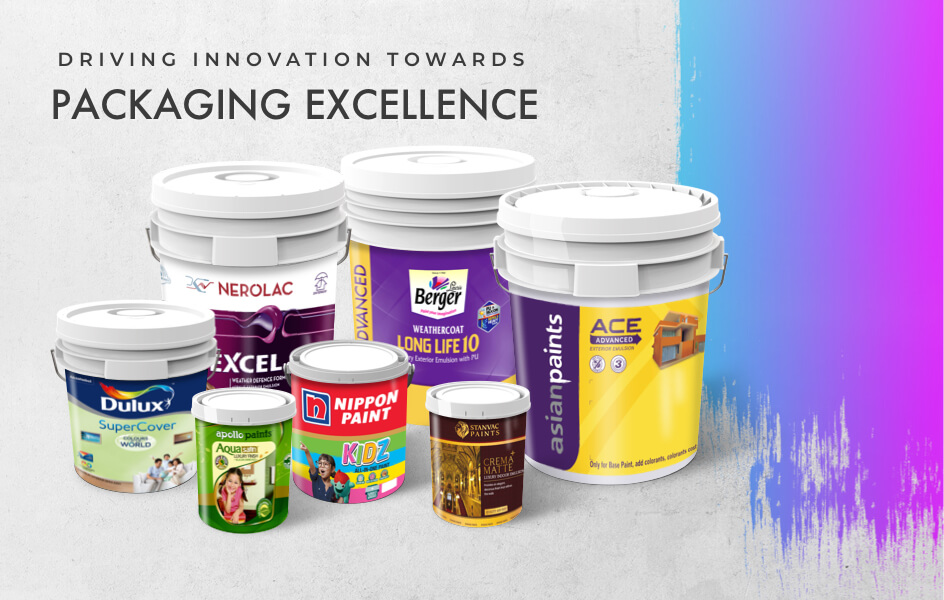
Mold-Tek Packaging — ₹2,606 crore market cap, 22% sales jump, and plastic tubs fancier than your gym lunchbox
1) At a Glance
Mold-Tek Packaging (Mold-Tek Pack, not to be confused with Mold-Tek Tech) is India’s poster child of injection-moulded buckets. Think lube pails, paint tubs, curd cups, and now pharma packs—everything your fridge, garage, and balcony has but you never noticed. Latest quarter: ₹241 crore revenue (+22% YoY), ₹21.8 crore PAT (+32% YoY), and OPM steady at 19%. The stock ran +75% in 6 months, because apparently even buckets can moon if branded well. Promoters hold just 33%, FIIs are slowly running away, but the company keeps opening new plants like it’s playing Monopoly.
2) Introduction
You know you’ve made it in India when your name is plastered across every paint bucket and edible oil tub. Mold-Tek Packaging has managed exactly that. For years, it was the “boring cousin” of FMCG—making containers, not content. But quietly, this Hyderabad-based player became the leader in rigid plastic packaging, owning ~25–30% share in paints & lubes packaging, while muscling into foods, FMCG, and now pharma packaging.
The narrative? “Asset-heavy + high client stickiness.” Translation: they spend a ton on machines but once Asian Paints or Amul approves your bucket, they don’t keep tendering it out every year.
Of course, the glamour is limited. You won’t impress your Tinder date by saying “I make injection-moulded lids with IML printing.” But investors are impressed—the stock trades at 40× earnings, double the industry median. Why? Because the company smells like a smallcap FMCG play disguised as a boring industrial.
But here’s the detective twist: low promoter holding (33%), pledges exist, and working capital cycle is stickier than Fevicol. Is this packaging prince ready for a royal march, or just one capex away from over-leverage?
3) Business Model – WTF Do They Even Do?
Mold-Tek’s empire rests on injection moulding with in-mould labelling (IML)—basically, embedding fancy labels during moulding itself. No peeling, no smudging, and customers pay more because branding matters.
Revenue split tilts ~70% towards paints/lubes but FMCG share is inching up. Margins are consistently 18–20% OPM, far better than flexi-pack peers. Customers include Asian Paints, Berger, Castrol, Amul, HUL, ITC—big names that don’t default easily.
The catch? Each new vertical = capex. Cheyyar (Tamil Nadu), Panipat (Haryana), Sultanpur (Telangana pharma unit)—all shiny plants commissioned in 2024. Assets rising, debt rising, depreciation rising.
Question: Do you prefer a packaging co. that milks old paint buckets forever, or one that burns cash to chase pharma dreams?
4) Financials Overview
Metric
Latest Qtr (Jun’25)
YoY Qtr (Jun’24)
Prev Qtr (Mar’25)
YoY %
QoQ %
Revenue
241
197
203
+22.3%
+18.7%
EBITDA
47
36
38
+30.6%
+23.7%
PAT
21.8
16.5
16.1
+31.8%
+35.4%
EPS (₹)
6.74
4.97
4.90
+35.6%
+37.6%
Annualised EPS (Q1 run-rate) = ₹27. Compare that to CMP ₹784 → ~29× forward P/E. On trailing EPS ₹20 → ~40×.
Sarcasm note: The company sells tubs, but the stock trades like it sells Tesla batteries.
5) Valuation – Educational Fair Value Range
A) P/E method
TTM EPS: ₹20 → Current P/E ~39.
Annualised EPS (FY26E run-rate): ₹27.
Peer multiples: 18–25× (packaging cos).
Reasonable range: 22×–30×.
Fair value = ₹594 – ₹810.
B) EV/EBITDA method
TTM EBITDA ≈ ₹152 crore.
EV = ₹2,780 crore → Current multiple ~18×.
Fair range: 12×–16× → EV = ₹1,824–₹2,432 crore.
Equity value ≈ ₹1,648–₹2,256 crore → Per share ₹497 – ₹680.