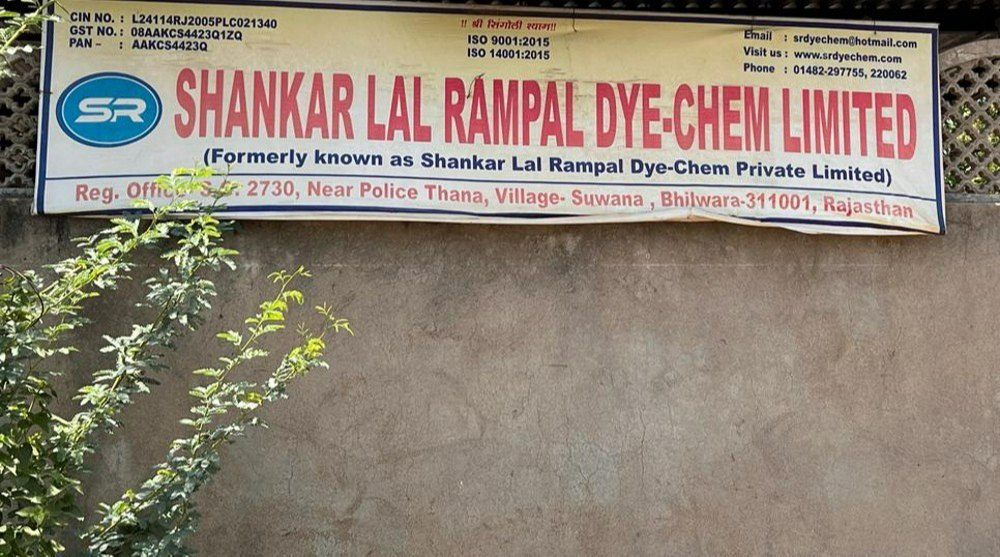
SR Dye-Chem (BSE: 542232 | NSE: SRD) is a trader–importer–exporter of dyes and industrial chemicals—more a sharp broker with a warehouse than a smokestack manufacturer. CMP ~₹77.7, m-cap ~₹497 crore, TTM P/E ~41. Beneath the polite exterior lives a nimble hustler: 122 crore quarterly revenue (Jun’25), OPM ~4.6%, PAT ₹4.24 crore, EPS ₹0.66. Debt is sleepy (D/E ~0.16), interest coverage is gym-fit (~21.6x), and current ratio is a Bollywood 6.66. But EV/EBITDA ~29.6 says the market already brought dessert before the main course.
2) Introduction
If chemical trading were a movie, SR Dye-Chem is the fixer who knows which drum, which port, which buyer, which week. Incorporated in 2005, the company sources and supplies a buffet of sulfur dyes, paraffin waxes, phosphoric acid, sodium sulfide/hydrosulfite, hydrogen peroxide, citric acid, phosphates, refined glycerine, and assorted “other chemicals”—to textiles, garments, dye houses, and industrial users. It even brokers chemicals on commission (the least capital-hungry calorie in the meal).
The business comp has two faces. In a good cycle, volumes pop, pass-throughs work, working capital behaves, and margins look dignified. In a tight cycle, spreads compress, customers negotiate like it’s Delhi wholesale, and your P&L becomes a masterclass in patience.
FY25 TTM revenue ~₹425 crore with NPM ~2.8% and ROCE ~14%—not bad for a trading-first model. Balance sheet is spartan: net worth ~₹110 cr, debt ~₹18 cr, asset-light fixed base. And Q1 FY26 brought a perk-up: revenue +23.8% YoY and PAT +21.8% YoY. Management also approved a backward-integration acquisition (Jul 28, 2025)—code for “we’d like some manufacturing margin, please.”
Detective’s prompt: Are we looking at a plain-vanilla trader, or a trader trying to grow some manufacturing teeth?
3) Business Model – WTF Do They Even Do?
Short answer: Procure chemicals globally, supply domestically (and a little globally), and earn spread + service.
Operating style:Low capex, high working-cap discipline, deep vendor/buyer network, and constant price discovery.
New spice:Backward-integrating manufacturing (board-approved in Jul’25). If executed sensibly, this can add margin stability and reduce pure-trader volatility.
Question: Would you prefer SRD to stay nimble and asset-light—or take measured manufacturing bets to lift margins above the 4–5% OPM ceiling?
Quip: The YoY recovery is real; QoQ jump in profitability suggests either better spreads or product mix. But at sub-5% OPM, one bad shipment and the calculator sulks.
5) Valuation – Fair Value Range only
We’ll triangulate with P/E, EV/EBITDA, and DCF (educational).
Blended Fair Value Range (education-only): ₹28 – ₹50
Sits where EV/EBITDA and DCF converge, with a nod to the annualised EPS upside.
This fair value range is for educational purposes only and is not investment advice.
Question: With a largely trading DNA, do you anchor on EV/EBITDA (cash reality) or P/E (earnings optics)?
6) What’s Cooking – News, Triggers, Drama (~300 words)
Backward Integration (Jul 28, 2025): Board approved an acquisition for manufacturing expansion. This is the most important pivot—could shift SRD from pure spreads to partial value-add manufacturing, improving margins and stickiness. Execution and compliance will decide the fairy-tale quotient.
Governance/AGM (Aug 30, 2025): AGM on Sep 27, 2025; final dividend ₹0.05/share recommended; director & auditor appointments lined up. An independent director completed a 5-year term.
Listing Optics: Direct listing approval on NSE (Oct 2024)—liquidity and visibility boost.
Capital Discipline: Debt modest, interest coverage robust; current ratio 6.66 (we see you, inventory/receivable cushion).
Export Optionality: Currently ~5% (FY23), but the supplier network spans Asia/EU/MENA. Any credible manufacturing line with export-grade compliance can