Search for stocks /

NGL Fine-Chem Ltd — “₹160 Cr Capex, 39 APIs, and a P/E that changes mood faster than a Mumbai signal.”

1) At a Glance

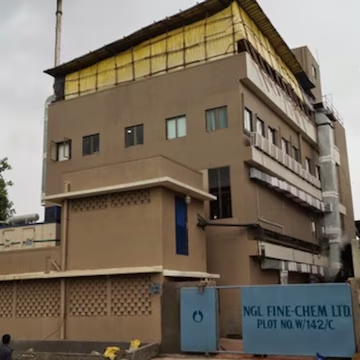
NGL Fine-Chem (NGLFINE) makes veterinary-first APIs (with a tiny human cameo), exports globally, and is currently mid-sprint on a ~₹160 crore multi-phase capacity build. It claims chunky shares in three niche vet APIs (Diminazene, Clorsulon, Buparvaquone), sells to global biggies, and just clocked a strong Q1 FY26 bounce with EPS swinging back to form. The catch? Mid-cycle returns aren’t jaw-dropping yet, ratings just nudged to BBB+ (Negative), and capex will drink cash before it serves cocktails. In short: a specialist lab with ambition—carrying both a stethoscope and a construction helmet.


2) Introduction

If pharma is a thali, NGL is the spicy pickle bowl: small, potent, and capable of lighting up the meal. Incorporated in 1981, NGL built a reputation in veterinary APIs—a less crowded lane versus human generics, with higher switching friction and deeper relationships. That’s the good news. The reality check? Vet APIs are still cyclical, procurement is price-sensitive, regulatory files don’t write themselves, and capex ramps rarely behave like IKEA furniture.

FY23–FY25 told a story: sales up from ₹339 → ₹368 → ₹382 crore, but operating profit ₹54 → ₹35 → ₹34 crore—margins got sandpapered even as scale rose. Yet the company stayed cash-disciplined (FY25 CFO: ₹36 crore), kept promoter pledge at 0%, and held promoter control at ~72.7%. Now comes the big swing: phase-1 commercialised in Q4 FY25, phase-2 due by Q3 FY26, total project cost revised to ~₹160 crore (60:40 debt-equity). Management guides meaningful revenue impact from FY27—translation: FY26 is about validation batches, filings, customer qualification, and absorbing overheads.

Here’s the detective’s hook: NGL’s moat isn’t marketing jazz; it’s process capability in tricky vet molecules, reliable supply for top animal-health names, and backward integration via Macrotech Polychem for key intermediates. If execution is tight and qualification wins land, FY27–FY28 earnings can look very different from the FY24–FY25 trough vibe. But till then, expect some construction dust on the P&L.

Pop quiz: Would you rather see margin first and growth later, or growth capex first and margin recovery after—the “trust me, bro” school of investing?


3) Business Model – WTF Do They Even Do?

Short answer: make and export vet APIs/intermediates for parasites and their shady cousins; add a dozen formulations; build capacity; repeat.

  • Products: ~39 APIs (37 vet, 2 human), ~4 intermediates, ~12 formulations across anthelmintics, antiprotozoals, ectoparasiticides, phosphorus supplements.
  • Concentration (FY25): Top-3 products ~35%, Top-5 ~49%, Top-10 ~69%—focused, but not single-product hostage.
  • Customers & Share: Supplies 5 of top-10 global animal-health players; 15–50%+ market share in three navratna APIs (Diminazene, Clorsulon, Buparvaquone).
  • Revenue Mix (FY25): Animal APIs ~92%, Human APIs ~4%, Intermediates ~2%, Formulations ~2%.
  • Geography: Asia ~39%, India ~27%, RoW ~21%, Europe ~11%, USA ~2%—diversified, US exposure small (reg filings in progress).
  • Integration: 100%-owned Macrotech expands intermediates—cost, quality, supply security (a quiet moat).
  • Capex: Tarapur greenfield; Phase-1 running, Phase-2 by Q3 FY26; ₹106.2 crore already sunk by Q4 FY25; FY27 revenue lift is the house view.

Your move: Do you prefer niche leadership in a few APIs or broad product salad with thinner moats?


4) Financials Overview

Quarterly Snapshot (Consolidated, ₹ crore unless stated)

MetricLatest Qtr (Jun’25)YoY Qtr (Jun’24)Prev Qtr (Mar’25)YoY %QoQ %
Revenue104.1990.7594.9714.8%9.7%
EBITDA (OP)10.989.356.3217.5%73.8%
PAT9.249.220.540.2%~1,611%
EPS (₹)14.9614.920.870.3%~1,618%

Annualised EPS (latest qtr ×4) = ₹59.8Re-calc P/E @ ₹1,423 ≈ 23.8x.
(Official TTM P/E shows ~42x on TTM EPS ₹33.8; the annualised lens captures the sharp Q1 rebound.)

Spicy note: QoQ PAT/EPS jump looks Bollywood—remember Mar’25 had a one-off weak print. The real question: can the Jun’25 margin level stick through validation costs and Phase-2 ramp?


5) Valuation – Fair Value Range only (P/E, EV/EBITDA, DCF)
Assumptions we’ll lay on the table:

  • Shares: ~0.62 crore; CMP: ₹1,423 → MCap ~₹879 crore.
  • EV: ~₹950 crore (debt ~₹77 crore, modest cash offset).
  • TTM EBITDA implied by EV/EBITDA 21.4x₹44–45 crore.

A) P/E Method

Scenarios for FY26–FY27 EPS:

  1. Run-Rate (annualised Q1 FY26): EPS ₹60 (assumes sustainability)
    • Apply 18–22x (smallcap, capex/qual risk): ₹1,080–₹1,320
    • Apply 24–26x (brand + visibility premium): ₹1,440–₹1,560
  2. Normalised (blend validation drag): EPS ₹45–₹50
    • Apply 18–24x: ₹810–₹1,200

P/E Range: ₹810 – ₹1,560

B) EV/EBITDA Method

  • EBITDA band ₹40–₹55 crore (TTM to early ramp).
  • Multiple 12–18x (API smallcap with capex in flight).
  • EV fair ₹480–₹990 crore.
  • Equity = EV – Net Debt (~₹77 crore) → ₹403–₹913 crore
  • Per share (÷ 0.62 cr): ₹650 – ₹1,474

C) DCF (Back-of-envelope, education only)

  • FY26–FY27 FCF muted (validation + WC), FY28–FY30 FCF build with Phase-2/greenfield.
  • Mid-cycle FCFF glide to ₹55–₹65 crore by FY30, growth 8–10%, terminal 4%, discount 15%.
  • Indicative equity value ₹900–₹1,100 crore → Per share ₹1,450 – ₹1,775.

Blended Fair Value Range (educational): ₹950 – ₹1,500

It straddles EV/EBITDA floor and P/E/DCFs mid-bands, acknowledging both the Q1 bounce and execution risk ahead.

Disclaimer: This fair value range is for educational purposes only and is not investment advice.

Question: Which lens do you trust more here—EV/EBITDA pragmatism or DCF storytelling?


6) What’s Cooking – News, Triggers, Drama

  • Capex Progress: Phase-1 commercialised (Q4 FY25); Phase-2 by Q3 FY26; project cost ~₹160 cr (slight overrun). Revenue lift from FY27—watch filings/qualifications.
  • Ratings Watch: CRISIL long-term downgraded to BBB+ (Negative); short-term at A2—capex/returns timing
error: Content is protected !!
Verified by MonsterInsights