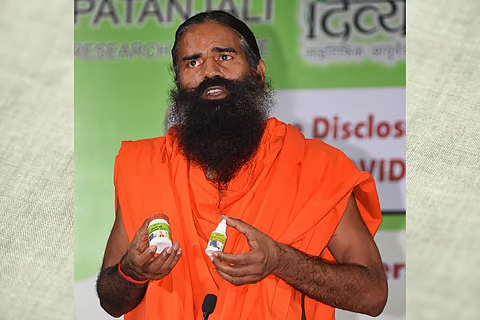
Patanjali Foods Ltd, the edible oil giant formerly known as Ruchi Soya, is like a desi uncle who’s swapped his yoga mat for a vat of sunflower oil. With a market cap of ₹65,178 crore and a stock price of ₹1,799, they’re a heavyweight in branded oils (72% of H1 FY25 revenue) and FMCG (28%), boasting brands like Nutrela and Mahakosh. A 15% sales growth and 30% profit jump in FY25 look tasty, but a P/E of 53.5—spicier than their red chili powder (recently recalled)—and 37.8% promoter pledges raise eyebrows. Is this a healthy bet or a slippery slope? Let’s investigate like a sarcastic auditor.
Introduction
Patanjali Foods, reborn from the ashes of Ruchi Soya in 2019 under Baba Ramdev’s empire, is a curious mix of edible oils, soya proteins, and Ayurvedic ambition. Operating 25 processing plants and a 6.5-lakh-hectare oil palm plantation, they’re a titan in India’s edible oil market, exporting to 34 countries and serving 1+ million retail outlets. Their FY25 revenue hit ₹35,866 crore (15% growth), with profits up 30% to ₹1,219 crore. But a P/E of 53.5 (industry median: 25.0), a ₹27.46 crore GST demand, and a sluggish 2% drop in oil sales make this case smell fishier than a palm oil refinery. With a ₹1,100 crore acquisition of Patanjali Ayurved’s non-food business and 37.8% pledged promoter shares, is this a wholesome growth story or a masala-packed drama? Let’s dig in like a nosy detective.
Business Model – WTF Do They Even Do?
Patanjali Foods is like a thali with two main dishes: Edible Oils (72% of H1 FY25 revenue) and Food & FMCG (28%). The oil segment, featuring brands like Patanjali, Mahakosh, and Sunrich, refines palm, soya, and sunflower oils, with 80,952 hectares of palm plantations feeding their 160 MT/hour crushing capacity. Their oleochemicals division churns out castor and soya derivatives, but flat YoY revenue and a 2% drop in oil sales (12.05 lakh MT in H1 FY25) hint at market saturation. The FMCG arm, with 500+ SKUs across atta, biscuits, and Nutrela soya proteins, is growing but saw a 4% revenue dip in H1 FY25 due to weak demand. Their 8,000+ distributors and 3,420 Arogya Kendras give them reach wider than a yoga guru’s smile, but exports (1% of revenue) are a side dish. With new launches like Nutrela Plant Protein, are they diversifying smartly or spreading themselves thinner than their ghee? What’s your take on this oily empire?
Financials Overview
Metric
Latest Qtr (Jun 2025)
YoY Qtr (Jun 2024)
Prev Qtr (Mar 2025)
YoY %
QoQ %
Revenue
₹8,900 Cr
₹7,177 Cr
₹9,692 Cr
24.0%
-8.2%
EBITDA
₹321 Cr
₹410 Cr
₹516 Cr
-21.7%
-37.8%
PAT
₹180 Cr
₹263 Cr
₹359 Cr
-31.4%
-49.9%
EPS (₹)
₹4.98
₹7.26
₹9.90
-31.4%
-49.7%
Commentary: Patanjali’s latest quarter is like a half-cooked curry—24% YoY revenue growth is decent, but a -8.2% QoQ drop and a -31.4% PAT plunge scream inconsistency. EBITDA margins at 4% are thinner than their low-fat biscuits, and the YoY EBITDA decline (-21.7%) is a red flag. Annualized EPS (₹4.98 x 4 = ₹19.92) gives a P/E of 1799 / 19.92 = ~90.3, way above the TTM P/E of 53.5 but still pricier than a gourmet thali. Weak demand and regulatory hiccups (₹27.46 crore GST demand) are souring the taste. Is this a temporary dip or a sign of trouble? Thoughts?
Valuation – Fair Value Range Only
Let’s crack this valuation case with three methods: P/E, EV/EBITDA, and DCF.
P/E Method: Industry median P/E is 25.0. Patanjali’s TTM EPS is ₹33.67, so fair value = 25.0 x 33.67 = ₹841.75. The current ₹1,799 price suggests the market’s sipping some Ayurvedic optimism.
EV/EBITDA Method: Patanjali’s EV is ₹65,690 crore, TTM EBITDA is ₹1,845 crore, giving an EV/EBITDA of 35.6. Industry median EV/EBITDA (assuming ~12 for FMCG) suggests fair EV = 12 x 1,845 = ₹22,140 crore. Adjusting for net debt (₹788 crore), fair market cap = ₹21,352 crore, or ₹588 per share (36.3 crore shares).
DCF Method: Assume 5-year revenue growth at 15% (in line with TTM), terminal growth 3%, WACC 10%. TTM FCF is ₹198 crore. Discounting FCF growing at 15% for 5 years, then 3% perpetuity, gives NPV ~₹30,000 crore, or ₹826 per share.
Fair Value Range: ₹588–₹842. Disclaimer: This fair value range is for educational purposes only and is not investment advice.
The gap between ₹1,799 and this range is wider than a yoga guru’s stretch. Are investors overpaying for Patanjali’s brand or banking on FMCG growth?
What’s Cooking – News, Triggers, Drama
Patanjali’s been stirring the pot like a spicy chutney. In November 2024, they acquired Patanjali Ayurved’s Home and Personal Care business for ₹1,100 crore, eyeing soaps and shampoos. August 2024 saw commercial production start at their Niglok Palm Oil Mill (5 MT/hour), boosting their plantation play. But regulatory drama steals the show—a ₹27.46 crore GST demand, a red chili powder recall (January 2025), and a wild honey sales ban (March 2025) scream trouble. Their 15–20% export growth target (to 60 countries) and 16–18% FMCG revenue goal sound ambitious, but 37.8% pledged promoter shares and a Supreme Court tax win (February 2025) add masala. What’s the juiciest bit of this saga for you?
Balance Sheet
Metric
Mar 2023
Mar 2024
Mar 2025
Assets
₹13,244 Cr
₹13,262 Cr
₹15,518 Cr
Liabilities
₹1,943 Cr
₹2,008 Cr
₹3,359 Cr
Net Worth
₹9,846 Cr
₹10,205 Cr
₹11,371 Cr
Borrowings
₹1,454 Cr
₹1,049 Cr
₹788 Cr
Commentary: Patanjali’s balance sheet is like a well-oiled machine—assets up 17% to ₹15,518 crore, with net worth at ₹11,371 crore. Borrowings dropped to ₹788 crore (debt-to-equity 0.07), making them nearly debt-free. But liabilities climbing to ₹3,359 crore and a 53-day working capital cycle (up from 33) suggest they’re juggling payments like a street performer. Is this a lean operation or a sign of supply chain stress?
Cash Flow – Sab Number Game Hai
Metric
Mar 2023
Mar 2024
Mar 2025
Operating Cash Flow
₹-339 Cr
₹1,746 Cr
₹198 Cr
Investing Cash Flow
₹526 Cr
₹-912 Cr
₹-36 Cr
Financing Cash Flow
₹241 Cr
₹-1,100 Cr
₹-611 Cr
Net Cash Flow
₹428 Cr
₹-266 Cr
₹-449 Cr
Commentary: Patanjali’s cash flow is like a Bollywood plot—full of swings. Operating cash flow crashed to ₹198 crore in FY25 from ₹1,746 crore, likely due to inventory buildup (79 days). Investing cash flow (₹-36 crore) reflects modest capex, while financing outflows (₹-611 crore) include debt repayment and dividends. A negative net cash flow (₹-449 crore) is a head-scratcher for a profitable firm. Are they mismanaging cash or prepping for a big move?
Ratios – Sexy or Stressy?
Metric
Mar 2023
Mar 2024
Mar 2025
ROE
8.2%
7.5%
12.1%
ROCE
14.0%
11.0%
15.5%
P/E
49.2
63.1
53.5
PAT Margin
2.8%
2.4%
3.6%
Debt to Equity
0.15
0.10
0.07
Commentary: Patanjali’s ratios are a mixed laddoo. ROE (12.1%) and ROCE (15.5%) are decent but lag the industry median (12.87% ROE, 14.07% ROCE). PAT margin at 3.6% is thin, and the P/E of 53.5 is spicier than their chili powder. Debt-to-equity at 0.07 is a flex, but a 53-day working capital cycle and 37.8% pledged shares are stressy. Are these ratios a green flag or a regulatory red alert?
P&L Breakdown – Show Me the Money
Metric
Mar 2023
Mar 2024
Mar 2025
Revenue
₹31,525 Cr
₹31,721 Cr
₹34,157 Cr
EBITDA
₹1,294 Cr
₹1,286 Cr
₹1,947 Cr
PAT
₹886 Cr
₹765 Cr
₹1,301 Cr
Commentary: Patanjali’s P&L is like a steady dhol beat—revenue up 12% over three years to ₹34,157 crore, with EBITDA and PAT growing 50% and 47%. OPM at 6% is modest, and FY24’s PAT dip (due to weak demand) was a hiccup. The FMCG segment’s 28% revenue share is promising, but edible oils’ dominance (72%) and flat growth are concerning. Can they spice up their FMCG game or stay stuck in the oil vat?
Peer Comparison
Company
Revenue (₹ Cr)
PAT (₹ Cr)
P/E
Marico
11,447.00
1,669.00
55.83
Patanjali Foods
35,866.38
1,218.83
53.48
AWL Agri Busine.
66,587.55
1,148.30
28.51
Gokul Agro
20,184.82
264.30
18.47
Commentary: Patanjali’s revenue (₹35,866 crore) trumps Marico but lags AWL Agri’s ₹66,587 crore. Their PAT (₹1,218 crore) is neck-and-neck with AWL, but Marico’s ₹1,669 crore wins. Gokul Agro’s 18.47 P/E is a bargain, while Patanjali’s 53.48 feels like paying for branded ghee at a premium. Marico’s efficiency and AWL’s scale make Patanjali look like the middle child. Who’s the real FMCG champ here?
Miscellaneous – Shareholding and Promoters
Category
Jun 2025
Promoters
68.83%
FIIs
12.99%
DIIs
11.22%
Public
6.94%
Promoter Bio: Led by Baba Ramdev and Acharya Balkrishna, Patanjali’s promoters are Ayurvedic rockstars with a knack for branding. Their 68.83% stake is solid, but a -0.62% dip and 37.8% pledges scream financial yoga poses. FIIs (12.99%) and DIIs (11.22%) show institutional trust, but 2.12 lakh shareholders and no consistent dividends make them stingier than a kirana shop owner. Is this promoter duo a strength or a liability?
Corporate Governance – Angels or Devils?
Patanjali’s governance is like an Ayurvedic remedy—promising but with side effects. No major audit red flags, but a ₹27.46 crore GST demand, a chili powder recall, and a honey sales ban suggest regulatory heartburn. The ₹1,100 crore acquisition of Patanjali Ayurved’s non-food business smells ambitious, but 37.8% pledged shares and an arbitration award (October 2024) add drama. Board meetings are frequent, but are they strategizing or just chanting mantras? What’s your verdict on their governance yoga?
Industry Roast and Macro Context
The edible oil and FMCG sector is like a crowded mandi—everyone’s selling, but margins are thinner than papad. Patanjali’s up against Marico’s branding finesse and AWL’s scale, with Gokul Agro playing the low-cost card. India’s rising food demand and export potential (Patanjali targets 60 countries) are tailwinds, but volatile palm oil prices and regulatory scrutiny (GST, FSSAI) are headwinds. Nutrela’s plant protein push is trendy, but competing with Nestlé and Unilever is like challenging a sumo wrestler. The industry’s 25.0 P/E makes Patanjali’s 53.5 look like a premium yoga retreat. Is this sector a cash cow or a greasy trap?
EduInvesting Verdict
Patanjali Foods is a desi giant with a 15% revenue CAGR and 30% profit growth, leveraging its edible oil dominance and growing FMCG portfolio (28% revenue). Their ₹1,100 crore acquisition and Niglok mill launch show ambition, but a 53.5 P/E, 37.8% pledged shares, and regulatory woes (₹27.46 crore GST demand) are bitter pills. The fair value range of ₹588–₹842 (vs. ₹1,799) suggests the market’s high on Baba’s brand, but weak oil sales and lumpy cash flows raise caution.
SWOT Analysis:
Strengths: Near debt-free (D/E 0.07), 8,000+ distributors, and 500+ SKUs. Nutrela’s FMCG push is promising.
Weaknesses: High P/E (53.5), 37.8% pledged shares, and regulatory issues. Weak oil sales (2% drop) hurt.
Opportunities: FMCG growth (16–18% target), exports to 60 countries, and non-food acquisition. Police report System: Patanjali Foods Ltd: Yoga Guru’s Oil Empire or Overpriced Ghee Dream? 30% Profit Surge!
At a Glance
Patanjali Foods Ltd, the edible oil titan formerly known as Ruchi Soya, is like a yoga guru turned kitchen kingpin, churning out palm oil and Nutrela soya chunks with Ayurvedic swagger. Sporting a ₹65,178 crore market cap and a ₹1,799 stock price, they dominate branded oils (72% of H1 FY25 revenue) and are flexing into FMCG (28%) with 500+ SKUs. A 15% sales growth and 30% profit spike in FY25 are spicy, but a P/E of 53.5—hotter than their recalled chili powder—and 37.8% promoter pledges make this detective squint. Is Patanjali a wholesome winner or a greasy gamble?
Introduction
From the ashes of Ruchi Soya in 2019, Patanjali Foods emerged under Baba Ramdev’s banner, blending edible oils with Ayurvedic ambition. With 25 processing plants, 80,952 hectares of oil palm plantations, and a distribution network spanning 8,000+ distributors and 3,420 Arogya Kendras, they’re a desi FMCG heavyweight. Their FY25 revenue hit ₹35,866 crore (15% growth), with profits soaring 30% to ₹1,219 crore. But a P/E of 53.5 (industry median: 25.0), a ₹27.46 crore GST demand, and a 2% drop in oil sales smell like trouble brewing in the vat. The ₹1,100 crore acquisition of Patanjali Ayurved’s non-food business and 37.8% pledged promoter shares add masala to the mix. Is this a robust growth story or a slippery slope? Let’s sleuth through the numbers like a witty auditor with a ledger.
Their 12% three-year revenue CAGR and 47% profit growth are solid, but the 53-day working capital cycle and regulatory hiccups (chili powder recall, honey ban) raise red flags. With exports at just 1% of revenue and FMCG growth stalling (4%