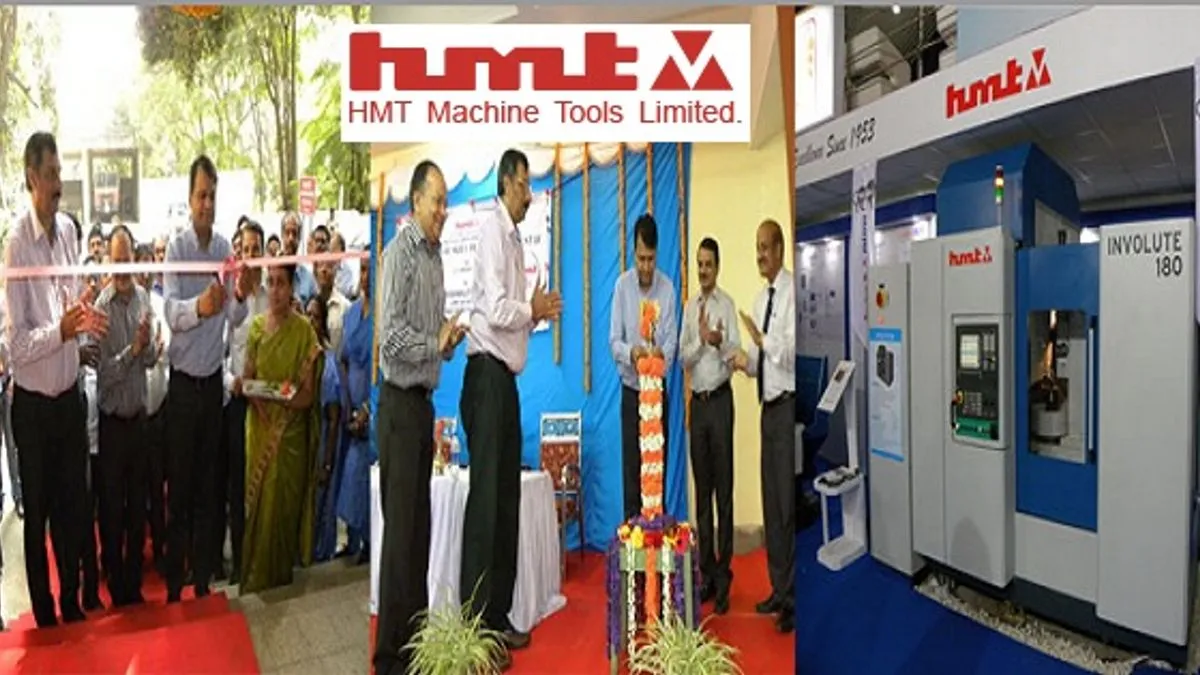
HMT (a.k.a Hindustan Machine Tools) is the government’s mechanical antique shop — a once-great PSU now reduced to manufacturing losses instead of machines. Once famous for watches, tractors, and bearings, today it survives on machine tools, food processing equipment, and the occasional land sale to plug balance sheet holes. The stock trades at ₹56 with negative book value (-₹53/share), net worth erosion, and margins so red they look like a butcher’s ledger. In short: nostalgia stock with PSU garnish.
2. Introduction
Remember HMT Watches? The pride of 90s India, gifted by dads to sons with the promise: “Ye chalti rahegi.” Sadly, the company didn’t.
Founded in 1953, HMT was supposed to be India’s industrial backbone. Over decades, it dabbled in machine tools, tractors, bearings, food processing gear, and watches. What actually happened? Global competition, PSU lethargy, and government indecision turned this engineering behemoth into a case study in “how to miss every industrial bus.”
Fast forward to 2025, HMT is a shell of itself: most divisions shut, land parcels sold to railways and state corporations, and revenue from core ops at a measly ₹135 Cr — smaller than the annual revenue of a medium-sized engineering college canteen. Yet, the stock has cult-like PSU investor interest, because hey, “sarkari company hai, kuch toh hoga.”
3. Business Model (WTF Do They Even Do?)
Let’s be honest: HMT is now less of a business, more of a PSU museum exhibit.
Machine Tools (~81% revenue): CNC machines, lathes, printing machines. Subsidiary: HMT Machine Tools Ltd. Problem? Private competitors outclass them in cost and tech.
Food Processing (~9%): Pumps, homogenisers, pasteurisers — basically dairy and agro equipment. Still niche, but too tiny to matter.
Projects (~10%): Through HMT International Ltd, they implement turnkey projects abroad (training centres, IT labs) mostly as part of MEA diplomatic handshakes.
Closed Segments: Watches, bearings, tractors — all gone. Remember that 446-acre tractor division land? Already sold off to Haryana State Industrial and Infrastructure Development Corp + Indian Railways.
Plants: Just 2 running — Aurangabad & Bengaluru. The rest are either closed, rusting, or waiting to be “monetised.”
So the business model? Sell machines (loss), sell land (profit), repeat.
4. Financials Overview
Quarterly Snapshot (₹ Cr.)
Source table
Metric
Jun 2025
Jun 2024
Mar 2025
YoY %
QoQ %
Revenue
24.6
31.8
40.0
-22.7%
-38.5%
EBITDA
-21.0
-21.0
-64.0
-0.0%
+67.2%
PAT
-27.8
-29.0
-36.0
+4.0%
+22.7%
EPS (₹)
-0.78
-0.81
-1.01
NA
NA
Annualised EPS = negative → P/E = Not Applicable (unless your Excel supports dark humour).
Commentary: Sales collapsing, profits consistently negative, survival dependent on “other income” and government kindness.
5. Valuation (Fair Value RANGE only)
Method 1: P/S Approach
Sales FY25 = ₹135 Cr
Apply modest P/S of 1–2× = ₹135–₹270 Cr FV (~₹4–₹8/share).
Method 2: Asset Sale Play
Land parcels + subsidiaries could unlock value. If