Jyothy Labs: ₹2,854 Cr in Sales, ₹97 Cr in Sass – But Can Ujala Still Outshine in 2025?
1. At a Glance 🧴
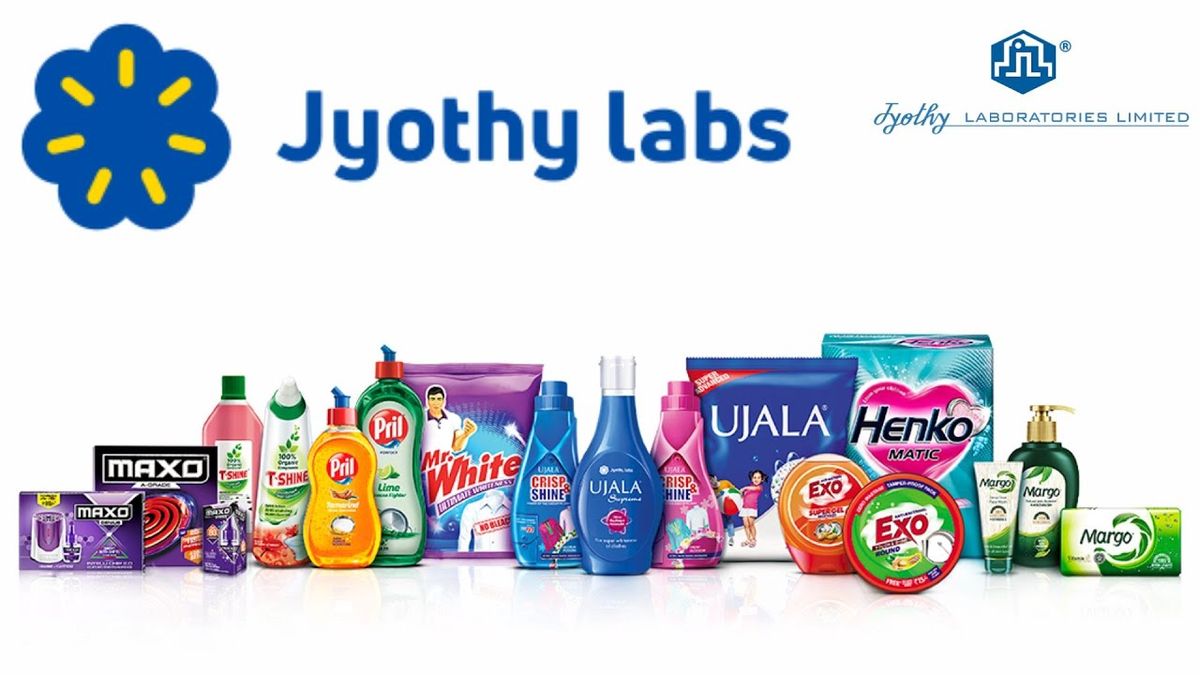
Jyothy Labs is what happens when your nirmaa-washing dreams meet your mosquito-repelling nightmares — all under one roof. With brands like Ujala, Pril, Exo, Margo, and Maxo, they’ve been scrubbing, whitening, and dishwashing their way through ₹2,854 Cr in TTM sales. But here’s the kicker: after 40+ years in the game, the real question is — are they just rinsing and repeating or actually innovating?
2. Introduction
Once upon a time in Thrissur, Kerala, a man named M.P. Ramachandran launched a tiny ₹5,000 startup called Jyothy Labs in 1983. Today, it’s a ₹12,000+ Cr FMCG player trying to fight the HULs and Daburs of the world — armed with detergent, dishwash, and a hell of a lot of mosquito coils.
Fast-forward to Q1 FY26: revenues grew 1.4% YoY, volume growth hit 3.6%, and PAT came in at ₹96.8 Cr. But look closely and you’ll see cracks — working capital days nearly doubled, and debtor days are creeping up like that one cousin who always asks for money. With ₹751 Cr in quarterly revenue and an 18% OPM, margins are clean, but top-line growth? Let’s just say it’s exfoliating very gently.
3. Business Model (WTF Do They Even Do?)
Jyothy Labs is basically your bathroom + kitchen in corporate form. Their four segments are:
Fabric Care (44%) – Ujala and Henko lead the charge. Ujala Supreme holds 84% market share in fabric whitener. Basically, it is the market.
Dishwashing (28%) – Exo and Pril keep your plates shinier than your future.
Household Insecticides (16%) – Maxo chases away more mosquitoes than your ex runs from commitment.
Personal Care (12%) – Margo, Neem active, etc., keeping Ayurveda alive since before it was cool.
Their model is asset-light, brand-heavy, and pan-India. But competition is brutal and rural growth is always a wild card.
Revenue growth has been slow at 2%, but profits have grown at a 19% CAGR over 5 years — thanks to margin improvement, not volume firecrackers. ROCE is an eye-popping 38%, and ROE sits proudly at 30%. The balance sheet is as clean as their detergents — debt is negligible at ₹61 Cr.
“This FV range is for educational purposes only and is not investment advice.”
6. What’s Cooking – News, Triggers, Drama
Q1 FY26 Results: Revenue growth was meh (1.4%) but PAT ₹96.8 Cr is stable.
New Launches: Expansion of liquid detergent line under Mr. White & Morelight.
Festive Season Ahead: FMCG demand always surges in Q2–Q3, so expect some festival tailwinds.
Volume vs Value Fight: Rural volumes recovering, but inflation isn’t done slapping wallets.
Working Capital Ballooning: From 39 to 97 days — CFO might need Ujala Supreme for his spreadsheets.
7. Balance Sheet – Auditor’s Playground
₹ Cr
FY23
FY24
FY25
Total Assets
1,392
1,732
2,024
Net Worth
882
1,142
1,383
Borrowings
47
51
61
Liabilities
1,392
1,732
2,024
Balance sheet looks stable. But increase in borrowings (₹61 Cr) despite strong cash flows? Suspicious. Maybe a shopping spree? Or a large advance tax refund pending?