1. At a Glance
If Indian diagnostics had a “quiet overachiever” award, 3B BlackBio Dx Ltd would already be polishing the trophy. Market cap around ₹1,397 crore, current price hovering near ₹1,628, and a business that somehow manages 43%+ operating margins without screaming about it every quarter. In the last three months, the stock is up 22.4%, while the one-year return is a painful -18.8%—classic “markets have commitment issues” behaviour.
Latest quarter numbers? ₹50.4 crore sales, ₹21.7 crore PAT, and a QoQ sales jump of 98%. That’s not growth, that’s a glow-up. ROCE sits comfortably at 25.8%, ROE at 19.4%, and debt is basically a rounding error at ₹0.27 crore. Diagnostics contribute the bulk of revenue, agro-chemicals quietly do their government tender thing, and margins remain absurdly high for a company this size.
So the big question: is this a high-quality diagnostics compounder hiding in plain sight, or a pandemic-era overhang stock that the market still hasn’t forgiven? Let’s put on the funny-detective hat and start digging.
2. Introduction
3B BlackBio Dx didn’t just wake up one day and decide to become fancy. This company has been grinding since 2011, long before PCR kits became dinner-table vocabulary. Originally known as Kilpest India Limited, it went through a proper corporate makeover in late 2023—amalgamation approved, name changed, and suddenly everyone started noticing the margins.
The business sits at an interesting intersection: advanced molecular diagnostics on one side and old-school agro-chemical government tenders on the other. On paper, that sounds like a weird arranged marriage. In practice, it gives revenue stability plus optionality. Diagnostics bring the margins and global reach; agro-chemicals bring steady cash and minimal drama.
What really changed the narrative was consistency. Post-pandemic, while many diagnostics players saw revenues fall off a cliff, 3B BlackBio quietly recalibrated towards oncology, infectious diseases, human genetics, and antimicrobial resistance. And now, just when everyone thought it was a “COVID one-hit wonder,” the company dropped a Belgian acquisition into the mix.
So no, this is
not a hype stock. It’s more like that student who never tops the class but always ends up doing surprisingly well in life. Curious yet?
3. Business Model – WTF Do They Even Do?
Let’s simplify this for the lazy but smart investor.
Diagnostics Business (81% of FY23 revenue)
This is the star performer. The company designs and manufactures PCR-based molecular diagnostic kits, PCR enzymes, reagents, and NGS-based testing kits. Translation: they sell the stuff labs need to detect diseases at a genetic level.
Product coverage is broad:
- Oncology & Hematology
- Infectious Diseases
- Antimicrobial Resistance
- Human Genetics
- Extraction & Rapid Antigen Kits
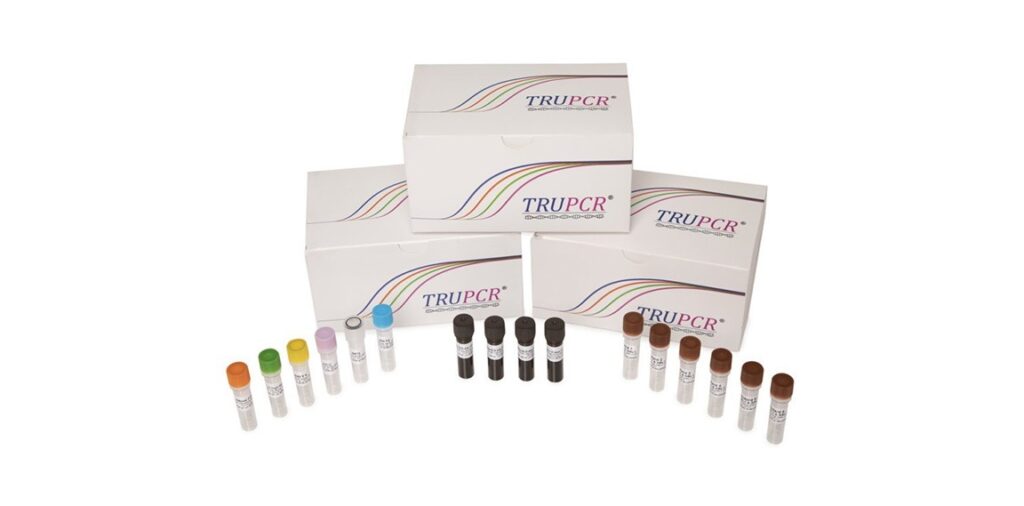
Their brands—TRUPCR, TRUNGS, and TRURAPID—sound like gym supplements but are actually exported to 40+ countries across Europe, the US, Middle East, APAC, and LATAM. There’s also a UK subsidiary, TRUPCR Europe Limited, which gives regulatory credibility and global access.
Margins here are juicy because once a kit is approved and scaled, incremental costs are low. IP, certifications, and regulatory approvals act as entry barriers.
Agro-Chemical Division (19% of FY23 revenue)
This is the boring cousin who pays the bills. Products include insecticides, bio-fertilizers, public health chemicals, and larvicides—mostly sold via government e-tenders (GeM). Growth is lumpy, margins are lower than diagnostics, but cash flows are steady.
Why keep this business? Because stability matters when diagnostics cycles fluctuate.
